Pittsfield Looks at Zoning Amendment for Battery Energy Storage
PITTSFIELD, Mass. — In an effort to embrace greener energy sources while protecting the interest of residents, the city has proposed a zoning amendment for battery energy storage systems.
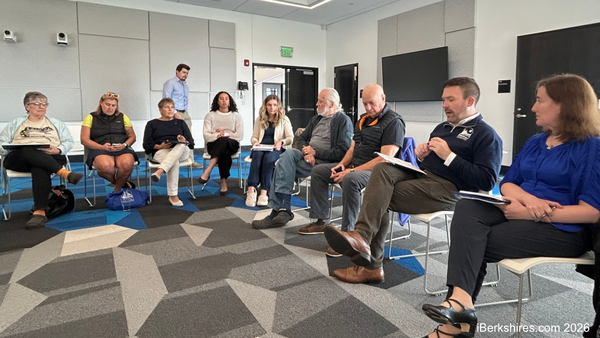
On Tuesday, the Community Development Board got a first look at the proposal. There were several items that the panel would like City Planner Jacinta Williams to revisit so it was tabled until a later date.
Williams explained that it aims to protect critical parts of the community with a mind to continuing development and acknowledging that technology is changing.
It provides regulatory guidelines, ensures compatible land uses, and guides responsible and intentional development of residential, small, and commercial scale battery storage systems.
"We understand that solar panels are going to be implemented on residences, and we wanted to allow for greater storage of both electricity from solar panels but also from electrical vehicles," Williams said.
"And again, just with a mind towards implementing those alternative uses in our homes and in our neighborhoods as we move away from fossil fuels."
She also proposed an overlay district to account for businesses and developers.
Language about Native acknowledgments stirred the most conversation, as board members are supportive of the effort but want to make sure that the language is clear.
One of the goals reads:
"To go beyond land acknowledgments, recognizing forests, riparian ways, and wildlife (hereafter, "the land") as living breathing members of our community that deserve to be protected in accordance with Native Nations' and Indigenous Communities' practices."
Member Libby Herland explained that the likes the concept but is not sure that it should be in the ordinance.
"In recent times, there has been a lot of concern about the relationship of land, both forest and other lands, to Native peoples," Chair Sheila Irvin said.
"And so I think there was an attempt here to respect land that may be connected with Native peoples and wanting to be careful not to kind of run over that."
Herland said she is completely sympathetic to the cause but wonders if it will cause confusion for applicants.
"I like the fact that there's a conscious thought to do something beyond just acknowledging it," she said. "To me though, to put it in here it's like a larger question."
Matthew Herzberg said that the intent is probably valid but the wording is vague and open to interpretation when the rest of the document is very prescriptive. He asked if it could be written in a way where the intent is clearly demonstrated and easier to follow.
Williams explained that the intent is a couple of things and that is why it may be difficult to grasp.
"The idea is to recognize that land has been stolen essentially, from Native nations, and they were the original caretakers and as such, there should be some recognition beyond land acknowledgments," she said.
"Which is why that part is in there as to the fact that we should be considering what those caring practices would be, and incorporating that into our decision-making process."
She strongly advocated for keeping the language in there but agreed to offer wording that is more clear.
"I think my issue with this is that it's very unclear what the expectations are of somebody who is attempting to build something under this ordinance," Herzberg said.
Williams will present a revised document at the board's next meeting that takes all of the concerns raised into account. After the board approves it, it will be presented to the City Council.
In other news, the board approved a site plan for a recreational cannabis retail store at 5 Cheshire Road and a site plan for the Casella Waste transfer station.
Casella purchased the waste transfer facility on Hubbard Avenue from Community Eco Power LLC, which filed for bankruptcy in 2021 and has demolished it for redevelopment into a waste transfer station.
Tags: zoning,