BRPC Talks Rural Issues With Healey's WMass Director
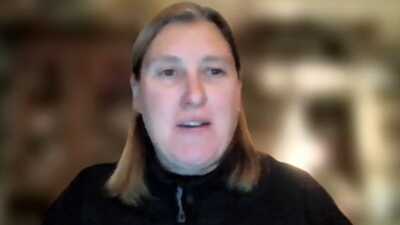 |
| Western Massachusetts Director of the Office of Governor Healey Kristen Elechko met with BRPC. |
PITTSFIELD, Mass. — The Berkshire Regional Planning Commission on Thursday spoke with a representative from the Healey Driscoll administration about advocacy in the upcoming term.
"We've been really committed to affordability, equity, competitiveness, and the climate," Western Massachusetts Director of the Office of Governor Healey Kristen Elechko said.
She pointed out that the administration chose to create a director of rural affairs and hired Anne Gobi, who spoke at the Berkshire County Selectman's Association last month, and keeping her office open to support and serve Western Mass.
"I can certainly say that because one of my primary roles is to support the governor, lieutenant governor, and secretaries when they're in the four counties. They're keeping me very busy by their visits," she said.
"They certainly have been here, I would say incredibly frequently."
Last year, Healey visited the Colonial Theatre to detail how she will advocate for the region on Beacon Hill, and this year, she visited North Adams to survey the millions in damages that were caused by flooding and Pittsfield to tout the $4 billion Affordable Homes Act at the Morningstar Apartments.
In August, Lt. Gov. Kim Driscoll announced $31.5 million in grants for climate resilience implementation and planning throughout the state in Stockbridge and took a tour of Berkshire Community College's campus upgrades in Pittsfield.
Also over the summer, Representatives from the state Department of Agricultural Resources stopped at the Pittsfield Farmers Market as part of Massachusetts Farmers Market Week.
"There have certainly been conversations about having more events in Berkshire County related to the Affordable Homes Act," Elechko reported.
"We had economic development listening sessions within Berkshire County, which I feel like I've been at the (Berkshire Innovation Center) a lot lately for all of the ways in which we've been coming to all of you, which I think has been really wonderful."
She added that there is also a new Federal Funds and Infrastructure Office launched in October to connect with municipalities so that they can access federal grants, possibly with matching state funds, that can support work needed in communities.
Commission members largely had comments and questions about Chapter 90 funding, which is for improvements to and investments in local transportation networks.
"Basically the message we wanted the prior administration to get and I would like you to relay to the current administration is no matter what you do with the formula, if you don't fund Chapter 90 adequately, the formula doesn't make much difference," Windsor Delegate Douglas McNally said.
"It's been level-funded pretty much for a long time. A culvert that cost us to replace a decade ago would cost $200,000. It's now 600,000. A bridge that was $250,000 is now a million and there's been no increase and our roads and bridges are falling apart and small towns don't have the wherewithal to repair them and neither do the large communities."
Elechko reported that there is a new $25 million bucket of money for Chapter 90 and a grant program for small bridges.
McNally also pointed to the issue of writing grants for state programs when a small community such as Windsor does not have a grant writer. At a Highway Superintendents Association meeting, he heard advocacy for Chapter 90 funding that is not through grants so that towns can plan long-term.
Mount Washing Delegate Keith Torrico seconded this as a resident of a town with less than 200 residents.
"I worked with Senator Markey prior to coming to the administration and have been working in the four counties, again, for a good amount of time and am acutely aware of the personnel challenges that present themselves in many of the towns," Elechko replied.
"It's not even just the small towns. South Hadley has literally one (grant writer) who is on staff, and certainly, they have college within the town and things like that."
She believes this struggle is heard based on efforts within the administration.
BRPC's Executive Director Thomas Matuszko pointed to municipalities' struggles with staffing. According to a survey the planning commission conducted earlier this year, 16 of the 21 responding communities had vacancies on volunteer bodies and 25 percent reported difficulty filling seats on their select board.
"I think being able to work in a community similar to this one that's gathered here today is a really good potential for us to be learning from each other," Elechko said.
"And for me to be hearing from each of you about similar challenges that you're experiencing or similar opportunities that you've been able to take advantage of."