Northern Berkshire United Way: 1980s Sees Double the Growth, Double the Need
Northern Berkshire United Way is celebrating its 90th anniversary this year. Each month, we will take a look back at the agency's milestones over the decades.
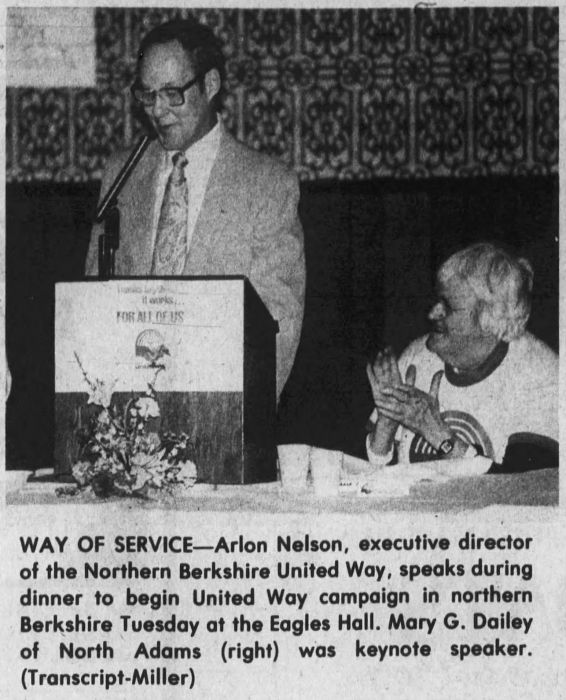
The "Massachusetts Miracle" ushered in a boomtime — despite gloomy local indicators like the relocation of Sprague Electric, loss of Adams Print Works in a massive blaze, and Photech's bankruptcy.
The agency failed to reach its fundraising goals only two times during the decade even as the region's needs grew. For the first time, homelessness and substance abuse were listed among its allocations.
Fundraising grew by leaps and bounds as critical human service relief agencies asked for more. An estimated 36,000 people in North County were being served by the agency's affiliates. The funds went to support between 14 and 17 agencies over the decade for health services, youth support, mental health, child care, and family needs.
NBUW was making enough toward the end of the 1980s that it could provide help to nonmembers such as the Dalton Community Chest, a rape crisis center and two homelessness initiatives. It also worked with the Piton Foundation of Colorado on venture funding, including for a peer mentoring program at Drury High School
Mary G. Dailey had given her first dollar to the original Community Chest in 1935 as a worker at Arnold Print Works. As keynote speaker at the 1981 kick off, she credited North Berkshire's generosity as "enthusiasm."
"I'm all for enthusiasm," she told the 150 gathered at the Eagles Hall that fall, with her sister, Catherine, as toastmaster. "No other characteristic, with the possible exception of kindness, has contributed so much to happy and successful living."
Ironically, the 1981 drive was one of the two that just missed the mark. But that did little to deter the Northern Berkshire United Way from stepping up its goals each year.
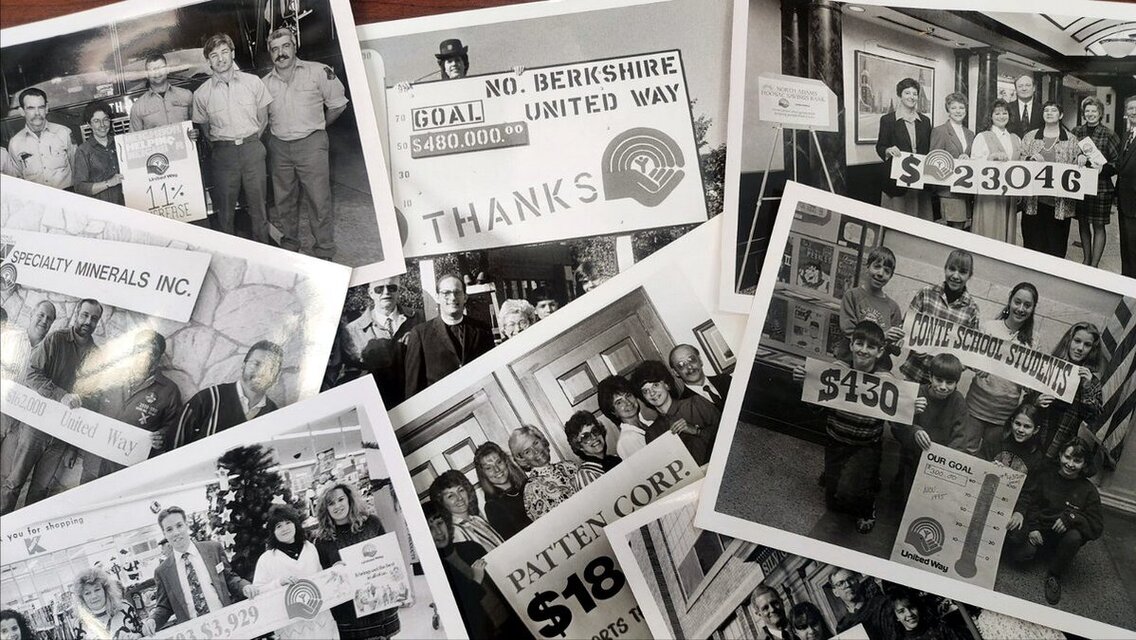
For example, the decade began with a goal of $222,000, reaching $233,000 by the end. It was the first time in several years the target had been exceeded. Sprague Electric that year reached a 90 percent participation with more than $35,000 flowing to the fund.
By the end of the decade, NBUW would more than double that goal asking for $500,000.
Through out it all, new Executive Director Arlon "Al" Nelson, a program director at WMNB, would steer the agency through the decade of growth.
For years, the North Adams Transcript had featured stories about all the separate agencies each fall during the drive. But the campaigns became longer, often not tallying up until the following January, and the agency experimented with new ways of raising awareness.
There were, of course, newspaper and radio ads and both the Transcript and Berkshire Broadcasting remained firm supporters. They often offered discounted or free advertising for businesses that donated a certain amount.
Restaurants began offering United Way days, pledging to donate a percentage of sales. Banks and other businesses start hosting a children's art show benefit and smaller groups community spaghetti suppers.
Middle schoolers and college students ran their own campaigns and elected officials like U.S. Rep. Silvio O. Conte and state Sen. Peter Webber spoke at meetings and kick-offs.
In 1983, NBUW officials met with Fred Abraham, 22, of Lowell, who was hiking the Appalachian Trail that year to plug the United Way. He hadn't raised much money, he said, but his goal was to raise awareness of the United Way and the plight of the homeless.
The NBUW also launched several initiatives including the Children's Fair, a business blitz, and collaborative blood donation stations.
The Children's Fair featured booths with all the agencies at Noel Field, along with fire truck races and activities. The second year found the fair integrated into the Fall Foliage Festival and more than 1,500 people attended. It included Thomas King, vice president of the North Adams Chamber of Commerce, and his wife, Kit, dressed as colorful clowns.
October was United Way Month, and Mayor Richard Lamb helped hoist a flag at City Hall; North County select boards also made proclamations.
More than 100 volunteers would call up businesses and organizations small and large asking for donations, scoring just under $5,000 the first and close to $50,000 by the end of the decade.
The United Way still depended on its door-to-door drive, with precincts divvied up in the residential division and the North Adams Transcript dutifully listing the names of people leading the charge. Hundreds of people volunteered each year.
An "extra effort award" was given to Bernice "Bunny" Ballou for recruiting more than double the number of volunteers for her area, bringing in 100 new contributors and exceeding North Adams' residiential goal in 1982.
There were some storm clouds. At the 1981 appreciation dinner, the Rev. Norman Towler Jr. of First Baptist Church quoted President Ronald Reagan saying voluntary organizations are "the core" of the social welfare system of the tails of his cutting 12 percent from govenment agencies.
The United Way couldn't replace the losses from government funding and agencies were told to prepare for a 4 percent cut the next year.
At the 50th anniversary, and the 100th for the national United Way, NBUW raised a record $302,000 — against a request of $340,000. But the agency's President Richard Scarafoni, then developing Western Gateway Heritage State Park, told the kick off meeting at the park that "our best days are ahead of us."
The loss of Sprague a few years later had the agency starting off with an estimated $28,000 deficit, despite Robert Sprague as honorary campaign chair.
Local firms made up the gap and more, with Pfizer continuing its streak as the No. 1 plant in donations per capita in the county and coming in second in the nation to county government employees in New Mexico the nation. One year, donations from Pfizer and its employees made up 25 percent of the campaign goal, and its employees, like plant manager and campaign Chair Robert Pombrio, were volunteers.
"It's not just giving, it's their belief, their willingness to let their employees tell others about United Way," said Nelson. "They're feeling is, they have good jobs, they live here, and everyone has a responsibility to give something back to the community."
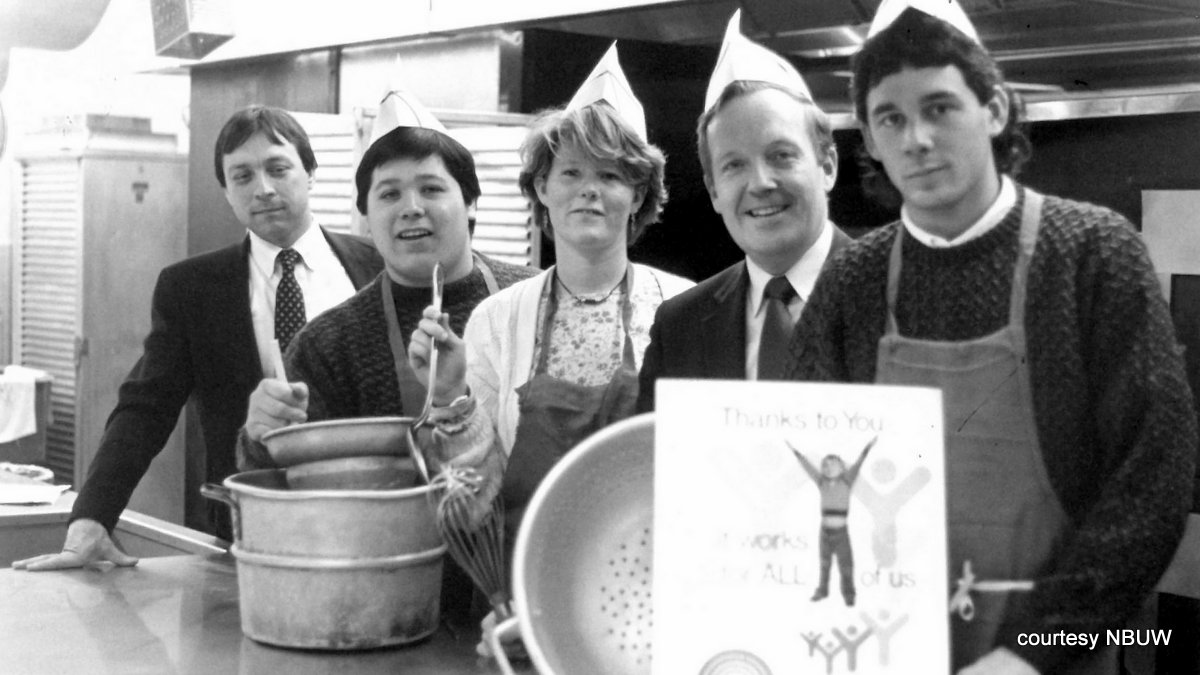
Student Government Association of North Adams State College holds a spaghetti dinner in 1987 to benefit the United Way. Campaign Chair Paul Hutchison is second from right.
This is just a small sampling of officers, volunteers, and campaign chairs over the decade. There were mechanics, housewives, teachers, nurses, laborers, clerks and truck drivers who all participated to make the campaigns a success.
Sue Green, then executive director of the Help Line and co-chair of the 1983 drive, reminded the volunteers what all that effort was for.
She told how she listened to a volunteer at the Help Line spend 90 minutes talking to a 17-year-old boy who thought he had no future — and convinced him that he did.
"Because of your efforts, this 17-year-old has a future and for him I thank you," she said.
Tags: NBUW,