Air and Water Quality Testing Planned for Pittsfield High
PITTSFIELD, Mass. — The district will test air and water quality at Pittsfield High School as it prepares to request funding for "in need but not dire" renovations.
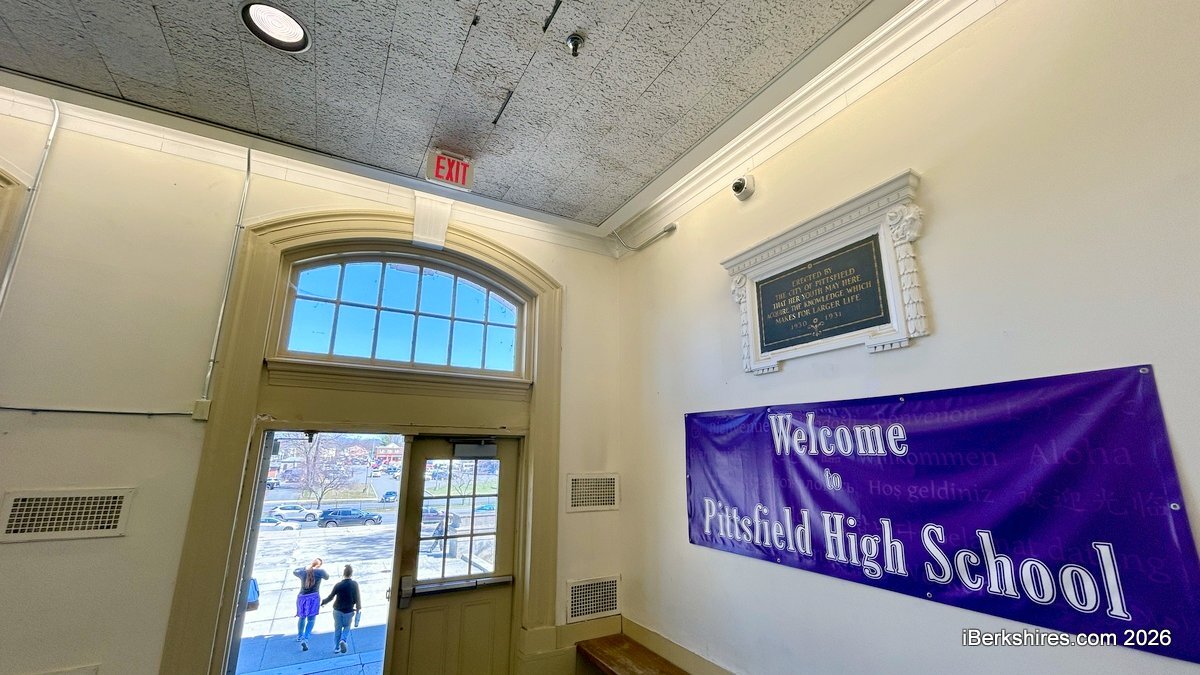
The School Committee last week received a report card on Pittsfield High School's physical condition, which was described as "poor" and in need of restoration to its original character.
The 1931 building's quality reflects the materials used at that time, and those strong bones were noted during the conversation.
"Yes, the school is in really poor condition and needs to be addressed, but I also think that we don't need to push an alarm, panic button, and create panic of whether or not certain things are there," Mayor Peter Marchetti said.
"… To me, if this was a doom and gloom, 'Oh my God, get the kids out,' it would be a lot more strongly worded."
He and Superintendent Latifah Phillips toured PHS the previous week and heard concerns about air and water quality. Testing will be done before school is back in session; there was some air quality testing done two years ago.
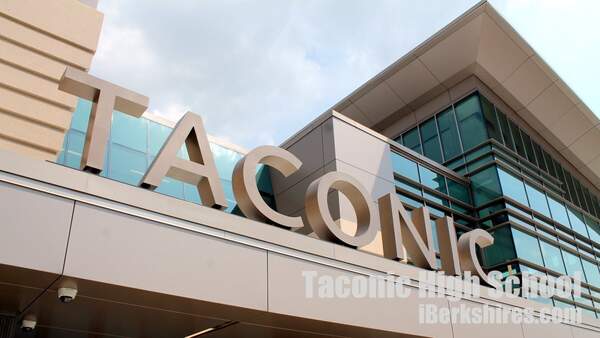
The city is pursuing a statement of interest to the Massachusetts School Building Authority, a quasi-independent government agency, to cover up to 80 percent of the cost for renovations. The Pittsfield Public Schools submitted statements of interest for five schools since 2007, and only two have been accepted: Taconic High School in 2009 and the proposed Crosby/Conte elementary build in 2024.
Marchetti believes PHS saw the "fastest statement of interest in the history of the City of Pittsfield." Without state funding, he said it will take 50 years to fix the issues.
During a meeting at Reid Middle School last Thursday, the committee reviewed a recent School Building Needs Commission report and discussed a path forward for the school.
A summation of the 284,301-square-foot building at 300 East St. describes it as being "in poor condition overall," but the condition of the finishes and overall quality of the school is said to reflect the age at which it was constructed; restoration to its original character is recommended.
"The site has issues with its asphalt paving, causing accessibility and safety concerns. The fields are in good condition. The sidewalks around the building appear to be in poor condition with accessibility updates necessary. ADA ramps are in poor condition," it reads.
"The building exterior is in poor condition overall. The windows appear to be in good condition. The doors are in poor condition. The brick is in poor condition. The roofs are at the end of their life expectancy and should be investigated further to determine when replacement would be warranted."
It notes that the interior and finishes are not well maintained, and the building interior appears to hinder the learning environment for ADA accessibility and appropriateness for the student user group.
"The majority of the building's systems are at the end of their life expectancies. Upgrades should soon be considered and should be a priority."
The restrooms are in "extremely poor" condition according to the report, with badly maintained finishes, toilet stalls falling into disrepair, a missing lavatory, and not accessible. The gymnasium ceiling appears to be relatively new and in good condition.
Based on the Mechanical, Electrical, Plumbing, and Fire Protection Survey, the systems that received a poor rating are the domestic water main and distribution system, natural gas piping, restrooms, water heater tank, boilers, ventilators, unit heater, all air handling units, exhaust systems, and security
systems.
The concept of one high school came up during conversation. Marchetti said that even if Pittsfield had the money to add to Taconic, from what he is told, it would only allow for 300 more students on the campus. The high school's current enrollment is about 700.
If the SOI is approved, he envisions the MSBA would consider a longer-term study on enrollment to see how feasible it would be to build an addition to Taconic that fits everybody, alongside other options.
School Committee member Daniel Elias said he has seen PHS renovations resurface every so many years during his long tenure.
"I have a number of concerns myself over the years that I've gathered for having one school, but that's my opinion only," he said.
"I think we're going to have to have a larger discussion, and I think this is a good way to start by putting this process forward to this point. Either way, you're looking at a number of years before we get to a fix. So in the meantime, we have to have a game plan, and it sounds like we're going to do the testing on some areas and some things, but a game plan on addressing some of the needs going forward to make it inhabitable."
Tags: MSBA, PHS, statement of interest,