Hoosac Valley Students Find Their Voice Through Advisory Board
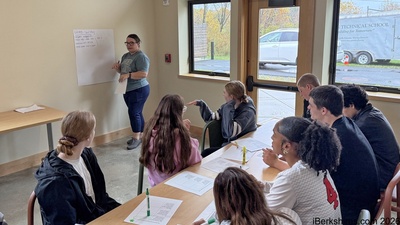 |
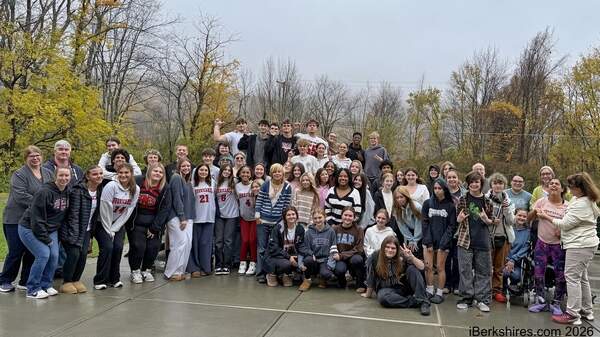
| Board members talk about the type of opportunities that surveyed students indicated interest in. The board also provides mentoring and helps plan schoolwide events and celebrations. |
ADAMS, Mass. — For the last three years, Hoosac Valley High School has encouraged students to take part in shaping their school community through its Student Adult Advisory Board.
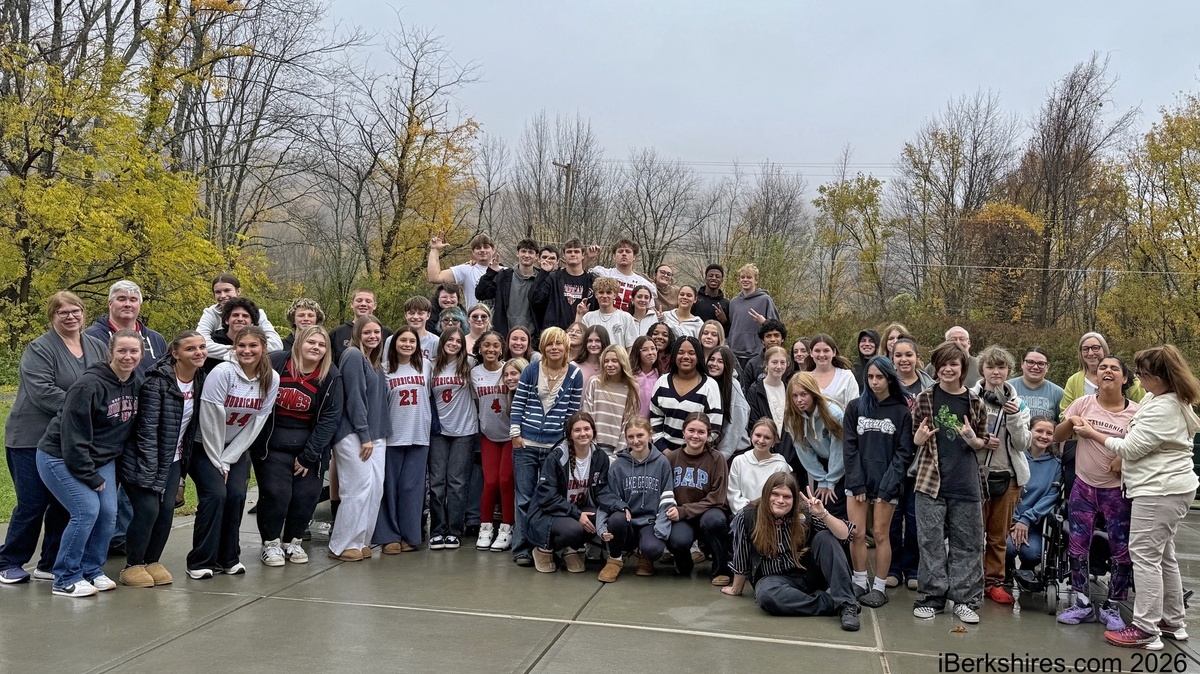
The board has become popular among students, with approximately 70 members currently enrolled and a waiting list of others eager to join — the largest it has ever been, said Jaclyn Ricci, history teacher.
"It gives us such a voice in the school, and I just think it's something every school should have because it really just brings all of us together, our whole student body as one, and helps us be more comfortable with each other," senior Rylin Larabee said.
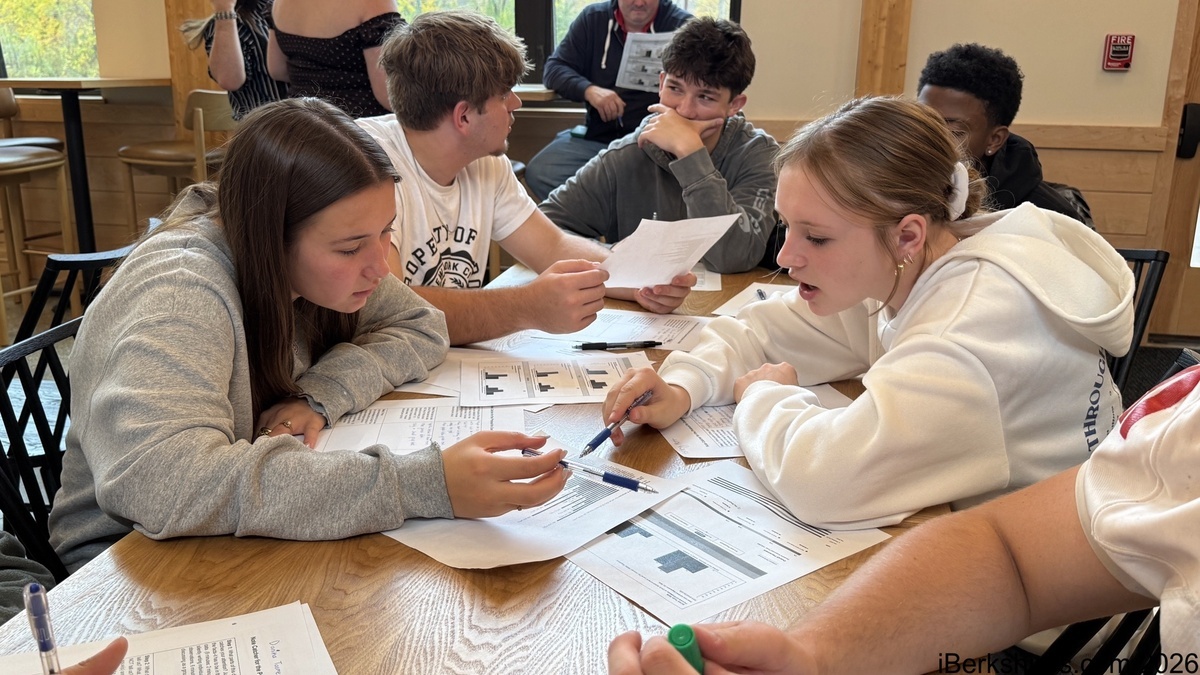
Students highlighted how the initiative allows them to work alongside school administrators and other adults to implement policies and advance programming, from bringing back the peer mentorship program and planning enrichment activities based on the student body's needs to advancing multi-year plans for outdoor classrooms and planning school celebrations and pep rallies.
"I feel like it brought me closer to a lot of the advisers that we work with, and the teachers in the building, and just being able to communicate with them and explain, like student to teacher, how both of us are feeling about different roles that we have in our school," senior Leyah Brown said.
Senior Preston Hnatonko said the Student Adult Advisory Board (SAAB) operates similarly to government in that it gives students firsthand experience in developing policies. They can then carry that experience beyond graduation and advocate for change and influence public policy as adults.
As an environmentalist, Hnatonko said one of the biggest things the program has done is teach him how to write legislation for the causes he believes in.
"Youth has also historically been essentially forced out of politics and things like that, and that also leads to when they are adults not knowing how to get into things like trying politics and how to get policies that they want and need for the future," he said.
"So, starting at a younger age, this is going to lead toward us being able to get policies that we want when we're adults, we're in the real world, and then there's issues that we see and we want to make change when it comes to that."
Before SAAB, senior Ben Payton said he didn't think it was possible for students to go to the administration and advocate for change.
"I think it's huge to let kids know that you have the ability to make change if you work hard enough and tell people and communicate with people, and without SAAB, I don't think people would really know that," Payton said.
The impact of SAAB is multifaceted, not only giving the students the chance to make real change in their school, but also helping the board members build confidence and develop leadership skills.
"They all make me so proud. They have such pride in their school, and they want to make it better. They want to empower each other to use their voice and to speak to admins and one another and say these are the changes that we need," Ricci said.
"These are the things that will help us be successful in life, and they're willing to take action in the classrooms, outside of the classrooms, and that's just wonderful to see."
Several students expressed pride in reinstating the peer mentorship program, which partners freshmen with seniors to help them adjust to high school, build friendships across grade levels, and feel more comfortable in their new environment, Payton said.
The school stopped the mentorship program for a couple of years, during which upperclassmen noticed that incoming students struggled to connect with older students, prompting their advocacy to reinstate it, said senior Reagan Shea.
Senior Niyanna Borawski recollected how when she was in eighth grade the mentorship program helped her be more comfortable with the seniors and upperclassmen.
"I think it brings a community closer together. It really shapes the culture of a community, and I think that's what it's done for our school. The school culture has definitely shifted into a more positive and welcoming group of people," senior Emma Akroman said.
The program demonstrates to the students diverse backgrounds, which means they have different resources and environments so it's important to acknowledge that not everyone has the same opportunities and support systems, said senior Alexandra Silvernail.
The board also helps plan schoolwide events and celebrations, including pep rallies and friendly competitions between grade levels, to promote school spirit, strengthen connections among students, and foster a sense of community, students said.
"For the celebrations one, for me, I see every single time that we have [an event] … it just really shows our culture, and it helps us all be more like a family and like a community in our school," Silvernail said.
The board has also advocated for more offerings classes aligned with students' interests and educational pathways, although staffing shortages have limited progress, Brown said.
Serving on the board has taught students how to facilitate discussions and advocate for peers who may be uncomfortable speaking up, ensuring their voices and concerns are still heard, students said.
"SAAB has kind of shown me that everyone has a voice, but not everyone really wants their voice to be heard in the biggest way," senior Olivia Silvernail said, saying a leader learns when to speak up for people and when to step back and let people be heard.
Tags: advisory committee, HVHS,