Taconic Students Install Bat Boxes to Help Protect the Species
PITTSFIELD, Mass. — Taconic High School students are hoping to bring awareness to bat population loss in the county.
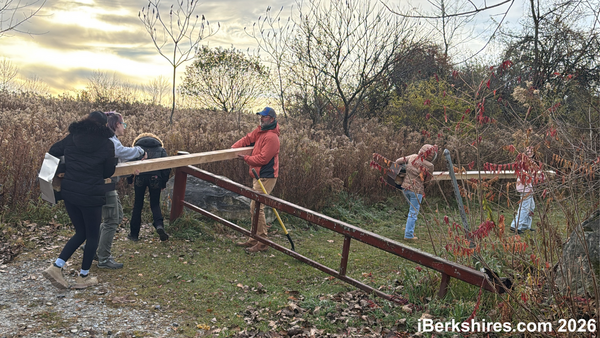
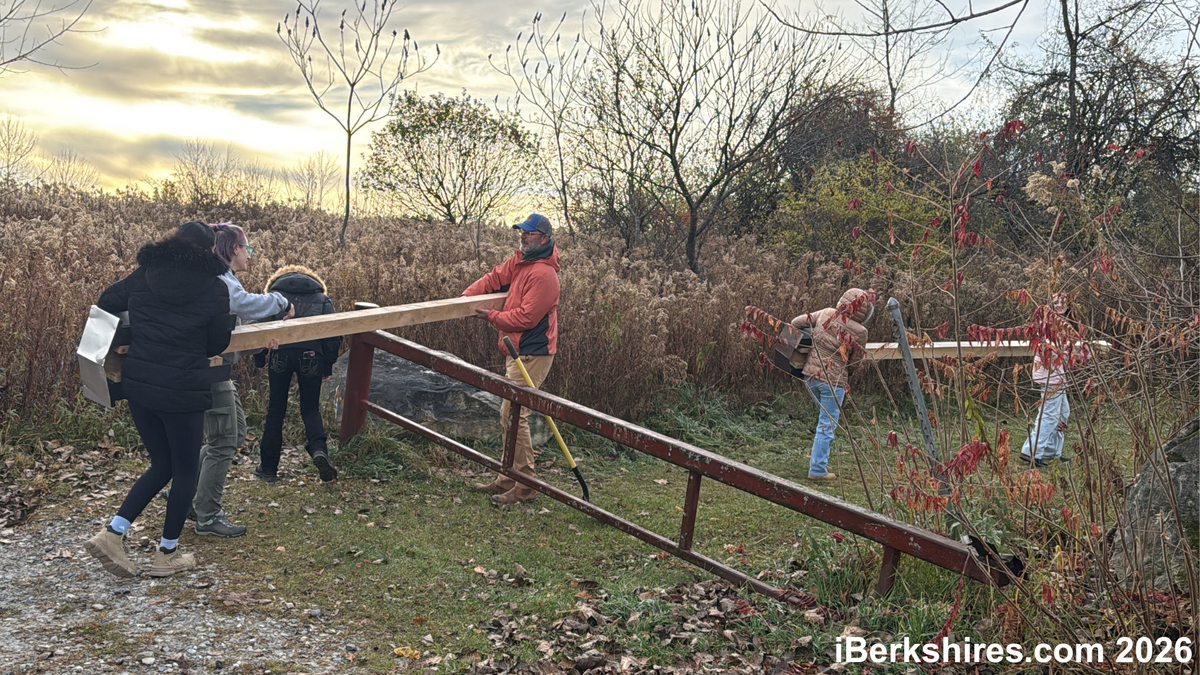
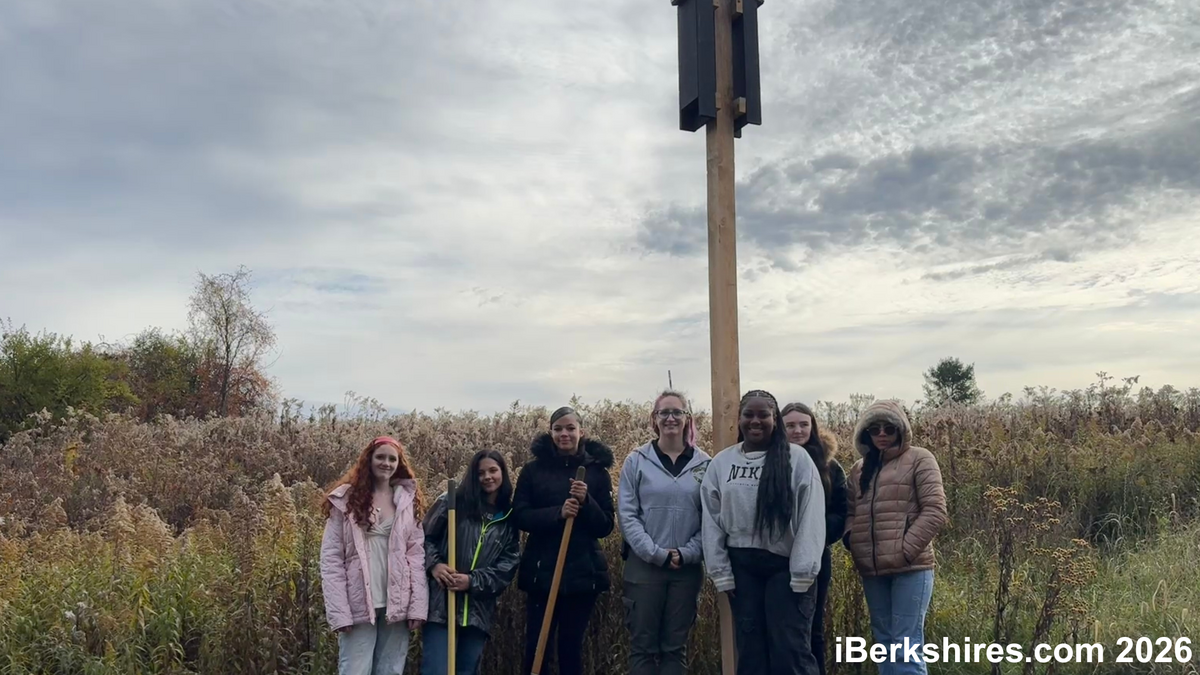
Students from the Environmental Science and Technology class last week erected two bat boxes in the pollinator garden at Wild Acres Park.
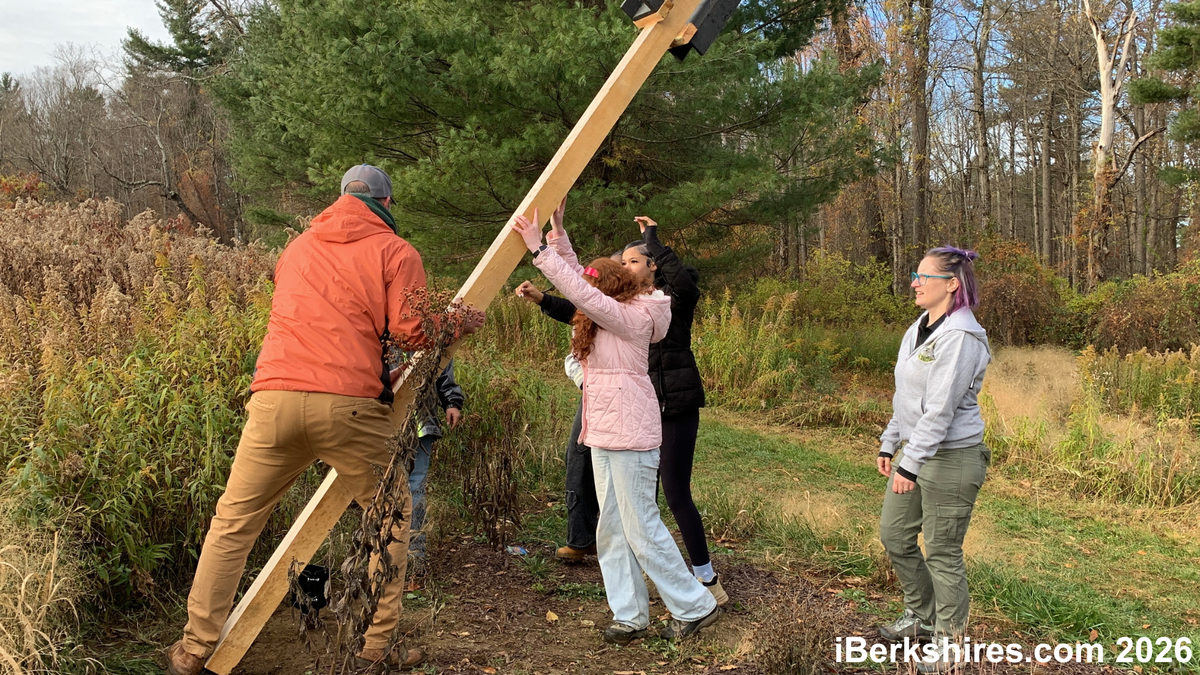
Students and science teacher Morgan Lindemayer-Finck dug holes to install their already built boxes to provide safe, clean roosting habitat for bats.
"Bat populations in Massachusetts are decreasing because their habitat is being affected by white-nose syndrome, as well as invasive species in certain trees that they live in," Lindemayer-Finck said. "So those invasive species are affecting the trees; it's making the trees go away. So bats are important for the ecosystem. They're pollinators. They provide pest control. They're a really important, key, integral part of the ecosystem."
Out of the nine species of bats in the state, five are endangered and three are threatened, she said.
The threats discussed included white-nose syndrome, which affects bats' respiratory systems and is prevalent in damp places such as caves and minea; the boxes provide a place that won't become very damp to affect that. They are also experiencing habitat loss through invasive insects, including emerald ash borer and Asian long-horned beetles that damage trees some bats use for roosting.
The boxes stand tall and were built with the help of the Taconic carpentry students with local wood donated by the state Department of Conservation and Recreation. The U.S. Fish and Wildlife Service design is to use single-cell boxes installed in pairs, allowing a family group or multiple bats to use them. The boxes are painted black to collect heat, have interior hatch marks for bats to grip and have narrow openings intended to keep predators out. The metal toppers help shed rain and protect the wood.
The class, in its second year, hopes to keep providing boxes around the city. The students put boxes up earlier this year at Springside Park.
"Our hope is to install bat boxes in other conservation areas around the city, in Pleasant Valley [Wildlife Sanctuary], and also going into rights of way and things like that to provide as much habitat as possible," Lindemayer-Finck said. "Then we will also have the ability to monitor populations."
But the class will be back, as they want to see if bats are using the boxes and, hopefully, learn which types of bats are using them.
"If there are bats in the boxes, we don't want to shine light up there or anything like that. So we can monitor by looking for guano on the ground," Lindemayer-Finck said. "And in the future, we would really also like to be able to sample that guano for genetics, so that we can tell what species of bats are utilizing the different bat boxes and keeping track of the population that way."
The program is in its second year, providing students with hands-on learning as well as exploration of a diverse range of environmental industries like wildlife and fisheries management, engineering, wastewater and drinking water treatment and distribution, and hazardous waste management.
"Through hands-on instruction and fieldwork, industry partnerships and real-world projects, students develop practical skills. So they gain industry recognized certifications. They explore pathways to further education and careers," Lindemayer-Finck said. "But what's the coolest thing about this project, and this program in general, is that they really look and analyze real environmental challenges.
"They apply scientific principles, and then they develop real practical solutions and act on those solutions to support protection, restoration, and responsible management of natural resources. But it really goes beyond that because we emphasize the connection between environmental health and the resources that are essential to human life."
The students were excited to see their boxes installed and hope the community can see the need for them.
"I hope to impact the community by showing them that any small action of help can bring a lot of awareness to the animals that are in need of houses or just places to be able to be safe," said 10th-grader Shayna Bowe.
"We hope to spread awareness about how useful bats can be in an ecosystem, but also to spread awareness about the disease that is very harmful to bats, and how we don't know what the cause is for it, but we hope that this will help them," said Audrianna Boos.
Parks, Open Space, and Natural Resources Manager James McGrath helped the students put the boxes in the ground. He said the partnership with the class has been important, emphasizing that the new program has room to grow and can prepare students to take on important restoration and sustainability work.
"We feel really strongly about forging this partnership with the environmental program at Taconic because we recognize that this field requires new young leaders to sustain momentum that we've built over the years as far as environmental restoration and environmental environmental projects," McGrath said.
Tags: bats, Taconic High, wildlife,