Becket Washington Gets Funds to Boost Enrollment
BECKET, Mass. — As a low-enrollment school, Becket Washington Elementary School faces challenges in providing the same level of services and support available at larger schools. However, funding from a supplemental budget bill is expected to help bridge that gap.
On June 12, Gov. Maura Healey signed a $1.35 billion supplemental bill in surtax revenue, $573.5 million of which was earmarked toward education.
As part of the bill, Central Berkshire Regional School District was awarded $250,000 to support enrollment growth at Becket Washington Elementary School, which has been faced with declining enrollment. That funding and $50,000 for the Dalton Community Recreation Association were earmarks filed by state Sen. Paul Mark and included in the Fair Share supplemental budget.
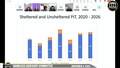
According to The Becket Beat, an online publication by a group of Becket residents, the school's student body has dropped to 83 students in 2026, a decrease from 125 in 2018. This enrollment is projected to drop further to 68 students in 2027 in Grades pre-kindergarten to 5.
Limitations in the state Chapter 70 funding formula and the unpredictability of rural aid have made it difficult for the elementary school to provide its students with the same level of services and support that are built into larger schools' systems, Superintendent of Schools Michael Henault said.
"This can often lead to a cycle of further enrollment decline we are trying to avoid," he said.
This year's budgeting season was challenging for the district, having to make more than a half-million dollars in cuts to its operational budget to be fiscally responsible to its seven towns.
Using the supplemental bill funds, the district is exploring building partnerships with local organizations to strategically add services into the school to show that with sustained, targeted investment, small rural schools can be successful, he said.
In doing so, the district hopes to attract families who are searching for a community-centered education, Henault said.
"We are hoping to draw some of our home school families back to the district and over time keep more of our resident Becket students at Becket Washington Elementary School," he said.
"We are currently working with several organizations to bring additional services to our schools … and will be excited to share details once they have been confirmed later in the summer."
The district is already controlling its enrollment growth through school choice at its other schools and if Becket Washington grows this may impact the number of school choice students they accept at their other schools t in order to keep their overall enrollment stable, he said.
"This money will help us maintain high-quality curriculum and programming at Becket Washington Elementary School, ensure our teachers have access to educational technology and professional development, while also providing us an opportunity to explore new community partnerships and offer more opportunities for authentic community engagement," Henault said
Past partnerships the district has done include working with the Brien Center for its secondary schools to help support non-punitive responses to substance abuse and vaping, he said.
This effort reduced the number of suspensions it had for infractions in that area.
Additionally, the district has partnered with organizations like Dalton's Community Recreation Association to provide before and after school care, which is an essential service that allows parents' work schedules to coexist with school schedules, Henault said.
"There are many others, but we are trying to expand the number of organizations we work with and the type of support they can provide," he said.
The supplemental bill also awarded the Dalton Community Recreation Association $50,000 for its free tutoring program for students referred from the Central Berkshire Regional School District.
The Becket Beat reported on the Becket Washington Elementary School Community Forum that took place on Jan. 14, 2026, where Henault highlighted how the district needs to create a vision for the school that attracts students and families.
The outlet quoted Henault claiming that most people are not aware of the school's "fine reputation" and how visibility and awareness, especially among kindergarten parents will be essential.
Unlike other schools in the district, Becket Washington Elementary School does not have a school-choice waiting list. Nessacus Regional Middle School has a waiting list, while Wahconah Regional High School is also experiencing tighter enrollment.
"Yet no waiting list exists for students who attend Becket Washington Elementary School. They are guaranteed a spot. That should be a strong selling point," the Becket Beat quoted Henault saying.
Henault added that attending Becket Washington Elementary School can serve as a pathway to Nessacus and Wahconah, the outlet said.
For the last three years, Healey's administration has worked to prioritize funding for child care.
During her visit to the Berkshires earlier this month, she announced a $31.2 million statewide investment aimed at helping families afford child care and get off waitlists through the Child Care Financial Assistance program.
This investment follows an increase in CCFA reimbursement rates for fiscal year 2026, approved by the Board of Early Education and Care in February.
The FY26 rate increases build on the state's previous investments in CCFA rates, which have increased by $147.5 million since FY23 and represent the latest step in a multi-year, data-driven effort to set rates based on the cost of care.
Tags: CBRSD, enrollment,