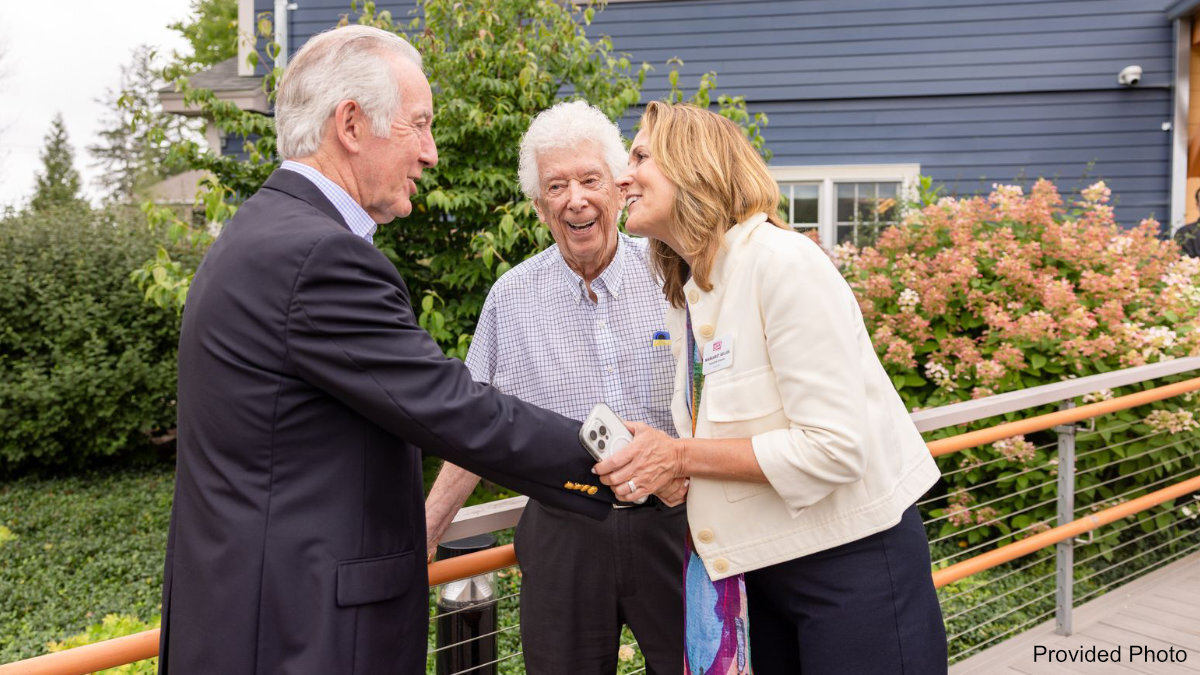
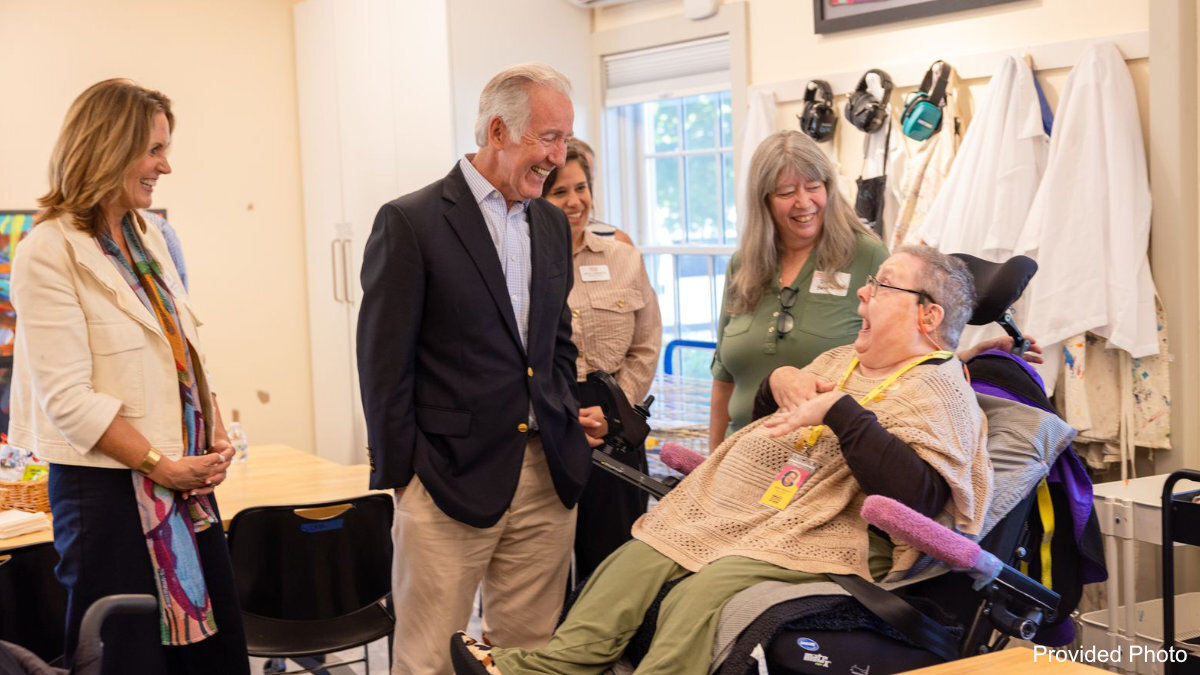
Congressman Neal Visits CATA, Meets Artists
 |
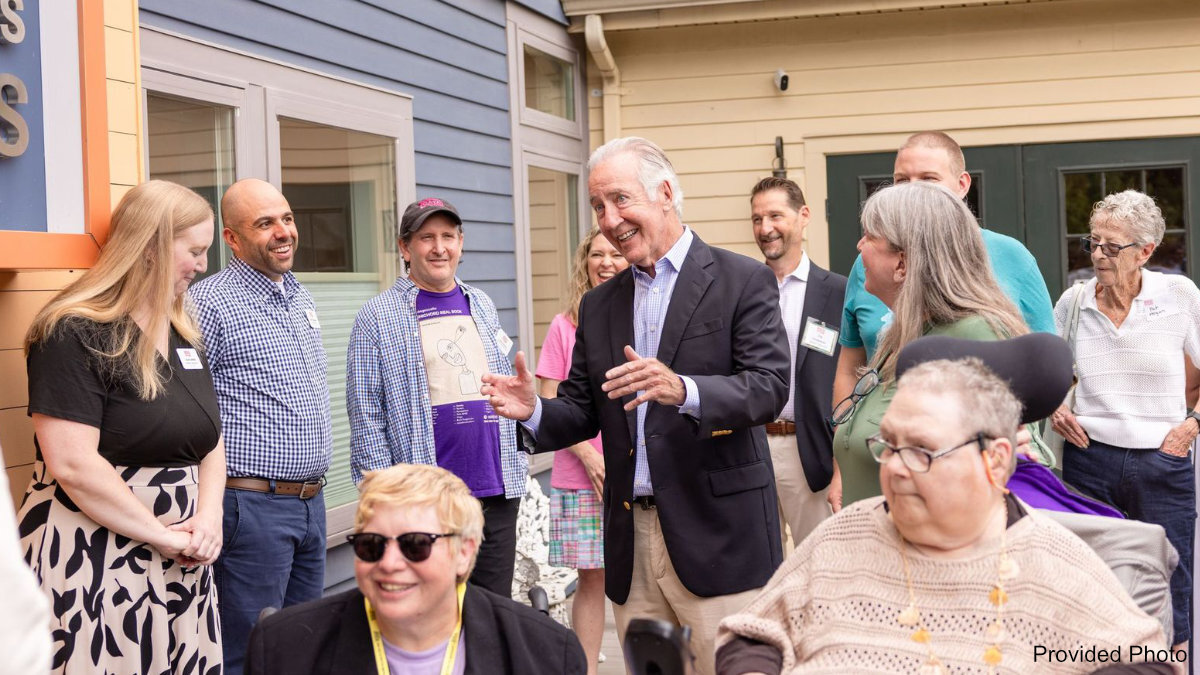
| Congressman Richard Neal listens to CATA artists' perspectives | photo by Marina Dominguez |
GREAT BARRINGTON, Mass. — On Thursday, Aug 6, U.S. Rep. Richard Neal visited Community Access in the Arts (CATA) to learn how the organization is creating critical opportunities for 1,300 children, teens, and adults with disabilities across Berkshire County to build skills, develop their talents, and strengthen their well-being.
During his visit, Congressman Neal met with CATA artists and their families, including artists with disabilities from many of CATA's 65 program partners including Berkshire County Arc Center for Development and Nu-Opps Brain Injury Program, UCP of Western Massachusetts, Blue Q, and Monument Mountain High School.
"CATA is deeply grateful to Congressman Neal for spending time with our artists and families to hear what makes CATA programs so meaningful in their lives," said Margaret Keller, CATA Executive Director. "We see every day at CATA how the arts are a powerful tool for personal growth. When people have the opportunity to create and express who they are, they discover new abilities, strengthen relationships with friends and family, and develop a strong sense of confidence and belonging. Our artists tell us that CATA is a place where they feel valued and celebrated for who they are and all they have to offer. We were grateful for the opportunity to share that impact with Congressman Neal."
He also spoke with CATA Executive Director Margaret Keller and members of CATA's Board of Directors about the organization's community-based approach to inclusive arts programs.
CATA provides over 3,000 arts workshops each year for people with developmental and intellectual disabilities, autism, and brain injuries, creating transformative opportunities for people with disabilities to create, connect, and build skills.
For the artists and families who met with Congressman Neal, CATA's impact goes beyond the arts:
"When we first moved to North Adams from New Jersey, we didn't know if we would have a community here," said Carlos Caicedo, whose daughter Sandra participates in CATA painting and dance workshops. "We have been so welcomed at CATA and found our place in the Berkshires. CATA doesn't make people fit their programs. They design their programs to fit each person."
For Nikki Lee, who participates in CATA programs through Berkshire County Arc's Nu-Opps Brain Injury Program, painting at CATA has helped reclaim an important part of herself after a life-altering injury.
"I broke my neck and was paralyzed from the neck down," Lee said. I used to paint and play guitar. After I got injured, I couldn't write my name. Thank goodness for CATA. Painting is making me feel whole again."
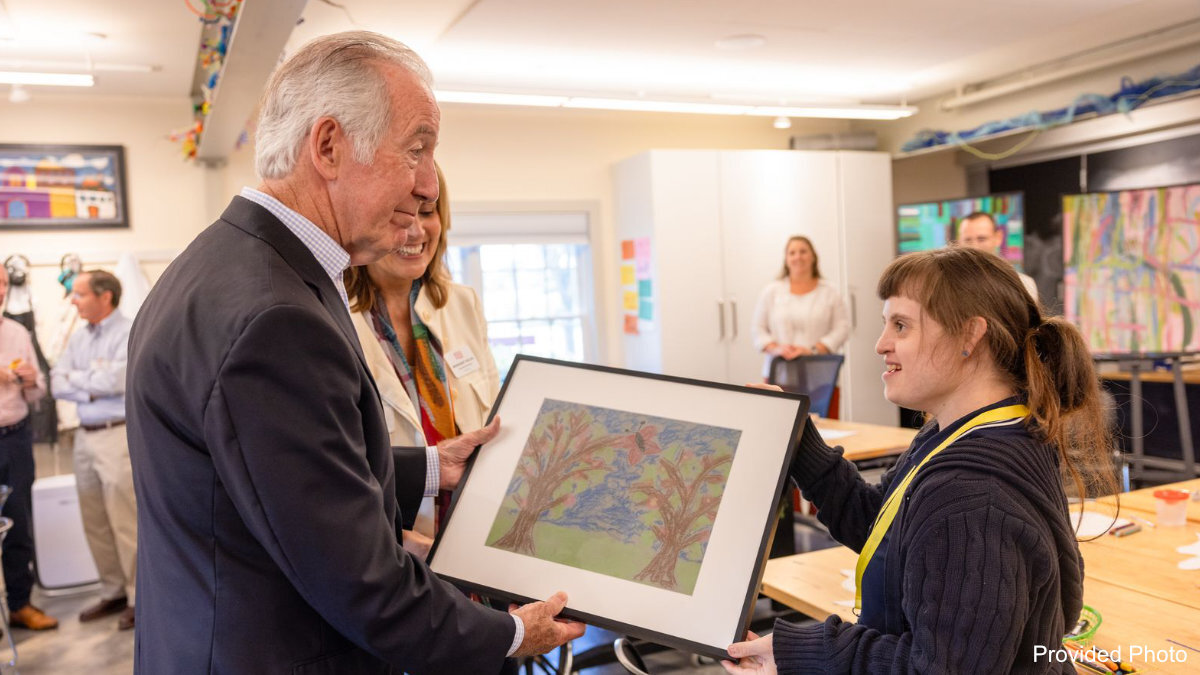
"CATA is family," said Katherine Butler, who lives in Adams and participates in CATA dance and painting programs through UCP of Western Massachusetts. During his visit, Katherine presented Congressman Neal with an original framed painting she created depicting a landscape with flowering trees and a butterfly.
"I could not think of a better way to spend my morning than with the people who call CATA their second home," said Congressman Neal. "The opportunities that CATA provides to people with disabilities every day are truly remarkable, and because of them, individuals can express themselves and showcase their full potential. It was a privilege to meet with CATA artists and their families to not only hear their stories, but to witness their incredible talents."
The visit also included a discussion about the impact of Medicaid cuts on people with disabilities, their families, and the local organizations that support them. The One Big Beautiful Bill Act, signed into law in 2025, includes provisions that the Congressional Budget Office estimates will reduce federal Medicaid spending by nearly $1 trillion over 10 years.
"Organizations like CATA are a reminder of why we must defend Medicaid," said Congressman Neal. "The $1 trillion in Medicaid cuts set to take effect next year pose a significant challenge to the financial stability of organizations like CATA and the families they serve. If you were to ask every parent in that room what their number one priority is, I can guarantee they would all say the same thing: 'caring for my child.' That is why I look forward to continuing to work with CATA to ensure they can continue their programs for decades to come."
CATA works closely with families, schools, disability agencies, and caregivers to design programs that meet the needs and interests of each participant. Through the arts, CATA artists develop skills that support their well-being and participation in everyday life—from communicating and collaborating with others to working toward goals and taking on new challenges.
"We are grateful for Congressman Neal's advocacy for people with disabilities and for taking seriously the concerns we shared about Medicaid and other cuts that impact our program partners and the people we serve," said Margaret Keller. "For many people with disabilities and their families, Medicaid is the foundation that makes it possible to access the services, supports, and opportunities they need to live full and connected lives. We hope that by sharing what we see every day at CATA—the creativity, confidence, relationships, and joy that flourish when people have opportunities to participate—we can help ensure that our community's needs remain at the center of these important policy decisions."
That impact extends throughout the community. CATA partners with 65 disability agencies, public schools, residences, and day habilitation programs to bring inclusive arts programs to people across Berkshire County. Through partnerships with eight Berkshire County school districts, CATA currently reaches 650 students with disabilities each week in more than 25 schools. Teachers participating in CATA's school programs report significant growth in students' confidence, communication, connection with others, and belief in their ability to succeed.
Tags: CATA, Neal,