This Labor Day, Take Another Look at the Older Worker Behind the Counter
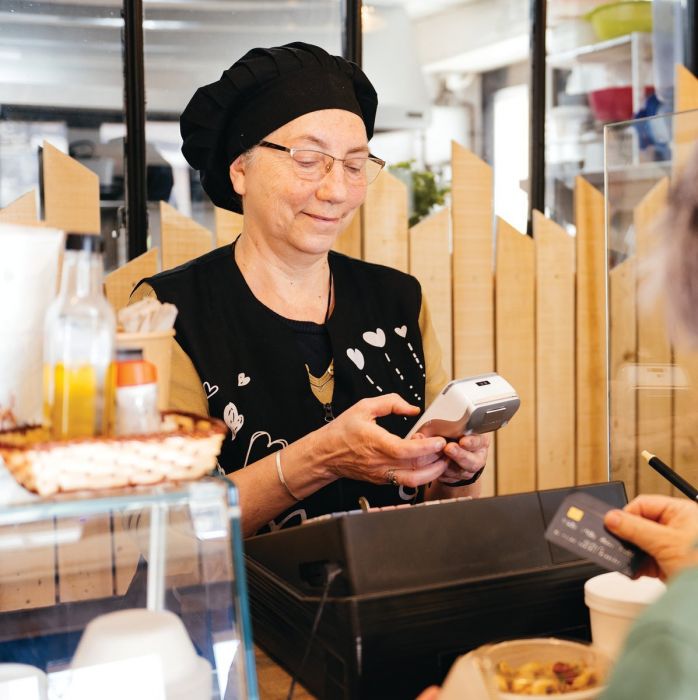
Photo credit: Getty Images via Shutterstock.
About one in five Americans older than 65 are working or looking for work, according to the Bureau of Labor Statistics.
Several months ago, I was at Macy's picking up coats for BCAC's Elf Children's Warm Clothing Program. An older woman was cashing me out and struggling with the computerized register. Her supervisor was becoming visibly frustrated. The line behind me was growing, and I could sense people becoming impatient.
The woman knew everyone was waiting. You could see her trying harder as she became more flustered, and the more flustered she became, the harder it seemed to make the technology cooperate.
I remember thinking, please, just give her a minute.
Then I began wondering about her. Why was she standing behind that register at her age? Maybe she was there because, like me, she still needed to feel useful, to contribute, and to know she had something worthwhile to offer. But maybe she was there for a much simpler reason. Maybe she needed that paycheck to make it through the month.
We will never know.
You see older workers everywhere now. They are behind cash registers, stocking shelves, greeting customers, serving food, and working jobs that require them to learn technology that did not exist for most of their working lives.
For many older Americans, Social Security simply is not enough to comfortably cover housing, food, utilities, transportation, medications, insurance, and expenses that do not disappear at retirement age. There may be no pension. Savings may have been consumed by illness, the loss of a spouse, rising costs, or helping children and grandchildren through difficult times.
So they keep working.
And imagine how much the workplace has changed around them. Cash registers are computers.
Schedules arrive through apps. Training is online. Customers pay with phones and watches. Passwords change. Software updates.
Think about what it takes for someone in their seventies to walk into that world, put on a name tag, learn an unfamiliar system, stand for hours, deal with the public, and keep trying even when someone behind them is growing impatient.
That is not failure. That is courage.
We see someone struggling with a screen, but we do not see the lifetime behind the person. We do not know if she raised children while working, cared for aging parents, lost a spouse, or helped grandchildren when they needed her. We do not know whether that paycheck buys groceries, pays for prescriptions, or makes it possible to stay in her home.
The younger supervisor may be under pressure too. This is not about blaming one generation or another. It is about giving each other a little grace.
I still think about that woman at Macy's, not because she struggled with the register, but because of how hard she was trying. I could see that she knew people were waiting, and I could imagine how vulnerable it must have felt to struggle in front of strangers while someone nearby grew frustrated.
In that moment, I did not see someone who was too old to understand the technology. I saw someone doing her best to learn, to adapt, and to continue contributing in a world that had changed dramatically during her lifetime. She did not need our impatience. She needed a little understanding and the dignity of being given the time to do her job.
This Labor Day, let us remember the older workers among us. The next time an older cashier struggles with a screen or takes a little longer, look at the person instead of the clock.
Behind that name tag is a lifetime of work, sacrifice, responsibility, and experience. And here they are, still showing up. Still learning. Still trying. They deserve more than our patience. They deserve our respect. And perhaps, most of all, they deserve our kindness.
Deborah Leonczyk is executive director Berkshire Community Action Council.
Tags: BCAC,