Andrea James Runs 'Grassroots' Gubernatorial Campaign
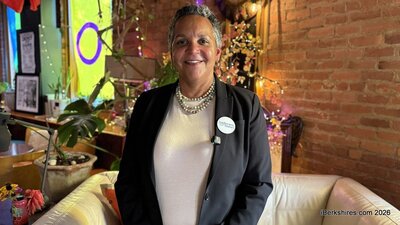 |
| Andrea James has been an advocate for criminal justice reform, housing, climate and universal healthcare. |
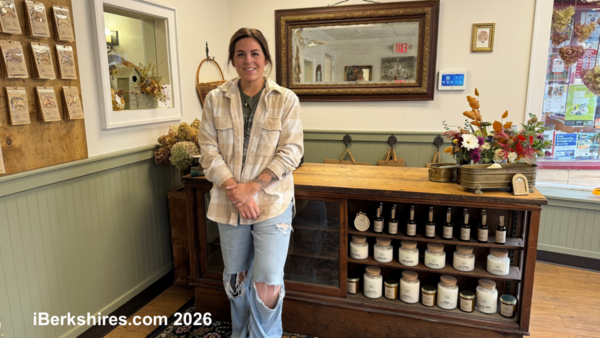
PITTSFIELD, Mass. — Independent gubernatorial candidate Andrea James said voters need to rise up and challenge the status quo to create meaningful progress for the working class rather than corporate capitalists.
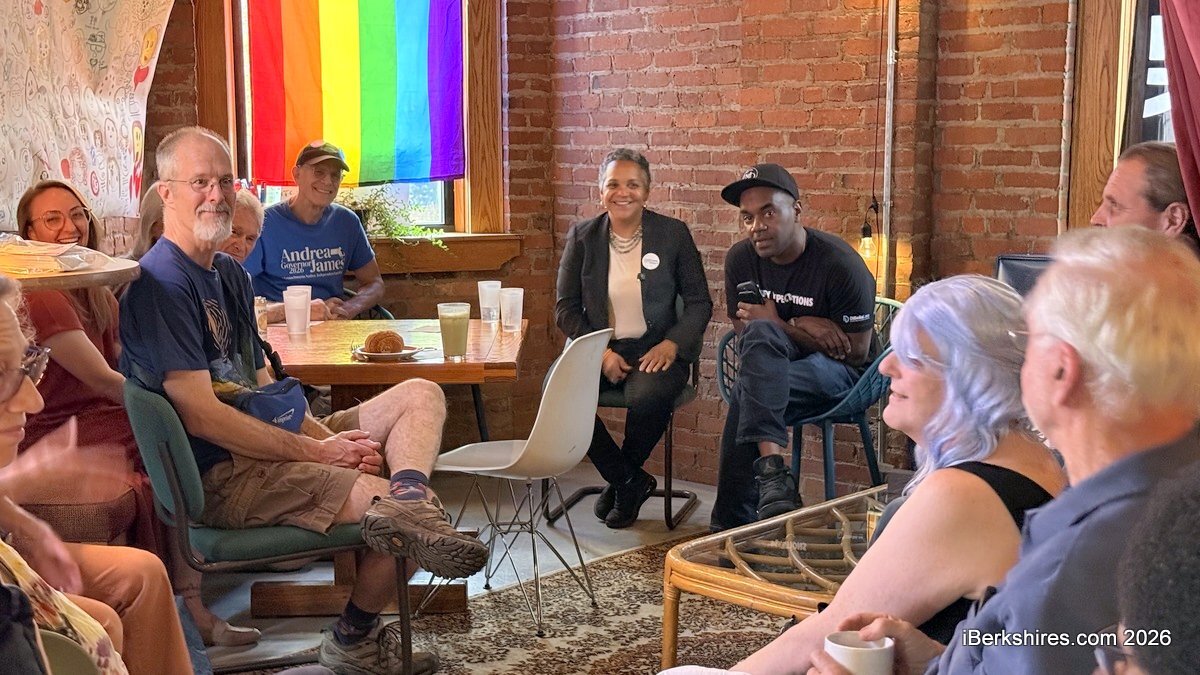
There is one thing more powerful than money and that is the people, James told a group of attendees at Wander on Friday.
James is a lifelong Massachusetts resident who has spent more than 15 years regularly advocating at the State House for action on issues including criminal justice reform, housing, climate and universal healthcare.
She is the founder and executive director of Families for Justice as Healing and the National Council for Incarcerated and Formerly Incarcerated Women and Girls, work that takes her into communities across the state.
James and a small volunteer team collected 13,311 signatures across Massachusetts — surpassing the 10,000 required to secure her place on the November ballot.
During the meet-and-greet ahead of the city's First Friday event, attendees highlighted struggles that they are facing in the community and passionately spoke about issues they all find important from housing and poverty, public safety, healthcare access, voter disengagement, and systemic racism and economic inequality.
"I wanted to be the issue candidate. I wanted to make a promise that if we get this seat, this is what we are going to get across the line …These are the most dire things that need to be addressed. Not for us, for everybody else in the country," James said.
James described the challenges facing communities as a reflection of systemic flaws in the state's legislative and governing structure.
In a follow-up with iBerkshires, pointed to a bottlenecked lawmaking process where bills can die in committee, underinvestment in housing, childcare, schools and public-safety reform, and an administration she views as disconnected from the needs of working-class residents.
James said she is working to build an infrastructure that "lifts from the bottom and closes the gaps" between those struggling and those who are financially secure.
Massachusetts is one of the wealthiest states in the country, she said. There is no reason investments can't be made to help those who cannot afford the basics, such as rent and childcare.
Her campaign website outlines more than a dozen issues that form the foundation of her platform, including housing affordability, universal healthcare and childcare, education, immigration protections, lower utility costs, labor rights, LGBTQ-plus protections, climate and clean energy initiatives, and opposition to the construction of a new women's prison.
During the gathering, James pointed to firefighters, nurses and other working-class residents who are struggling to afford rent, purchase homes, feed their families and access quality education for their children, arguing that these conditions do not have to be the reality for Massachusetts families.
"Those of us who are privileged enough, privileged enough to live the lives that we live. Shame on us! Shame on us," she said.
"It's a four-year term. Vote me out if it doesn't work. It's four years. Let's try something different, and it is not going to bring the state to its knees. It's not going to bankrupt us.
"It is going to create an investment in the systems that are going to radically, radically transform this state for the better. And so that's why I'm running."
James also shared the varied life experiences that have shaped her work and candidacy.
Raised in Roxbury in a family of educators and activists, she spoke about her family's history of breaking racial barriers, as well as her own experience becoming a teenage mother and facing poverty and food insecurity before completing college and attending law school.
James went on to become a criminal defense and real estate attorney before being convicted of wire fraud and sentenced to two years in federal prison in Danbury, Conn. She has described the offense as a serious mistake for which she took responsibility, while also raising concerns about how she was prosecuted.
In the years since, James has become a prominent criminal justice advocate, participating in policy change with the Obama and Biden administrations and pushing for reforms centered on incarcerated and formerly incarcerated people.
James and the crowd expressed concerns about the work of the current gubernatorial administration, which, she says, advances the corporate agenda rather than a humanitarian one by prioritizing wealthy donors, corporations, and tax breaks.
She initially entered the gubernatorial race as a Democrat but later withdrew her papers to run a grassroots campaign as an independent.
Her decision followed a state Democratic convention where party leaders, "in the dark of the night," stripped the party platform of progress advocates had made on issues including universal health care and a proposed moratorium on new prison and jail construction.
James criticized the party for abandoning those priorities while the Maura Healey administration increasingly focused on positioning Massachusetts against President Donald Trump's administration.
"We have to take it. We've got to either stand up and the power of the people speaks," James said.
"Or we get another four years that will be even more challenging for everyday people who are already in a significant state of struggle, because that's just going to open the doors for [Healey] to continue doing nothing."
James said her campaign is powered by small, individual donations rather than corporate interests or wealthy donors, noting that her campaign has never had $100,000 in its coffers.
While James acknowledged the campaign needs financial support to remain effective through the November election, she said part of the campaign's broader mission is to dispel the idea that a candidate needs $10 million to win a statewide race.
For James, the campaign's reliance on grassroots donations is part of the message itself — an effort to demonstrate that political viability does not have to depend on access to wealthy donors or multimillion-dollar campaign coffers.
Tags: election 2026, governor,