Williamstown Board Won't Support Wetlands Bylaw
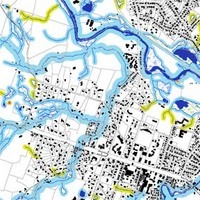 |
| A portion of Williamstown showing DEP protected areas in light blue and bylaw areas in yellow. |
The Conservation Commission has been working on the Municipal Wetlands Bylaw for more than year; an attempt to place it before voters last year was abandoned after the Selectmen and others sharply criticized its formulation and language as well as the need for more buffer zones on private properties.
The Selectmen raised some of the same issues they had last year, saying it would have adverse effects on future town development and citing the moribund state of current town growth.
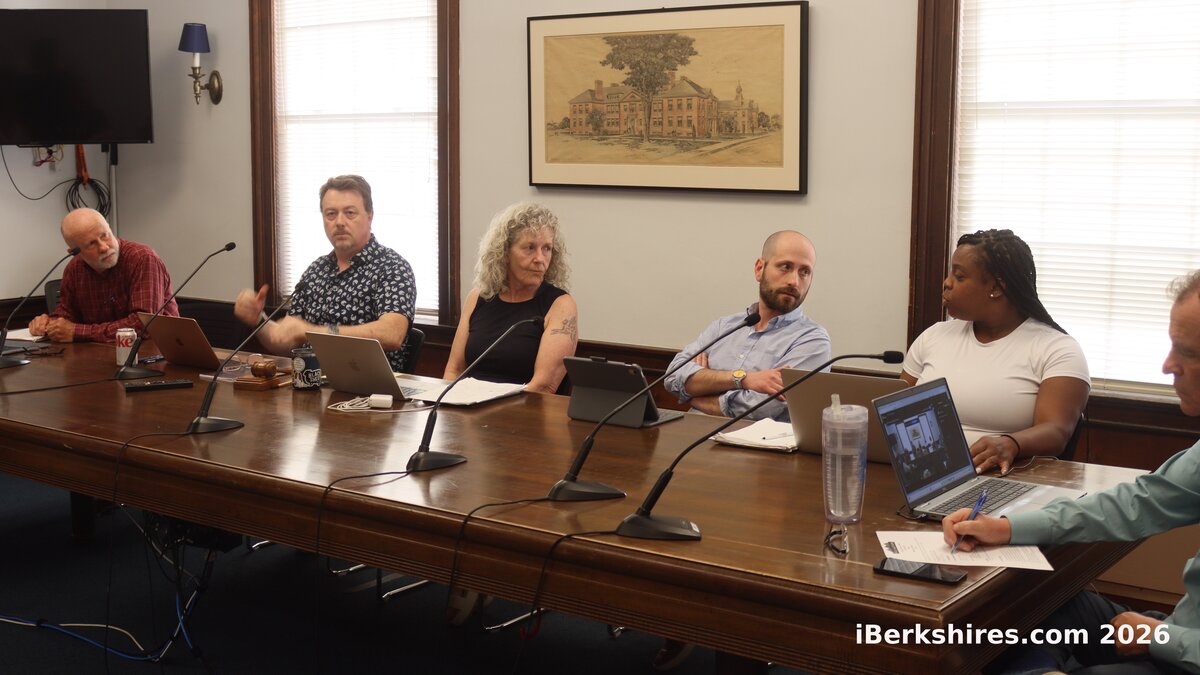
The wetlands question, and its accompanying fine structure, were the only ones on the 29-article warrant that the board will not recommend. Also before the board were $60,000 for the Sheep Hill barn restoration (passed 3-0), the Cole Avenue affordable housing project (passed 5-0), and the Open Space Redevelopment Bylaw (passed 4-1). All of the articles will now go before town meeting on May 20 for approval.
Bylaw All Wet
Selectman Ronald Turbin, the sole supporter of the wetlands bylaw, said the criticisms that the law was antidevelopment were not correct.
"Members of the Conservation Committee believe this will not preclude the building of one house ... but will take measures to provide wetlands are protected," he said, adding for proof that no building proposal had ever been denied in Williamstown.
Turbin went on to say the bylaw had become the "scapegoat" for Williamstown's affordability problems and "the way to address [affordable housing] is not ... to vote down the bylaw."
Selectmen Jane Allen and Thomas Costley disagreed, citing a 2005 Massachusetts Institute of Technology study that examined municipalities that passed wetlands protection beyond the state's already high standards. Costley said many "of these communities were wealthy communities looking to curtail development."
Chairman David Rempell seemed the most conflicted of the selectmen, admitting that "I've been all over the place in my thinking." His final worries, however, won out: "I'm concerned about the perception that Williamstown values open space more than people coming into the community."
In the end the debate came down to this dilemma, with each member acknowledging environmental needs, but fearing a continued loss of residents and housing. Though as Rempell said, "we can't say what the impact will be 10 years from now," the prevailing opinion was such an impact would be adverse.
Costley closed the argument, saying, "For my money, we at least have enough in protection, [but] where are we in development? Anemic, one-half of one percent. We've had a long history of environmental policy, but ... we need to change our direction and put people first."
Barns and Open Space
Leslie Reed-Evans of the Williamstown Rural Lands Foundation opened the discussion on the Sheep Hill restoration project by outlining how the $60,000 would be spent "to do structural repairs ... mostly because the barns need new roofs." She then noted that "the public can come and use the barns. We really hope they'll be a community treasure."
The nonprofit organization, which is dedicated to preserving open space, is based at Sheep Hill on Route 7. The foundation offers a variety of workshops, hikes and other outdoors activities for area residents. The money for the barn work would come out of the town's Community Preservation Act Fund.
The discussion, however, seemed notable less for its outcome than the peculiarity of its proceedings, with first Costley and then Richard Steege abstaining from the deliberations.
Costley cited donations his business Overland had made to the Rural Lands Foundation, though it was he, in a previous meeting, who raised serious doubts about so much money going to a "well-off [private] organization" and to a barn. He did not say whether he would have voted for the restorations had conflicting interests not arose.
For those supporting the project, the community access and historical preservation seemed key: "In a way, it's acting as a museum," said Turbin.
Allen sounded the one dissenting voice to the Open Space Residential Bylaw, a building ordinance meant to encourage open space preservation and affordable, multifamily housing, wondering whether "these things can be accomplished in other ways?"
Rempell said there would be benefits.
"We've got a problem - lots of 10-acre plots and 5,000-square-foot homes. This gives the option of encouraging people ... to have some very attractive town homes and condominium, so other families have access to living in our community."
Because of its zoning status, OSRD will require a two-thirds majority vote at town meeting to pass.
Town meeting will be held Tuesday, May 20, at 7 p.m. at Williamstown Elementary School.
Walden Street Parking; Spring Street Construction
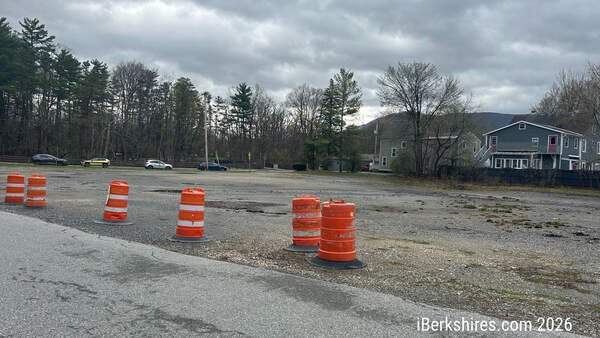
In other business, the Selectmen voted to alleviate a parking shortage created by the Spring Street lot construction. They moved to add two-hour parking spaces on Walden Street and make that street one-way.
Some Spring Street merchants, including Paul Lovegreen of Tunnel City Coffee and Michele and Ken Gietz of "Where'd You Get That?" advocated a one-hour time-limit, citing enforcement troubles. Lovegreen said, "two hours turns into three and four, and one turns into two and three."
The merchants has previously met with Police Chief Kyle Johnson and, in his words, "asked for two things: more aggressive enforcement" and more than one ticket per offender. Johnson said that with only two patrols in town at any given time, the former would be hard to accomplish.
In the end, the merchants voiced their support for the Walden solution and the 25 additional parking spaces to be added to the Spring Street lot, which will be under construction for approximately 40 days.