Schapiro Leaving Williams for Northwestern
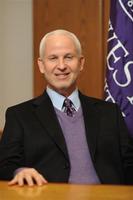 |
The president of Williams College has been tapped to lead Northwestern University in Evanston, Ill., and its 18,000 students. He will take Northwestern's helm effective Sept. 1, 2009.
"The timing was right," said Schapiro on Tuesday. The 55-year-old president had expected to stay at Williams for another year or so when he was approached by Northwestern.
He wasn't sure about relocating, he said, but after a visit was impressed with the university's undergraduate program, its "spectacular" Ph.D. program in economics and its Midwest location near the nation's third-largest city, Chicago. Not to mention Chicago's new prominence on the national scene, in part because of President-elect Barack Obama.
When he was offered the job three days ago, Schapiro was ready to pull up stakes and head west.
"This is a whole new learning experience, a whole new world out there," he said. "I'm curious to see what's out there."
He was the unanimous choice of a search committee of Northwestern trustees, faculty, students, staff and alumni to replace retiring President Henry S. Bienen, who headed the university for 14 years.
The Williams community was informed by e-mail today; Schapiro will finish out the school year, ending his presidency on July 1.
"Twenty of my 30 years in academe have been spent at Williams and I've loved virtually every minute," he wrote in the e-mail. "The past nine as president have been the greatest honor and privilege of my professional life. But with the completion of our comprehensive campaign this month and my strong feeling that institutions need new leadership every decade or so, I think the timing is right."
 Northwestern University
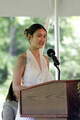
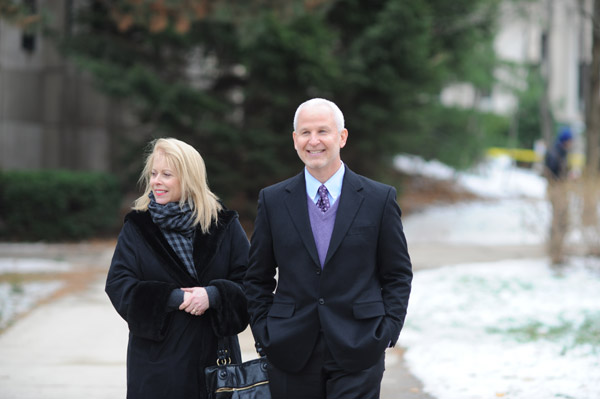
Morton Schapiro and his wife, Mimi, on a recent visit to Northwestern University |
During his tenure, the college embarked on several major building projects, including the '62 Center for Theatre and Dance and the North and South academic buildings; completed a more than $400 million fundraising campaign; increased the number of minority students; and increased the college's affordability for students for whom Williams might once have been out of reach.
Schapiro also expanded its efforts in the community, including the Williams Center tutoring at Mount Greylock Regional High School, the partnership with Massachusetts Museum of Contemporary Art and the Yale University Art Gallery on the Sol LeWitt installation at MoCA, the establishment a 20-year endowed fund for building renewal at Williamstown Elementary School and a drive to reduce the college's greenhouse gas emissions.
"These accomplishments have been made possible by the passion, energy, and brilliance Morty has brought to the presidency," Greg Avis, chairman of the Executive Committee of the Williams board of trustees said in an accompanying letter. "By any measure, Williams is better positioned today because of initiatives he has expertly led."
Avis said the trustees held a special meeting by telephone on Monday night authorizing the formation of a committee to search for Schapiro's replacement. "I have been selected as chair, a responsibility I accept with humility and care commensurate with the importance of the task."
Like Williams, Northwestern is a private institution and its Wildcats share the Ephs' passion for the color purple. Founded in 1851, the research university includes 11 schools and colleges ranging from medicine to music on two Illinois campuses and a third in Qatar. It has some 2,500 faculty members and awards bachelor's, master's and doctorate degrees.
"One thing I love about Northwestern is that they put a lot of focus on their undergraduates. They provide a really good undergraduate education," said Schapiro. "I hope to make it even better."
Schapiro said it will be different going from a small liberal arts college in a rural community to the sprawling, urban university, but it won't be wrenching. After all, 18,000 students isn't much after spending years in the administration of the University of Southern California, which has an enrollment of 30,000.
His experience in both settings will inform the way he steers Northwestern in the future. And, as he did in Williamstown, he plans to get to know the community and the students, and "to listen to people, focus on priorities ... and be humble," he laughed.
As for his accomplishments at Williams, he said evaluating those are best left to historians. "I'm not an historian, I'm an economist."
"The search committee received numerous excellent nominations for the position, but President Schapiro was the unanimous choice of the search committee," said Northern Trust Corp. Chairman William Osborn, a Northwestern graduate, trustee and chairman of its search committee. "His grasp of the issues facing higher education, the complexities of a research university, his impressive record of academic achievement and leadership, and his instant rapport with all the members of the committee made it clear that he was a perfect fit for Northwestern."
Schapiro is among the nation's premier authorities on the economics of higher education, with particular expertise in the area of college financing and affordability and on trends in educational costs and student aid. He has been widely quoted in the national media and testified before U.S. Senate and House committees on economic and educational issues.
In addition to frequently attending the college's many cultural and athletic events, he has continued to teach introductory microeconomics, a tutorial on the economics of higher education, and two interdisciplinary seminars, one on the economics and philosophy of higher education and the other on disease, culture, and society.
While president, he has co-edited, with his longtime scholarly colleague Michael McPherson, two books, "College Access: Opportunity or Privilege" (College Board 2006) and "College Success: What It Means and How to Make It Happen" (College Board 2008), and written numerous articles.
He was a member of the Williams faculty from 1980 to 1991 until moving to USC, where he was chairman of its department of economics until 1994 and then dean of the College of Letters, Arts and Sciences until 2000.
He received his bachelor's degree from Hofstra University and doctorate in economics from the University of Pennsylvania. He has been awarded honorary degrees by Hebrew Union, Williams and Amherst colleges and Hofstra and Wesleyan universities.
While he'll miss Williams, Schapiro is looking forward to living in the Midwest after decades residing on the country's coasts. That, he said, was the biggest change his family is dealing with, including 9-year-old daughter Rachel.
"She didn't want to leave her friends," he said, so he tried the Obama ploy. "I told her I'd get her a puppy. ... She said, all right."