image description

BCC Gallery Opens with Exhibition by Grier Horner

By Peter DudekSpecial to iBerkshires
Print Story | Email Story


'And She Was All of Solid Fire'

Grier Horner:
Dresden Firebombing

Berkshire Community College Gallery
Director, Lisa Yetz
Intermodal Transportation Center
1 Columbus Ave., Pittsfield

Through April 17, 2009

Fridays and Saturdays, 1-4 p.m.
PITTSFIELD, Mass.  
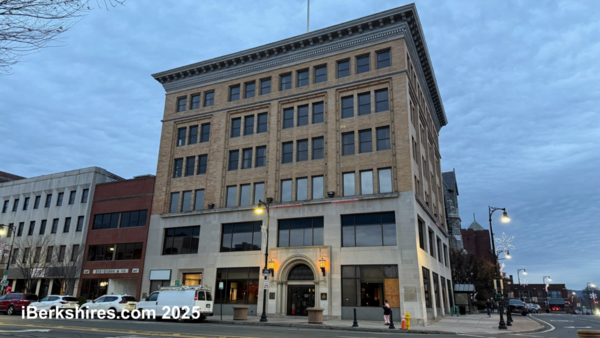
Berkshire Community College has opened a new exhibition space in the building that houses the Intermodal Transportation Center in downtown Pittsfield.

This now brings the number of year-round gallery/exhibition spaces in the city to six, along with the Berkshire Museum, Ferrin Gallery, Zeitgeist, Lichtenstein Center and the Storefront Artist Project, the most of any town in Berkshire County.

For Pittsfield, this is an unprecedented achievement and emphasizes the ongoing role that the creative economy is playing in the revitalization of its downtown. 

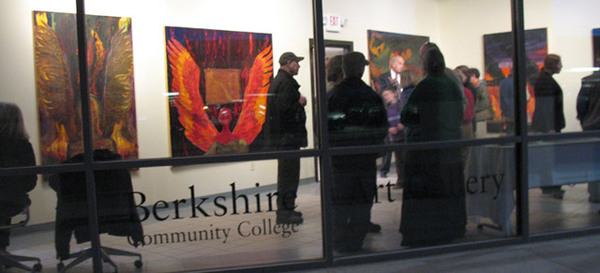
BCC opened the storefront space with an exhibition of large paintings by Berkshire artist Grier Horner. The shape of the gallery echoes the wedgelike form of the transportation building and has large floor-to-ceiling windows making the exhibit visible 24/7 from the outside.

Working with an initial one-year lease Director Lisa Yetz, an artist and faculty member, plans to use this prominent location to present the artwork of professional artists, alumni and students. It is currently open on Fridays and Saturdays from 1 to 4; more days and longer hours will be added in the coming months.


Photos by Peter Dudek 
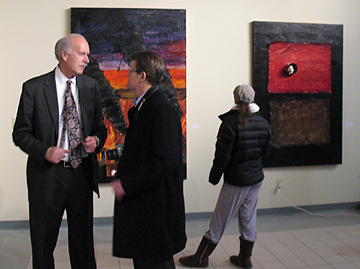
Grier Horner in front of one of his works at the BCC Gallery.
The title of Horner's exhibition is "Dresden Firebombing." The six paintings on view were all made in 2006 and are part of an ongoing narrative cycle based on the horrific fire bombing of Dresden, Germany, during World War II. These large stretched canvases tower over the viewer. The dominant colors are red and black, and the paint is often thickly applied by palette knife or loosely dripped onto the surface, creating a waxy and disfigured skein. 

Although the imagery in these paintings can be simultaneously intense and ambiguous, with multiple evocations of fire, angels, birds and planes, the titles like "Angel of Incineration" and "She Was All of Solid Fire" pull the works back into its narrative focus, a dark and gruesome one at that. Frayed skin, disfigurement and a general sense of terror and confusion are evoked. That said, at times these paintings can be rather attractive to look at. It is this attraction/repulsion paradox that keeps the viewer's vision in play.

Horner, retired associate editor of The Berkshire Eagle, has been painting for many years and has created a substantial body of work based on a wide range of subject matter, from "The Scarlet Letter" to portraits to surreal landscapes, but perhaps none of his previous work can match the driven fervor of his "Dresden Firebombing" series.

More information about Horner’s work is available at grierhorner.com or his blog.

The BCC Gallery will likely be joining the co-operative efforts of Pittsfield Contemporary, a Web site and promotional effort formed three years ago by the above-mentioned exhibition spaces in order to draw attention to the ever-increasing presence of contemporary visual art in downtown Pittsfield.

Pittsfield has traditionally (with BCC playing a major role) drawn local artists to study and make art, but never before has it had this year-round mix of street-level commercial and noncommercial gallery activity that is now present. And with BCC having added its gallery to this burgeoning cluster of exhibition spaces, there are more opportunities than ever for artists to exhibit and sell their work in the city's downtown.


Left, Lisa Yetz, artist and director of the gallery, talks with fellow BCC instructor Kieth Shaw, an art historian. Above, BCC President Paul Raverta, left,  mingles at the exhibit.
If you would like to contribute information on this article, contact us at info@iberkshires.com.

PCTV Turns 40, Anniversary Celebration This Friday

By Breanna SteeleiBekshires Staff

PITTSFIELD, Mass. — Pittsfield Community Television is turning 40 this week, and it's celebrating with its viewers and listeners.

This Friday, Sept. 18, PCTV will celebrate at the Berkshire Hills Country Club. Ryan Peterson, WTEN News10 ABC anchor and Pittsfield High School graduate, will give the keynote address. 

Executive Director Shawn Serre, who has been with the station for over 32 years, said it's their chance to celebrate all they have been able to bring to the community.

"It's a chance to reflect on everything that the organization has done over those years, all the people that have been involved. From board members to volunteers to producers to crew people to staff members, and all the different programs that we've produced," he said. "Everything from public programming to education, sports, graduations, parades, government meetings and forums, and election night coverage, and all kinds of other things that just year upon year of history that we've been able to create and document here for the Pittsfield community over those years." 

Serre took over as executive director about nine years ago. Originally a volunteer fresh out of college.

The original board included former mayor Edward Reilly, Dan Dillon, Diane Morgenstern, Bernard Avalle, and John Fukes of the Berkshire Athenaeum. The operation was all-volunteer until PCTV hired the first executive director in January 1989.

PCTV has operated out of its station on Federico Drive since 1999. But originally they worked out of a basement. 

"The first location that we ever had, we had all of our equipment stored in cardboard boxes in the basement of the Berkshire Athenaeum, because the Berkshire Athenaeum at the time was very gracious and allowed us to have some space while we sort of got our feet on the ground and sort of got things organized," he said. "But we had no location. We had no studio. We just had this equipment that was ordered with the money that we had from the original cable franchise grant."

"So that lasted a couple of years, and then we signed and got a lease over in our first studio location, which was over on Fourth Street in Pittsfield," Serre continued. "That was around the time that I first got involved, just before we moved to Fourth Street. So I was there in the basement of the library, opening those boxes up and seeing what we had for equipment. So we stayed there at Fourth Street for about 10 years, and then this building that we're currently in now, over on Federico Drive, was constructed in 1998. It was built kind of custom-made for the cable company and for us and for one other company." 

Serre said one of their proudest moments was saving the radio station WTBR-FM back in 2018. PCTV made space for them so they could continue operation.

"We carved out some space here in our facility for that, and we've been operating that radio station ever since. So those are some of the big milestones of growth of the organization over the years, and the things that we've done," he said.

They have also invested in advanced technology to keep their programming accessible to all.

"Technologically, there's another whole series of things that we've gone through," he said. "We've started out with a single cable TV channel. We grew to three cable TV channels. We started out as standard definition on videotape, and we grew to digital, and then to high definition, and then everything went to the internet. So we're able to offer video on demand and live streams and video on social media. And then with the radio station, we also have a live stream there and podcasting. So we've seen a lot of technological change and tried to roll with that over the years."

Serre said that PCTV strives to keep people informed while also allowing space for people to create their own media.

"The whole idea behind PEG [Public Education and Government Access]...the whole idea behind that back in the 70s and 80s was that people could be left behind with the technology that's available to the big corporations," he said. "So, if you had a cable system at the time, ordinary people maybe they had camcorders at home, but they didn't have access to a TV studio; they didn't have access to the kind of technology that we had to allow them to create programs and share it with the community. So we filled that gap, and that was one of the main things that we did. And then also to be able to create programming for viewers and for the city, so that the municipal meetings can be shown, and so school committee meetings can be shown, and it really brings people in and involved."

View Full Story

More Pittsfield Stories