State Working to Become 'Model Employer' for Disabled
$2.5 million will fund regional employment collaboratives Eugena Ossi/Governor's Office
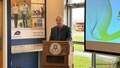
Gov. Deval Patrick announces the state's 'Strategic Plan to Make Massachusetts a Model Employer for People with Disabilities.' |
Based on a framework laid out by the federal Equal Opportunity and Employment Commission, the plan sets out a road map for improving the recruitment and retention of state workers with disabilities, including workers who age into disability.
Focused on the 45,000-person work force in the executive branch, the plan provides an implementation strategy for the disability portion of the governor's executive order on diversity and affirmative action issued two years ago.
"As someone who oversaw the implementation of the Americans with Disabilities Act at the federal level, I know how challenging it has been to realize the promise of anti-discrimination in employment of people with disabilities," said Patrick. "With this plan, our state government – and my office – will move Massachusetts one step forward in achieving that goal."
Patrick also announced that the commonwealth, in collaboration with the University of Massachusetts Medical School, will make available $2.5 million in Centers for Medicare and Medicaid funding for five regional employment collaboratives intended to support more private sector employment of people with disabilities. The regional collaboratives will allow the state to work with private industry to become model employers as well.
"Addressing the economic security of people with disabilities is an important part of our Community First Olmstead Plan," said Health and Human Services Secretary Dr. JudyAnn Bigby. "These initiatives hold out real hope for changing opportunities even in a difficult fiscal time."
Under development for a year, the plan envisions changes in the practices of the state's Human Resource Division regarding the outreach, recruitment, hiring, retention and promotion of people with disabilities. It also puts in place a centralized process and fund for supporting reasonable accommodations people may need.
A number of innovations are already under way, including a new internship program this summer focused on youth with disabilities. Eighteen college and high school students have been placed in state agencies, including the governor's office, and will be receiving training and support to assure their success. Additionally, focus groups with employees with disabilities across the commonwealth are informing the new outreach and other practice changes.
Community-based groups have been endorsing a Model Employer strategy for some time. "We look forward to supporting the state in making this a successful initiative," said Bill Henning, director of the Boston Center for Independent Living.
The announcement comes during the 10th anniversary week of the Supreme Court’s decision assuring the right of people with disabilities to live in the community.