Lanesborough Receives Complaints Over ZBA Meeting
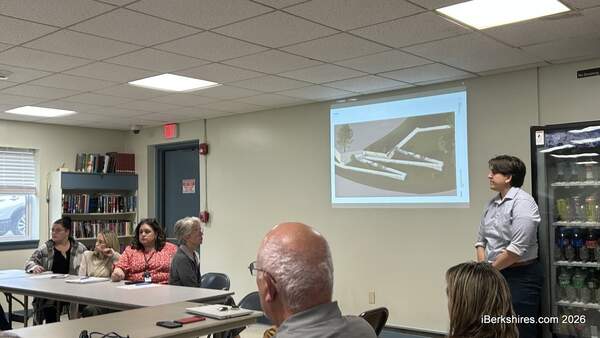
LANESBOROUGH, Mass. — An argumentative Zoning Board of Appeals meeting has prompted complaints to the town.
The nearly 40-minute discussion navigated the intention of the sign bylaw and whether the display on the truck was a violation, with short bursts of yelling in between.
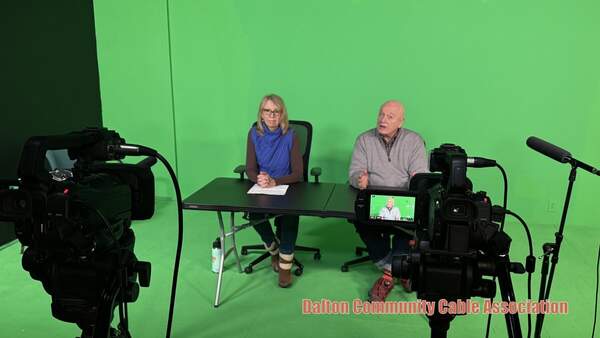
The meeting was not recorded by the board or by LCATV and the town requested iBerkshires share its recording to provide the Select Board additional context surrounding the few complaints. It is not iBerkshires.com's policy to share unpublished recordings or meeting notes.
Town Administrator Gina Dario said the town received two complaints, only one of which was formally submitted.
When the town receives a complaint, it is investigated by speaking with the relevant parties followed by an executive session, she said.
State Open Meeting Law permits executive sessions for the purpose of discussing the reputation, character, physical condition or mental health, rather than professional competence, of an individual, or to discuss the discipline or dismissal of, or complaints or charges brought against, a public officer, employee, staff member or individual.
Lanesborough Local Country Store owner Tyler Purdy confirmed his intention to file a complaint because of what he said was unprofessional behavior displayed during the meeting.
During the meeting, Paula Messana, owner of Inspired Creations gift shop on Main Street, spoke in support of the truck display.
"I'm just sitting here listening, and these people are actually my competitors, but I'm going to speak on their behalf, because, from what I'm hearing is, the bylaws were written and put into place in 2022 …" she said before being interrupted by board Chair Mark Siegars.
Siegars loudly spoke over her asking, "Do you have any evidence of that?" multiple times and clarified that the bylaw was recodified in 2022, not established.
"My question to you is, why do you not have evidence of that," Messana said, matching Siegars' tone.
Siegars explained that it is the applicants responsibility to bring the evidence showing their case.
"Then you should continue the meeting so evidence can be provided," Messana said, with Siegars voicing "No we shouldn't" at the same time.
"I'm sorry, that's not the way it works. The court doesn't give you any extra time if you don't do it when you have an opportunity to do it, we don't have an opportunity to continue it because you want to bring in something about a question that was raised during the hearing," Siegars said.
Messana went on to say, without interruption, that "Everyone should be given a fair and equal opportunity," highlighting that although she saw Siegars' point, more research should be done to determine if the truck is non-conforming.
"It would be a simple continuance so he can do his due diligence, because he's a new business owner in town, and we need business owners in this town," she said.
"We don't need to shut everybody down and make their life difficult. We need to work with these people and try to help them to succeed doing business in the town of Lanesborough."
Messana said it's not easy being a business owner.
"We're in January right now, and we're all dying, trying to cling on to life of our stores. I think that you need to give them the opportunity to do their due diligence," she said.
"They're naive. They don't know what they needed to do. So. work with them as a human being and [be] respectful.
"That's all I have to say but I just don't like this [Messana slammed her hand to the table]. It's going to be my way. That is not fair. It is not correct, and it is not working for your community."
Later in the meeting, when the board closed the public hearing for deliberations, Siegars explained his perspective.
"I'm just going to say for the record that this application is signed by an attorney, so if the applicant wasn't prepared, shame on their attorney," he said.
"I understand people are tired of how they get treated in this town, but my name has been carried through the mud for the past 10 years, including by that person sitting next to you," Siegars said, referring to Barbara Davis-Hassan, with whom he has butted heads with in the past.
"And nobody ever came to my defense. I have a business in town, so don't tell me businesses are mistreated. I know exactly how they are treated," he continued before Messana interrupted him, saying this section of the meeting is supposed to be a deliberation.
"No, you don't get a chance to say anything anymore. You came in here. It's our turn to speak," Siegars said.
"Then don't speak directly to me," Messana responded.
"No, I'm going to speak directly to the record. You don't have to look at me," Siegars said. "I'm going to just say that there was an attorney involved. So, any question about legality or anything else — there was more than ample opportunity for that lawyer to be here to present evidence."
The board returned to discussion of whether the sign was a bylaw violation, and voted to uphold the building inspector's violation. More information on that here.
Tags: ZBA,