Pittsfield Preliminarily OKs $87M School Budget

PITTSFIELD, Mass. — The City Council preliminarily approved an $87 million FY27 budget for the Pittsfield Public Schools.
Budget season began on Tuesday with a hearing for the city budget, five-year capital improvement plan, and school budget.
The $86,855,061 budget includes $68,886,061 in state Chapter 70 funding and $18 million from the city. With $345,000 in school choice and Richmond tuition revenues, it totals $87,200,061 and is an approximately $300,000 increase from the Pittsfield Public Schools' FY26 budget of $86.9 million.
Assistant Superintendent for Business and Finance Bonnie Howland pointed out that instructional costs account for 72 percent of the budget.
"It's a pretty modest increase in spending from this current year's budget, so we really had to be strategic and dial back expenses wherever possible," she said.
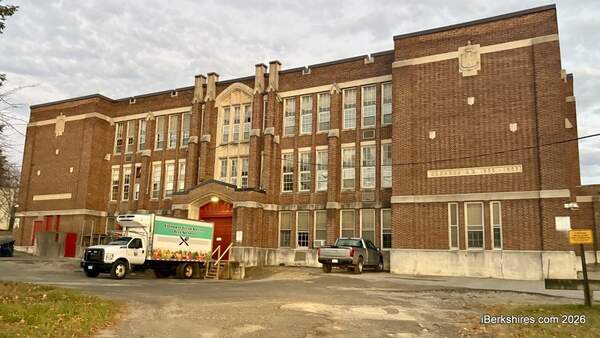
Council President Earl Persip III recognized that the district has new leadership and saw various struggles over the past year: the Pittsfield High School investigation into alleged staff misconduct, the decision to close Morningside Community School in the fall, a middle school restructuring, and insufficient funding.
"I mean, most people would not have to deal with sort of a scandal, middle school restructuring, a closing of a school, and a budget shortfall of about $4.5 million, and you've done that in a year," he said to interim Superintendent Latifah Phillips.
"We might not always agree, but I can agree that you guys have done a fantastic job, and this budget shows that."
This budget accounts for Morningside's closure and the middle school restructuring to an upper elementary and junior high school model in September; Grades 5 and 6 attending Herberg Middle School, and Grades 7 and 8 attending Reid Middle School.
Phillips reiterated the principle guiding this budget process: The district's responsibility to make decisions to improve student outcomes in academics, behavior, and social-emotional development.
"This year's budget development process has taken place in the context of a shortfall exceeding $4.3 million. This really has required us to make difficult decisions and carefully examine what we should continue doing, what we should stop doing, and what we should start doing," she said.
"Navigating these challenges has required collaboration, thoughtful analysis, and the willingness to consider different perspectives, always putting students at the center of our decision making."
The administration reviewed district data during this process. As of March 9, PPS serves 4,825 students and employs 1,738 full-time staff members.
The district is "very" diverse, Phillips said, with about half of its enrollment identifying as students of color, 15 percent whose first language is not English, 63 percent identified as low income, almost a quarter of students having disabilities, and 72 percent identified as high needs.
Seven of the current 14 schools are targeted for accelerated growth based on accountability data.
Ward 6 Councilor Dina Lampiasi thanked the team for prioritizing data.
"I feel that you've been very transparent in this approach with us and just kind of walking us through the real challenges that we have, but also how you're looking at solving those challenges," she added.
"It will be interesting to see what happens in the next year, but to your earlier point, we're not going to see the huge improvements that we're all waiting for in just a year, but I am hopeful that we'll see something good."
The cost of running the Eagle and Crosby Academies and Stearns Elementary School, which has a special education inclusion model, were not allocated enough operating funds through the Fair Student Funding formula, and monies had to be pulled from other areas.
Phillips said many elementary schools were under their building's capacity and were not able to have an assistant principal. The budget conversation was approached with right-sizing resources within schools to ensure the highest need schools have proper support.
Conte Community School, Crosby Elementary School, and Morningside have been identified as the highest need schools. The district is seeking up to 80 percent reimbursement from the Massachusetts School Building Authority for a consolidated and combined rebuild of Crosby and Conte on West Street.
Ward 7 Councilor Katherine Moody voted against the budget because she felt that the spending plan was not student-based, observing an increase in advisory positions and a decrease in others.
She also had concerns about supply cuts.
"I appreciate the effort in this, and I appreciate what you are doing, and I know that you have walked into a hornet's nest in this school system," Moody said.
"Our school accountability rating is in the 30 percent. Even our best schools, one of them is at like 42 percent accountability rating. That's one of our tier one schools. So I am not in favor of this budget."
Phillips said every cut was carefully evaluated, and supplies were informed by previous year expenditures.
Tags: fiscal 2027, pittsfield_budget, school budget,