Dalton Historical Pottery Project Celebrates Town's History
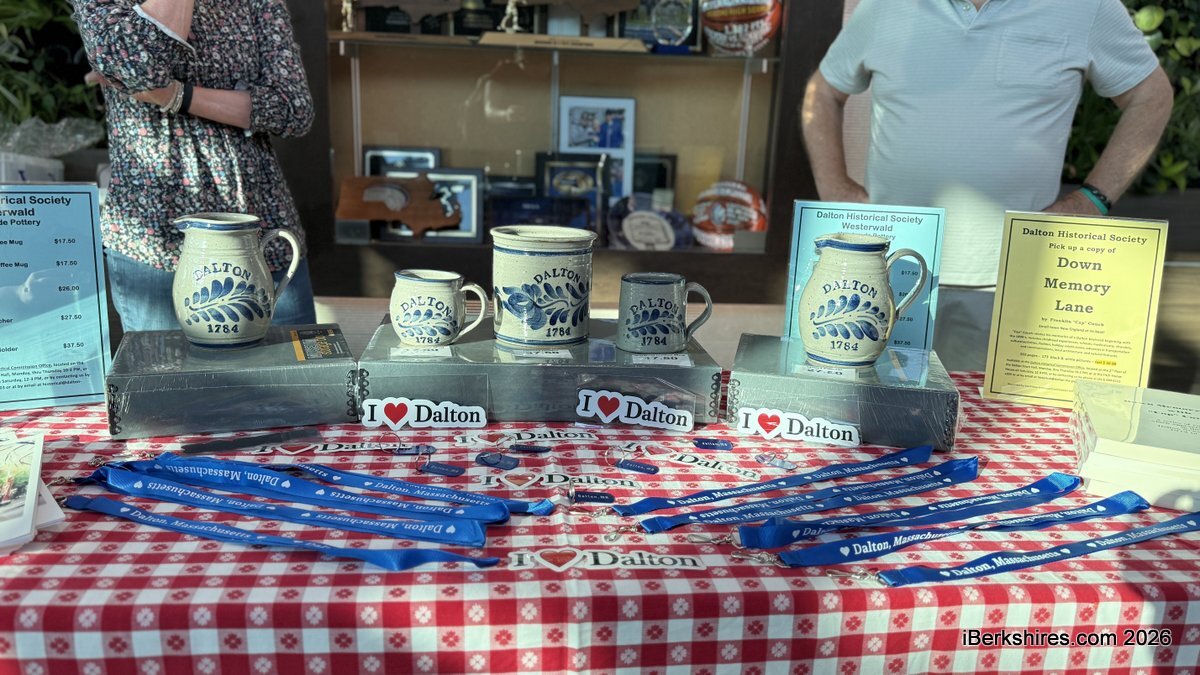
The pieces, handcrafted in Pennsylvania, debuted last month at Dalton Day.
More than a decade ago, Deborah Kovacs, commission co-chair, purchased a piece of pottery featuring Dalton's name, a type of commemorative memorabilia once used by many communities to showcase their identity but has since become uncommon.
People frequently asked where she had found the piece, prompting Kovacs to search for a place that sold them but soon discovered that few communities create these anymore.
So, she brought the idea to the commission, and the initiative had its debut sale during Dalton Day this past June.
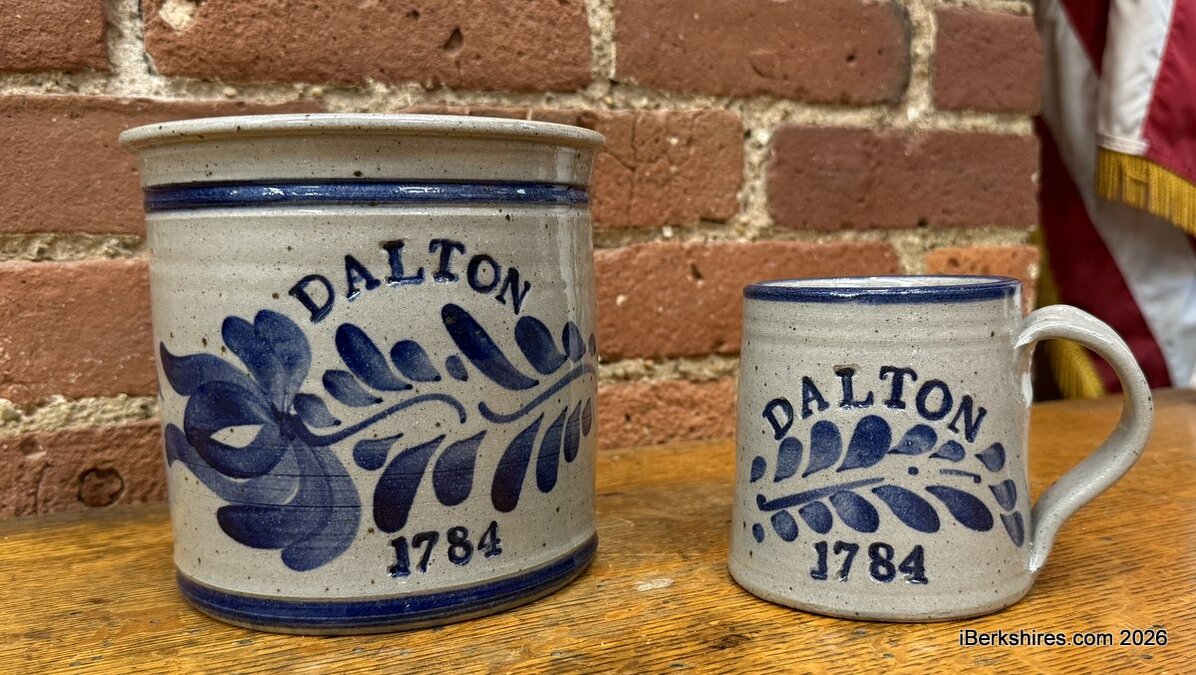
The first pieces were barrel coffee mugs, vertical coffee mugs, quart jars, quart pitchers, and utensil holders. However, with the increase in popularity for the pottery, the commission will also be selling sugar canisters and bean pots.
The items are available for purchase at the commission's office on the second floor of Town Hall, Monday through Thursday from 10 to 2, at the Fitch-Hoose House on Saturdays from noon to 3, or by contacting the commission by email or at 413-684-611, Ext. 303
Each piece is designed to be both functional for everyday use and durable enough to become a cherished family heirloom passed down through generations, Kovacs said.
"People are buying it, too, for their family members that don't live here anymore to bring Dalton to them,” she said.
"I've heard several people say that — keep Dalton in their hearts.”
The pottery is handcrafted by Westerwald Pottery in Scenery Hill, Pa. Each piece has a blue-gray finish with a stenciled design characteristic of early American pottery and is inscribed with "Dalton" and the town's incorporation year of 1784.
The commission has a handful of items left until it restocks, including a few vertical mugs and a single utensil holder, currently displayed in the clerk's office for residents to see and purchase.
The hardest part of this endeavor has been building up the stock with the limited funds available, co-Chair Dennis Croughwell said.
Although supplies are running low, the commission is continuing to accept orders and will notify purchasers when the next shipment arrives.
Restocking the pottery typically takes six to 10 weeks because each piece is handcrafted. Lead times may be even longer during the holiday season, when the small business experiences an increase in orders. The next shipment is expected around the end of September, Kovacs said.
The pottery ranges in price from $17.50 to $37.70, with most of the proceeds covering the cost of purchasing the items.
The remaining small profit is being set aside for the Historical Commission's long-term goal of establishing a town museum — a project still many years away and expected to cost approximately $100,000, Croughwell said.
The town has thousands of items in its collection from historical documents, instruments, sports memorabilia, a World War 1 uniform, pictures, and more.
The collection has some items dating back as far as 1784, when the town was established and had its charter signed by Gov. John Hancock. The charter can be seen in a case in the Town Hall's Callahan Room.
The commission had a museum in the basement of Town Hall in 1990 but it closed six or seven years later because it was too damp and had poor air conditions.
Tags: historical commission,