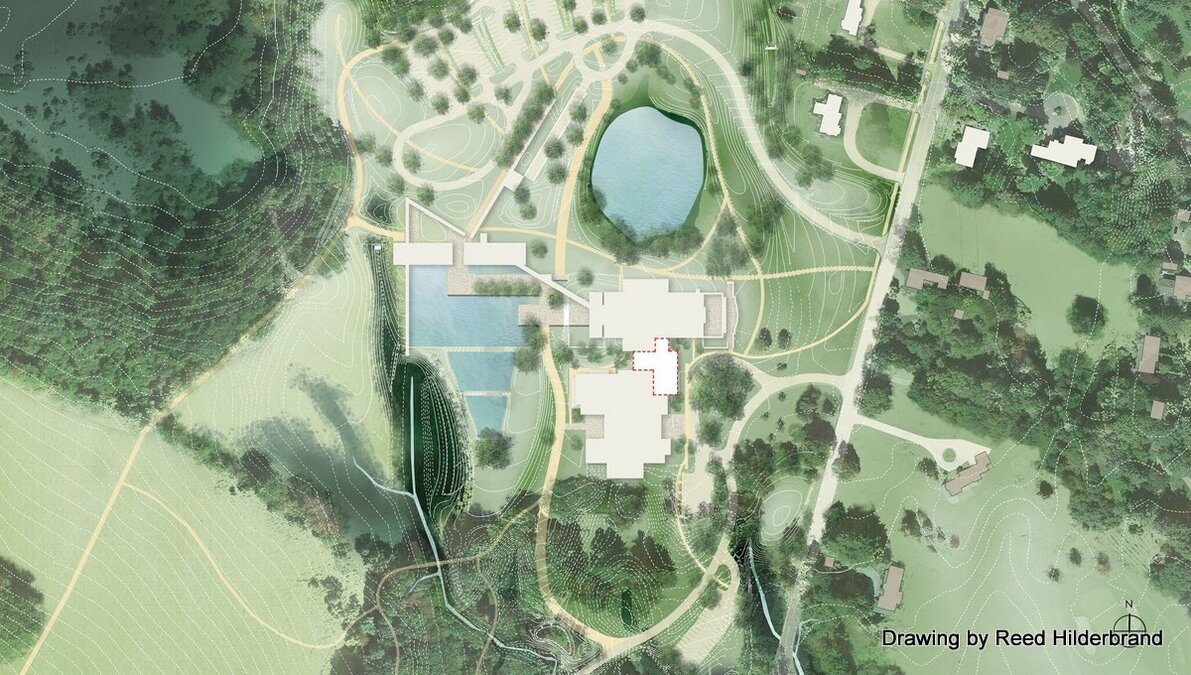
Clark Art Unveils Design for New Aso O. Tavitian Wing
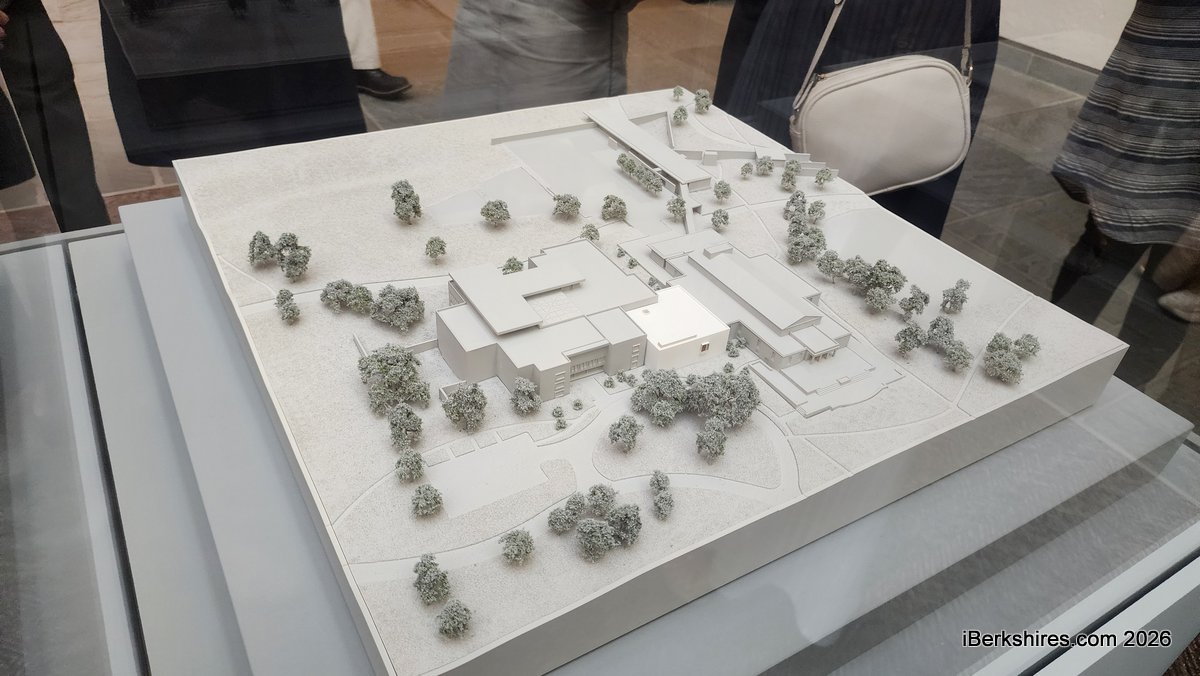
The bright white section is the new wing on this scale model.
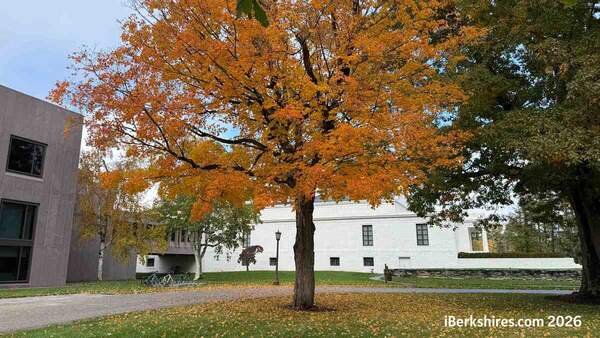
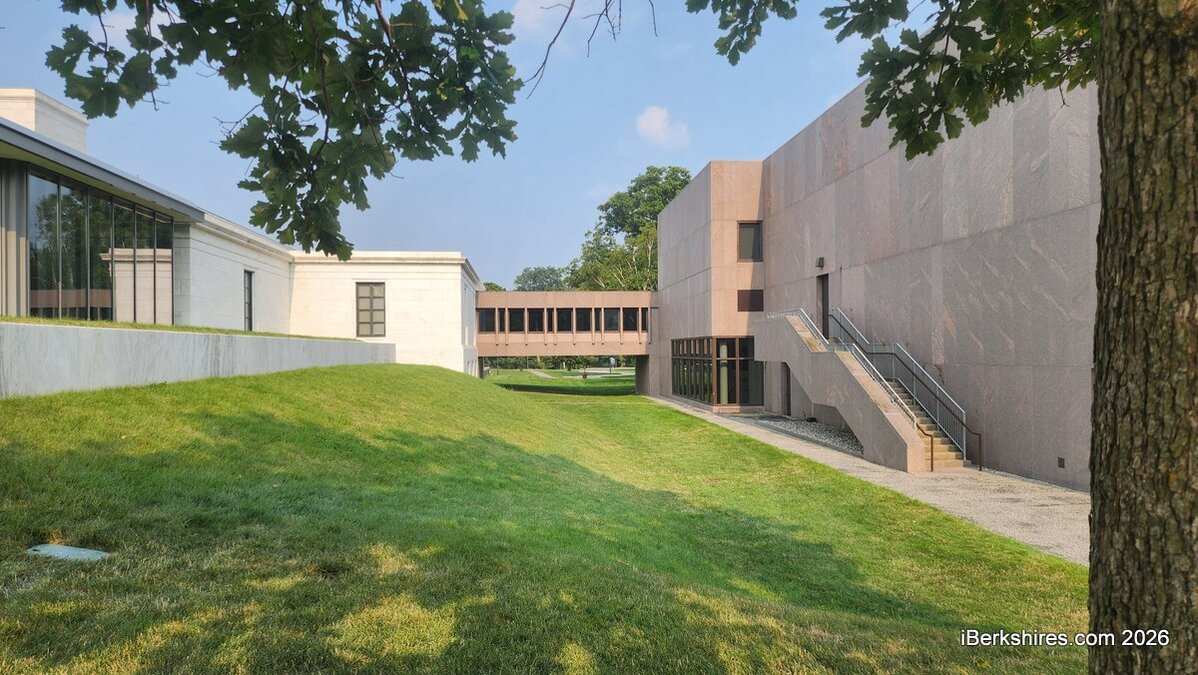
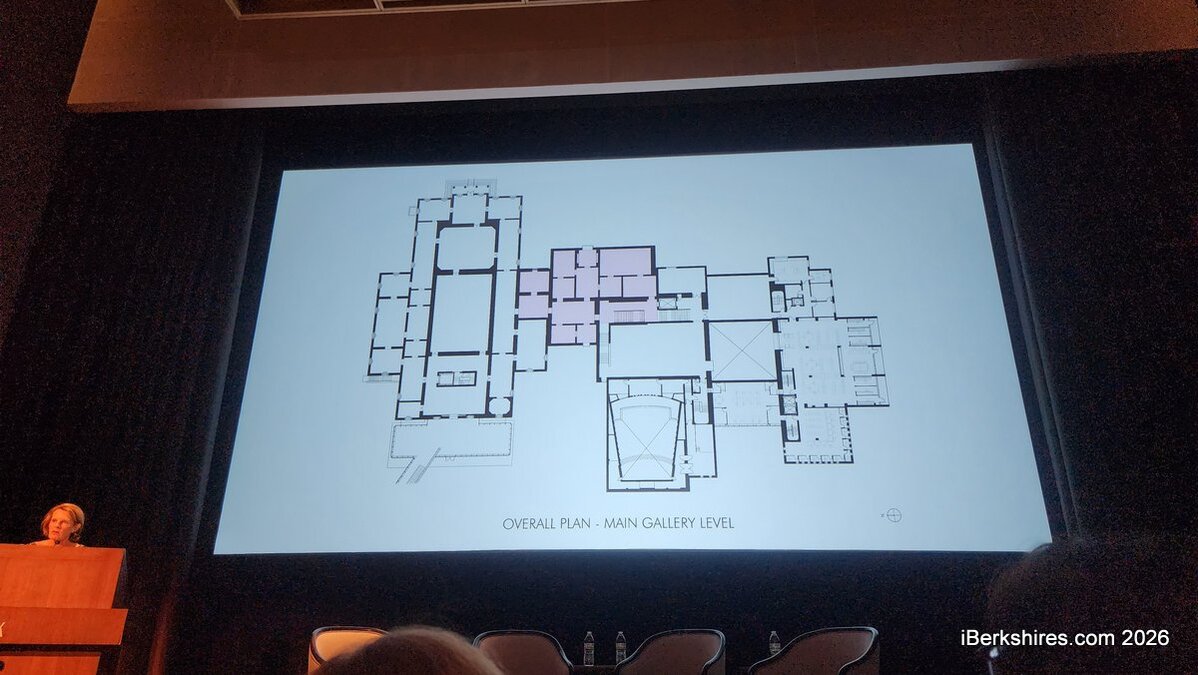
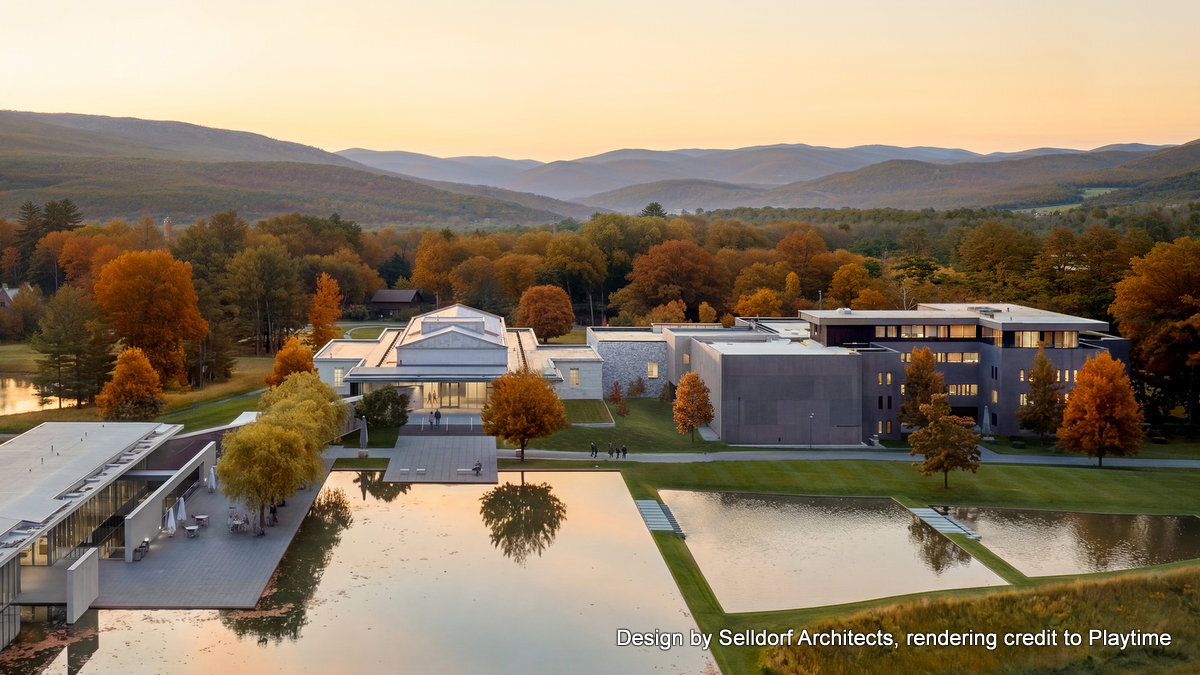
The wing designed by Annabelle Selldorf will hold 12 galleries on one floor and space for storage/mechanicals. The exterior is "multicolored veined marble in tones resonant with the adjacent buildings" connecting the 1955 marble original museum to the red granite 1973 Manton building. Selldorf designed the Manton's renovation in 2016.
Construction will begin next spring with an opening slated for fall 2018.
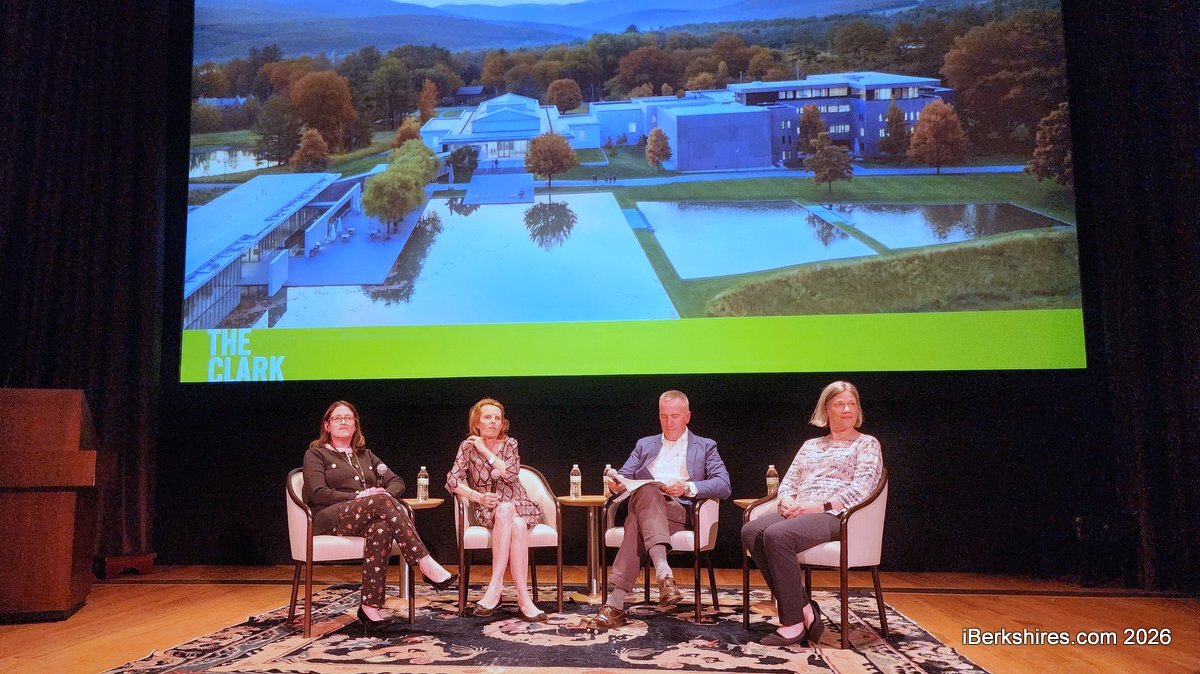
Marrying the two buildings took some thought, Selldorf told a packed auditorium in the Manton Center last week, calling the bridge an awkward connection between two very disparate structures. It also had been the way into the museum until the expansion and new visitors center designed by architect Tadao Ando.
"We're now doing something that is a dream for every architect — that is to build a new building, albeit one where we are replacing an existing bridge, a bridge that went in in 1973 and sort of jammed into the museum building," she said, asking how many loved the bridge, then to laughter, "I don't want to see any hands. ...
"It was a long road, shall we say, but one that makes me feel we wouldn't have gotten the commission had it not been for all that which we learned here at the Clark, and for that I am immensely grateful."
Tavitian, a philanthropist, art connoisseur and software startup entrepreneur, began collecting works of mostly old masters and portraits after the turn of the century.
On his death at age 80 in 2020, he bequeathed 331 works of art to the Clark and $45 million to build to exhibit and store them. The first exhibition of about 150 works is currently on display at the Clark; the rest of the collection will be exhibited on the completion of the wing in 2028.
The gift was one of the largest in the Clark's history and the works considered among the most significant private collections of European art. It includes 132 paintings, 130 sculptures, 39 drawings, and 30 decorative arts objects.
The wing to display the collection was somewhat "designed from the inside out" and also had to have "relevance and weight."
"It negotiates two facades, one that has sort of a reddish granite, really hard, really tough, and on the other side, a white Danby marble, marble from Vermont," Selldorf pointed out. "We had fantasies about creating a mosaic that is a mix of those two materials, and very quickly realized that only yielded ugliness.
The answer was a Calacatta from Portugal that brings all the colors together. It will be cut into four different slab sizes and worked out to prevent any one color from dominating.
As for the art, Kathy Morris, who is coordinating the project, said about 60 percent of the collection will be on display at any one time.
"We will try to create an organic experience be able to loan things and move things around to keep the exhibit fresh," she said, with Selldorf adding that they don't want to reveal how it might displayed because they could change their minds -- and "we would deprive you of a fantastic surprise."
Jon Maass, the owner's representative and director of his eponymous architectural and project management firm, said the new building with its 4,600 square feet of gallery space will maintain the sustainable aspects already present on the museum campus.
"The plant that provides hot and cool chilled water to provide all the heating and cooling, it's all coming from additional capacity of that system and the geothermal wells that are already in place," he said. "It's a very very tight facade. It's a very well-insulated facade. We're using a steel superstructure instead of a concrete structure to help reduce embodied carbon. We're using LED lighting. So it's it's really about trying to create a responsible building that is using as little energy as it possibly can."
The museum is not pursuing LEED (Leadership in Energy and Environmental Design) designation but is following its guidelines.
"Considering our new wing and the new Williams College Art Museum building now in progress, there is something extraordinary happening in Williamstown," Morris said. "Our Berkshire County oasis has long harbored great collections of art, but the quality and quantity of what we are fortunate to have here rivals truly those of cities many times our size. We are so proud to be a part of this community, and we are grateful that we are surrounded by people like you who care."
Tags: Clark Art,