Properties like the West End Market lose their commercial status if they're not in use for two years. The board would like to give owners more time.
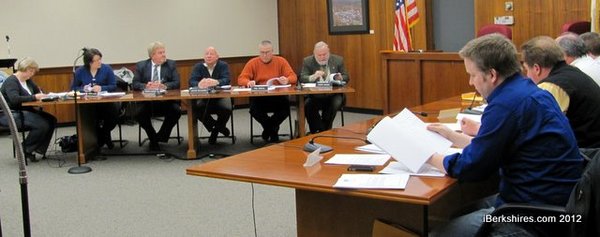
NORTH ADAMS, Mass. — The Planning Board is trying to keep commercial properties that were grandfathered into residential zoning from losing their ability to operate.
According to city ordinances, a commercial property grandfathered into a residential zone would lose its ability to be a business if it is not used for two years — such as the NAPA building on State Road that's deterioriating for lack of use.
"There is an ordinance that if there is no further use of the business as a business it reverts automatically to residential zone no matter what the property looks like or what the property is used for," Planning Board Chairman Michael Leary said on Monday.
It's unknown how many properties are affected. Building Inspector William Meranti noted the city was full of little neighborhood stores and other commercial and industrial enterprises, many no longer operating. In danger are landmarks such as the the West End Market and the Wigwam Cabins on Florida Mountain, both of which have undergone lengthy renovations.
The board is hoping to find a way to retain those properties as businesses so that they don't become abandoned.
"It obviously has a giant economic impact on the value of the property ... I've been approached by the owners of these [type of] properties and they've asked me to appraise it and I tell them the value is zero," Planning Board member Wayne Wilkinson said. "The reason that it is zero is because it is a commercial building but it has absolutely no revenue generating potential."
Wilkinson, a commercial real estate assessor, said that if something is not done, the owners of the obviously commercial buildings will stop paying taxes and the city will have to pay to tear them down.
However, the board is not sure how to go about changing the ordinance. The city still wants to retain control of the zoned areas but wants the ability to make "reasonable" exceptions and avoid any type of spot zoning, which is illegal. The former NAPA store is not suitable for housing but could easily be turned back into an auto parts store, the board used as an example. However, if someone wanted to use it for a different commercial activity that does not fit into that zoning, the board wants to be able to say no.
The board will be asking City Solicitor John DeRosa for guidance. That will include some research into the possible ways to do it and looking at other municipalities that face similar situations.
"I just want to make sure that the solicitor is comfortable in what direction we go in," Leary said. "I am certain other communities have the problem, I just don't know how or whether they've addressed it."
In other business, the board:
– Application of Jeremy and Dawn Broadwell for a special permit to install a sign on property located at 184 East Main St.
– Application of Darrell K. English to operate a non-retail educational museum (on the Holocaust) at property located at 45 Eagle St., in the former Papyri Bookstore. English is shooting for a Memorial Day opening.
– Application of Dong Liang for a special permit to operate a restaurant at 227 State Road; this is a change of ownership for Oriental Buffet.
– Application of Richard P. O'Neil for special permit to operate a motorcycle and small engine repair shop property at 54 River St., with the condition of parking for no more than three motor vehicles and that all vehicles be inside the shop at night.
– Reviewed new sign package for Adams Community Bank, formerly known as Adams Cooperative Bank, located at 31 Eagle St. The package included what is known as a "routed push through" sign, which lights the outline of the outline of the logo using LED lights.
– Re-elected Michael Leary as chairman and Paul Hopkins as vice chairman; reappointed Kyle Hanlon as liason to the Berkshire Regional Planning Commission.
iBerkshires.com welcomes critical, respectful dialogue. Name-calling, personal attacks, libel, slander or foul language is not allowed. All comments are reviewed before posting and will be deleted or edited as necessary.
Is this a problem in any other town/city? The only reason I bring it up, is perhaps neighboring community zoning laws would produce a solution to this issue.
I would think that the properties in question should have some value. Whatever the city has them assessed at should be the fair market value. If they are worth zero, then they should qualify for a tax abatement.
It strikes me that we already have a process in place called the Zoning Board of Appeals. Isn't that what they do?
Why should a grandfathered renewal be automatic? If they can't occupy and operate in two years, perhaps it is time to look for a more appropriate use. In other cases out would seem to be a no-brainer to issue a variance.
Editor: That's not what the ordinance says. Commercial properties no longer in commercial use revert to residential in residential zones. If it's not in use, you can't get a variance.
SECTION 12. NONCONFORMING BUILDINGS AND USES EN(113)
12.1 Existing uses continued: Any structures or uses lawfully existing on the effective date of
this Zoning Ordinance may be continued in accordance with the provisions of General Laws
Chapter 40A, Section 6. Any subsequent and substantial alteration, reconstruction or extension
of a nonconforming use or structure may be authorized by a special permit issued by the Zoning
Board of Appeals which will be granted only if the Board finds that the proposed alteration,
reconstruction or extension will not be substantially more detrimental to the neighborhood than
is the existing nonconforming use. The issuance of a special permit hereunder shall not authorize
the violation of any dimensional, parking or other regulation with which the structure or use was
theretofore in conformity. (Ord. of 8-14-1990, § 1; Ord. of 10-13-1992)
12.2 Abandonment of a nonconforming use: A nonconforming use which has been abandoned
or discontinued for a period of more than two (2) years or has been replaced by a conforming use
shall lose the protection set forth above in Section 12.1. (Ord. of 8-14-1990, § 1)
The editor is correct. The Zoning Board has no authority to issue a variance for a property that has reverted to non-conforming use, which is why the Planning Board is beginning the process of seeing if such a new ordinance should be adopted. The vigilance of the property owner in keeping track of how much time they have left on their usage is irrelevant, as many of these properties are way past the two year mark. As such, they are useless and if put back in use can add to the tax rolls, which benefits everyone. And any new ordinance would not grant automatic lifetime variances or automatic renewals. The applicant would still need to renew, if a time limit was placed, but it would at least allow for those properties already in this state to potentially be used again commercially.
I understand that the Planning Board cannot issue a variance, but I thought that was what the Zoning Board of Appeals did.
A neighbor got a variance for his residential business. I don't see the big deal in making the new business/owner go through the same process if its been longer than two years.
You didn't read my post correctly, Zoning. I said the Zoning Board cannot issue a variance for a pre-existing non conforming use, not the Planning Board (which also can't issue one). Zoning Board can issue variances for things like inadequate parking and even a home business located in a residential zone (such as the CPA operating out of a residence on West Main, the former West End Deli, now a house), but they cannot grant a variance for a building that was previously grandfathered as a commercial business in a residential zone whose permit has since expired due to the lack of continuous use of the business beyond 2 years. They can't because there is no such variance allowed by city ordinance. Home businesses are limited to specific things that can be allowed by variance in a residence. We're talking about buildings that were commercial properties, like the old NAPA Auto Parts on State Road, located in residential zones, that closed for over two years and now sit vacant because the property has reverted back to a mandatory residential zone use. You can't operate an auto parts store as a home business. And even if NAPA wanted to reopen there, it can't, because it's now a residential property by ordinance.
If the city approves a variance bylaw allowing variances for pre-existing non-conforming uses to be re-permitted as commercial properties, that could then happen.