Rising Blacktop Costs Worrisome to Williamstown
WILLIAMSTOWN, Mass. — Asphalt may pose a threat in the future.While reading through the first section of Town Manager Peter Fohlin's proposed 2013 budget, the Finance Committee questioned if the Department of Public Works should be budgeting more for asphalt. Blacktopping costs have tripled since the 1990s but the town has not been keeping pace.
Committee members expressed concern on Thursday that a massive one-time purchase in the town's future. However, DPW Director Timothy Kaiser said while there may be a time for concern in the future, they're OK for now.
"There is a gap that widens every year in the cost of asphalt," Kaiser said but for now "our pavement inventory is sufficient."
Kaiser said the department in recent years has scaled back the amount of paving it does in a given year and saves state Chapter 90 funds to do major projects. While the roads are not being completely renovated like they used to be, patching and paving smaller portions are keeping abreast with the needs. The cost has increased from $29 a ton in the 1990s to $76 a ton this year, he said.
In Fohlin's budget, nearly all departments are expected to receive budget increases and the total budget is up 2 percent but the DPW is taking a decrease. With that, committee members wondered if it was time to start incrementally increasing that budget line but backed off with Fohlin and Kaiser saying it is not needed.
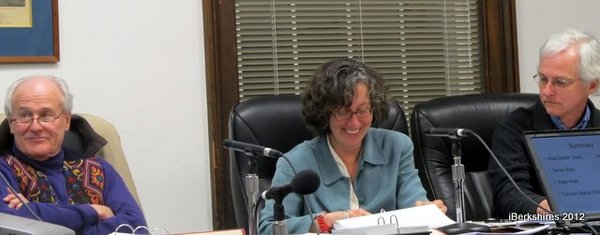
"I'd rather have an incremental increase in blacktop than a large one," Finance Committee member Elisabeth Goodman said.
Fohlin said while the costs are worrisome, his budget is aimed at keeping the tax rate the same and building up unused levy capacity for massive capital projects, such as a new high school or police station, later.
"If we didn't have a $40,000 increase in veterans' benefits, I would have put it in blacktop," Fohlin said. "We're not at the point where we're crying uncle."
The department will keep a close eye on their inventory and costs each budget year, Kaiser said, as well as continue applying for state and federal grant money for larger project. For example, the town is responsible for Route 43 from the Store at Five Corners to the Hancock border that simply cannot afford to be done right now, Kaiser said, but hopes the state can help out.
Also with the DPW, the current snow and ice removal budget is currently 75 percent spent, which is the least the town has spent in years. Snow and ice removal is typically under funded each year and paid in the following year so it is currently looking like very little will need to be rolled into future budgets. Kaiser said there will likely be a deficit but he expects it to be very slim at this rate.
The DPW also handled the repairs for damage caused by Hurricane Irene in their operating budget. The town received 75 percent reimbursement for many of those repairs and were able to digest the remainder of the cost, Kaiser said.
The Finance Committee had few questions about the first part of the budget, which Fohlin says will not change the tax rate. The town saw a 2 percent increase in revenues that it is reinvesting into the budget.
Tags: Finance Committee, property taxes, taxes,