Farm Program Marks 10 Years of 'Sharing The Bounty'
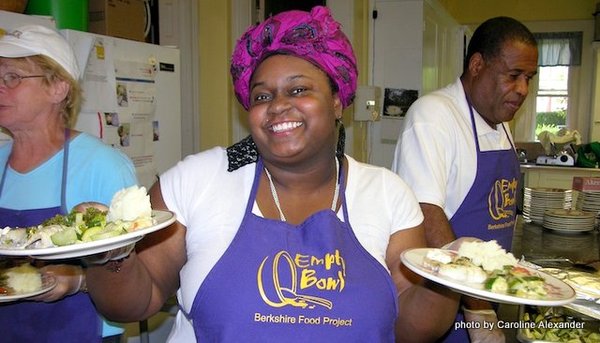
 Valerie Schwarz, director of the Berkshire Food Project in North Adams, said fresh produce from local farms made for a nutritious lunch. |
Giving in a way that multiplies the good work and keeps the money you contribute in the local economy is even better.
That is the point of Berkshire Grown's Share the Bounty program, which celebrates its 10th anniversary this weekend with a party at Lenox's Stonover Farm.
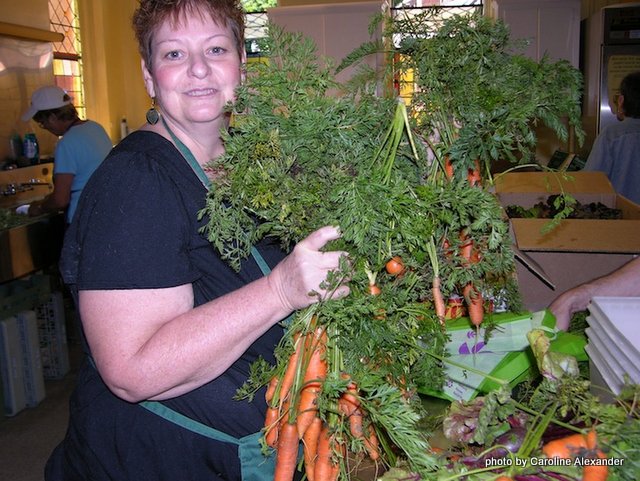
Share the Bounty connects local food pantries, community kitchens and participants in the Women, Infants and Children (WIC) program with community-supported agriculture farms throughout the region. Money donated to Share the Bounty is used to buy shares at the CSA farms, and those shares are given to the pantries and kitchens to help them provide beneficiaries with fresh, local produce.
"We believe folks who have lunch here should have a really nutritious meal," said Valerie Schwarz, the director of the Berkshire Food Project in North Adams. "We could purchase vegetables and things like that at the supermarket, but the organic and fresh produce we get from Caretaker Farm and Cricket Creek Farm is so important to their health, I believe."
Schwarz has worked in the North Adams community kitchen for nearly two decades, and her program's association with the CSA farms in nearby Williamstown goes back even further than that, she said. Share the Bounty helps ensure those relationships will continue by providing the Berkshire Food Project with two shares at Caretaker and one at Cricket Creek.
A "share" at a CSA farm is an allotment of fruits, vegetables and other farm products that a member can count on each week in return for paying a predetermined fee (often an annual fee).
Share the Bounty got its start in 2003 thanks to the efforts of Jonathan Hankin and Barbara Zheutlin.
"Ten years ago, my husband came up with the idea of Share the Bounty," said Zheutlin, who now serves as executive director of Great Barrington-based Berkshire Grown. "We were members of a CSA farm at the time, and he was trying to figure out how we could support these farms.
"And he came up with this idea. He said, 'Why don't we raise money to buy shares but give them to food pantries?'"
With the help of the Berkshire Taconic Community Foundation, the couple created a non-profit organization to collect donations, and Hankin started soliciting contributions from his colleagues at Great Barrington's Wheeler and Taylor Realty Co. That first year, Share the Bounty purchased shares at Indian Line Farm, which still has a partnership with the People's Pantry in Great Barrington.
The next year, Zheutlin and Hankin looked to expand the program, recruiting Janice Mones to help create a logo and brochure and contacting Berkshire Grown, which already was working on a grant application to expand Share the Bounty.
By 2004, Share the Bounty had expanded to five CSA farms with 10 total shares for food pantries or kitchens throughout the region, including Connecticut's Ridgway Farm, which continues in the program today.
This year, there are 14 participating farms, stretching from Williamstown in the north to Valatie, N.Y., to the west to Salisbury, Conn., in the south. Berkshire Grown estimates that about 600 families enjoy produce collected through the program.
A $1,525 grant from the Food Bank of Western Massachusetts this year allowed Share the Bounty to expand into Pittsfield for the first time. Food from the farm at Hancock Shaker Village is going to the Christian Center; food from Holiday Brook Farm is going to First United Methodist Church.
"Helping families achieve food security means not only making food available and affordable, but also ensuring that food is healthy," Food Bank of Western Massachusetts Executive Director Andrew Morehouse said in a news release. "Berkshire Grown's Share the Bounty program helps do just that and puts local, farm-fresh produce in the hands of neighbors who otherwise wouldn't be able to access it."
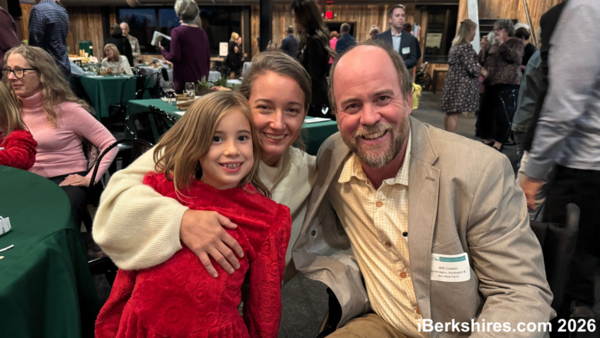
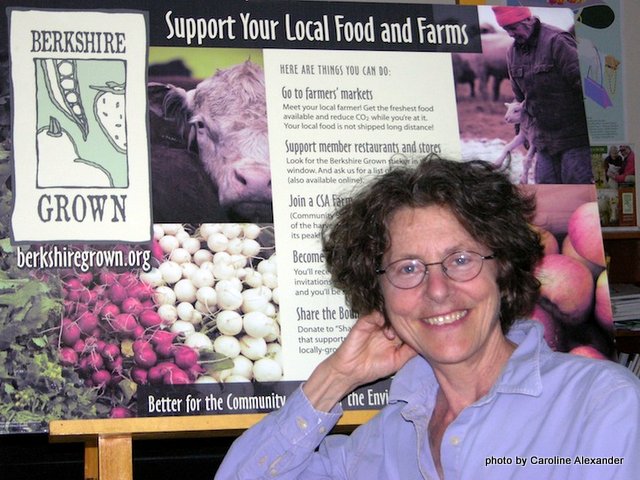 Barbara Zheutlin, above, and Jonathan Hankin kick started the program in 2003. Since then, the organization has received more than $100,000 in donations. |
Zheutlin, who moved to the Berkshires in 1995 from California, has a long history of working for social justice, world peace and human rights. Berkshire Grown, which she has led since 2007, dovetails nicely with her past efforts for nuclear disarmament and peace in El Salvador, she said.
"I was drawn to the Berkshires because of the pastoral landscape," she said. "I thought, 'How could I contribute to that? How could I help sustain clean air, clean water, healthy food and a sense of community on a human scale?'"
Berkshire Grown, which was founded in 1998, supports local farmers by fostering relationships between growers and local restaurants, promoting events that highlight agriculture and educating the general public about the benefits of farms in their communities.
"What's happened to farms in this country in the last 100 years is very stark," Zheutlin said. "What's starting to happen that is intriguing is that while we may be losing farm land, we're gaining in the numbers of farms. That's because new farmers are starting on smaller acreage. We're trying to promote that trend. That supports the local economy and, at the same time, produces healthier local food."
The CSA program is particularly important to growers in the Northeast, where short growing seasons make it difficult to sustain a business.
"If we give money to a CSA, it's a way that we in the community can provide money for farmers when they need it most — in the winter and early spring," Zheutlin said. "Some of them are experimenting with growing (off-season crops), but for the most part it's not a time of year when they can make money.
"To invest in them at that time is valuable to the local economy."
And if that investment is through Share the Bounty, the rewards are even greater. In the 10 years since its start, Share the Bounty has helped raise just over $100,000 in contributions. That is not a lot of money, but it has made a difference, Zheutlin said.
"I'm from Los Angeles, so I had the perspective of a major megalopolis, and I came here and found food pantries that are only open two hours a week," she said. "It's totally different, and it's been fascinating to figure out how to scale a program for a rural community.
"Here, I'm working to support small farms, and that helps strengthen local economies, and I'm helping to feed hungry neighbors. Even though they may be less visible than in a big city, they're just as hungry."
Berkshire Grown's Share the Bounty program will celebrate it's 10th anniversary with a party at 2 p.m. on Saturday, Juy 21, at Stonover Farm in Lenox. Frank Lowenstein of the Nature Conservancy will give a talk titled "Climate Change and Local Agriculture." A $10 donation is suggested. For information, visit www.berkshiregrown.org.
Tags: agriculture, Berkshire Grown, community supported agriculture, CSA, farming, food bank, food pantry,