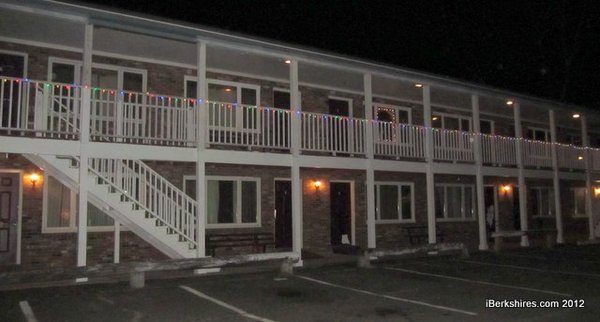
image description
Town officials have been planning to enforce health code laws at the Howland Avenue motel since September.

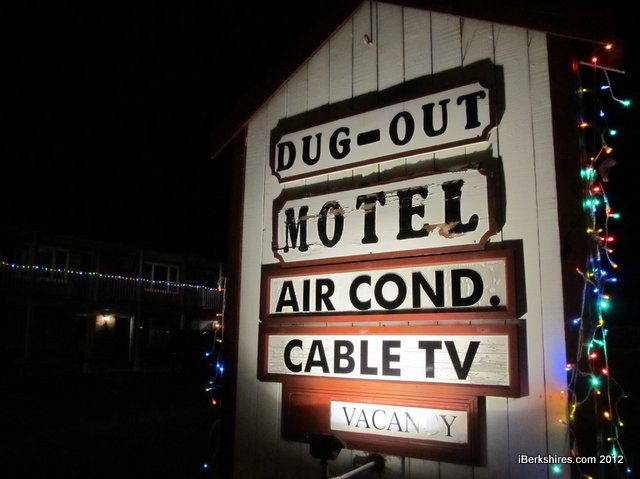
Adams Places Vacate Order On Dug-Out Motel

By Andy McKeeveriBerkshires Staff
Print Story | Email Story

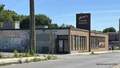
The motel at 99 Howland Ave. is often raided by police during drug stings; fire officials fear hazards and health officials say the rooms are not up to code for long-term usage.

ADAMS, Mass. — Town officials have placed a vacate order on the Dug-Out Motel, forcing 15 families to leave what has become, for many of them, their homes.

According to Code Enforcement Officer Scott Koczela, the vacate order was issued last week and everyone living at the motel must be out within 45 days of the order.

After the units are vacated, the motel may continue to operate as a motel and not as a "boarding home," as officials have characterized it.

The order comes as an "emergency" after a schoolteacher filed a report with the Department of Families and Children claiming rats had bitten a child living at the motel.

Koczela said it was not confirmed that the child was actually bitten by a rat, but the complaint in itself was enough to trigger a stronger response to already cited issues at the Howland Avenue motel.

Various groups are looking to find housing for those who will be removed.

"That's going to be a big, big case we're working on," Koczela said, who gave the update on the case at Wednesday's Board of Health meeting.

The Tenancy Preservation Project, an arm of the Berkshire County Housing Authority in Pittsfield, has been working with the town, the Housing Authority and other housing entities, such as the Brayton Hill Apartments in North Adams, to secure a place for those being evicted.

"They are already seeking out alternative housing," Koczela said.

He added that the school district is facilitating meeting with those families for alternative housing.

The major issue with the motel is that it is not up to code to operate as a long-term boarding house. Board of Health officials said people have been living there for years at a time, in often overcrowded conditions.

Board of Health member Patricia Clairmont said she knows of one family of eight — two adults and six children — living in one of the units.

Town officials are also aware of families of four and three but a full count of the number living there on a more or less permanent basis is unknown. There is a total of 15 rooms at the two-story motel; tenants are reportedly paying up to $850 a month to live there.


State law requires a minimum 150 square feet of space for one individual and an additional 100 square feet for each other occupant. The rooms at the Dug-Out are about 213 square feet.

Police, fire, building inspectors and the Board of Health performed a joint inspection of the property in September. Police have reported to a high volume of calls there as well as some major drug busts. The Fire Department found issues with the residents being given hot plates to cook on and multiple non-functioning carbon-dioxide detectors.

Town officials set their eyes on fixing those issues and getting the motel to operated as it is zoned and permitted. The town had planned to work with the owners and managers until the teacher filed the rat-biting report. The town then issued the emergency order.

According to land records, the property is owned by Shoba Inc. but Koczela said when he talked to the owners, they were unaware of the issues facing the hotel. The owner apparently leases the motel to the managers; the corporation's address is the same as the motel's.


Tags: board of health,   boarding house,   eviction,   health inspection,   motel,   
If you would like to contribute information on this article, contact us at info@iberkshires.com.

Cheshire Looks to AG's Office for Blighted Property Help

By Breanna SteeleiBerkshires Staff

CHESHIRE, Mass. — The Select Board heard a presentation last week from the state's Neighborhood Renewal Division program that could help rehabilitate two properties condemned by the Board of Health.

Janice Fahey, assistant attorney general for the division, explained program and what it means at last Tuesday's meeting.

"Our mission is to work with cities and towns in order to ensure safer neighborhoods by working with cities and towns to rehabilitate and bring them into compliance with the state sanitary code and to create safe, habitable homes," Fahey said.

At the March 17 meeting, Town Administrator Jennifer Morse said 200 School St. and 73 West Mountain Road were condemned by the Board of Health and a request was sent to the Attorney General's Office Division of Receivership Programs.

The program, active since 1995, has expanded to work with 169 municipal partners and 205 active properties, with 54 active cases in litigation. It has brought $714,000 into city and town coffers through tax and fee recoveries. The process involves identifying properties, conducting inspections, issuing orders to correct violations, and potentially appointing receivers if owners are uncooperative. 

Fahey said the division works with the local board of health to do a title search on who owns the property.

"If the owner is cooperative, then we will just work with them to bring the property up to the sanitary code. And it's uncooperative, we may file a receivership petition. So when first of all, who is a receiver? A receiver can be anyone who has knowledge and capacity to work with a property and bring it up to the sanitary code," she said.

Fahey said the cost to fix property cannot exceed the cost of its  market value as the receiver has to get paid.

"This isn't something that is going to be making the receiver rich. It's kind of going to be something that just basically cleans up the property, gets it rehabbed, gets it back on the tax rolls, and hopefully a family moves in, and there has to be the receiver, has to have funding. Sometimes there are grants that we'll talk about later as well, but in the end there, they have to have some type of ability to get loans or. Fund a project and get insurance as well."

After being appointed by the court, the receiver will do an inspection and create a budget and scope of work. Once property is brought up to standard sanitary code, they ask the court for authority to foreclose on the property to recover what they spent. In some cases, instead of foreclosure, there may be a fair market value sale approved by the court.

Once the property is sold either through auction or sale the town will get paid municipal fees and the unpaid property taxes, then the receiver will get paid.

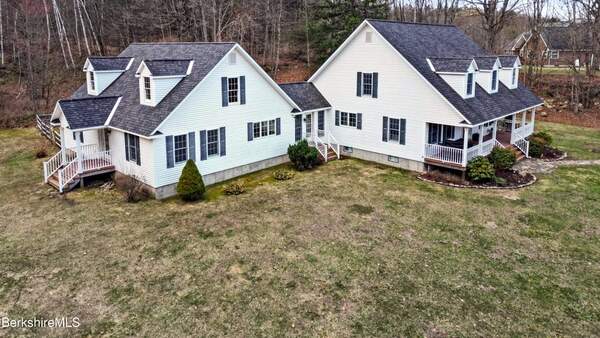
Fahey said it takes a lot of work and showed pictures of some properties rehabilitated throught the program that she described as a team effort.

"That involves everyone. It involves the city and town. It involves the receiver, certainly, and it takes a lot of people to put this together, and the time range is pretty significant, from a couple of months to a couple of years," she said. 

View Full Story

More Adams Stories