Cheshire Inn Scheduled For Demolition On Friday
Update: The inn was still in one piece — or mostly in one piece — late Friday afternoon. The reason for the delay in demotion was not immediately apparent. The inn came down on Monday morning.
|
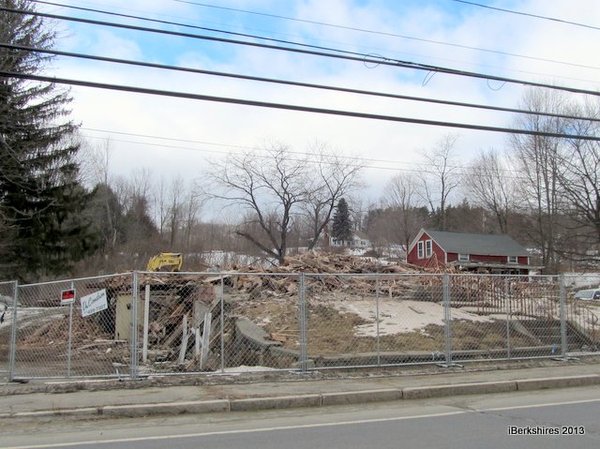
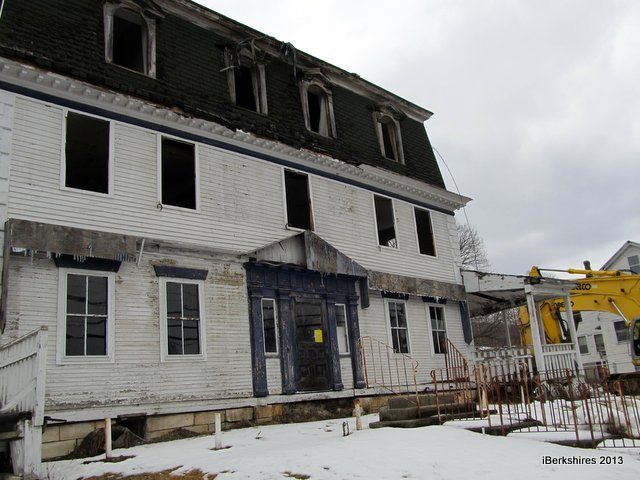
The former inn has already had its chimney and windows removed. The rest is expected to be removed Friday. |
CHESHIRE, Mass. — One of the town's oldest buildings will come tumbling down on Friday.
The former Cheshire Inn is scheduled to be demolished after workers have already removed all the windows and chimney.
Preparations for the demolition began on Monday.
The South Street inn was one of the town's first buildings but it has since fallen into disarray.
"It's sad because it is a historic building. It was one of the town's first," Board of Selectmen Chairwoman Carol Francesconi said on Thursday.
The three-story inn dates back nearly 200 years. The top two floors had housed dining rooms and a dance hall, and operated in the latter part of the 1900s as Country Squire and Tiffany Greens. More recently, a tavern operated at the basement level.
"It was quite the gathering place for the town," Francesconi said.
Former owner Peter Krutiak had planned to sell the property for a Dunkin' Donuts, but ran into opposition over zoning and use of the historic building.
In 2011, the town took the property for back taxes after it sat dormant for several years. With holes in the roof and floors as well as vandals stealing items of worth from the building, it was deemed unsafe.
The town also tried to sell the building in the hopes a private investor would restore it but received no interest. In January, voters approved transferring about $47,000 from free cash for the demolition.
"The historical society asked to take photos of the inside before it was demolished but there was nothing to take pictures of," Francesconi said of the vandalism. "Anything of value is gone, all the copper piping is gone."
The town doesn't have any specific plans for the future reuse of the land, though some ideas such as a farmers market have already been considered. But, the town owns little buildable land so the addition of downtown space is welcoming.
"It's a nice piece of property right in the center of town," Francesconi said.
Tags: demolition, historical building,