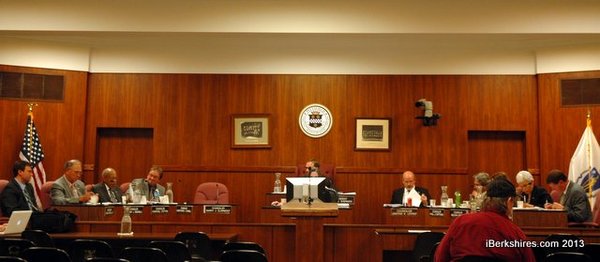
PITTSFIELD, Mass. — The City Council voted unanimously Tuesday on the first read of an amended ordinance designed to regulate the local zoning of medical cannabis dispensaries.
The first application for a marijuana clinic is expected within the next few months.
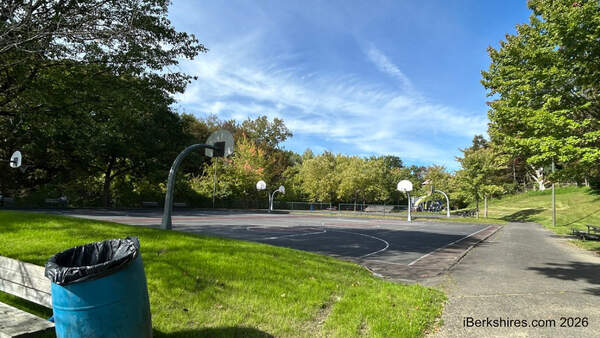
The final wording of the ordinance, which was previously developed by the Community Development Board and further tailored at the council's Committee on Ordinance & Rules, would prohibit opening of a dispensary within 1,000 feet of a school or public playground. This, in addition to other restrictions to the commercial areas in which it can be located, leave approximately 7 percent of the city open for this use, though the nature of the licensing for this operation may limit the number of possible locations further in a practical sense.
Ward 5 Councilor Jonathan Lothrop motioned to add the clause distancing such eventual dispensaries not only from schools, but from public parks and playgrounds. This recommended precaution, said City Planner C.J. Hoss, is aimed more at protecting future dispensaries from federal interference by the Department of Justice, noting that when federal law enforcement has acted against a dispensary, it has been on occasions in which the facility was close to a school or park.
An additional restriction on the distance from operating day-care centers was considered but discarded. Lothrop noted that such facilities are more plentiful and include home day-cares licensed by the state, and would further reduce the area of possible sites to about 5.8 percent of the city.
Councilor at Large Melissa Mazzeo raised concerns that the number of restrictions already in place, such as the distance from parks and restricting it from light industrial zones in residential areas, already may too tightly limit the zoning for this use.
"I hope we're doing the right thing, making it accessible to everyone but keeping it out of areas it shouldn't be in," said Mazzeo.
Hoss said only about 15 percent of the city currently allows any kind of commercial or industrial use, and Lothrop added that the zoning for adult entertainment in Pittsfield narrows the field down to 3.2 percent.
"I'm very comfortable with 7 percent," said Lothrop.
If you would like to contribute information on this article, contact us at info@iberkshires.com.
Your Comments
iBerkshires.com welcomes critical, respectful dialogue. Name-calling, personal attacks, libel, slander or foul language is not allowed. All comments are reviewed before posting and will be deleted or edited as necessary.
No Comments
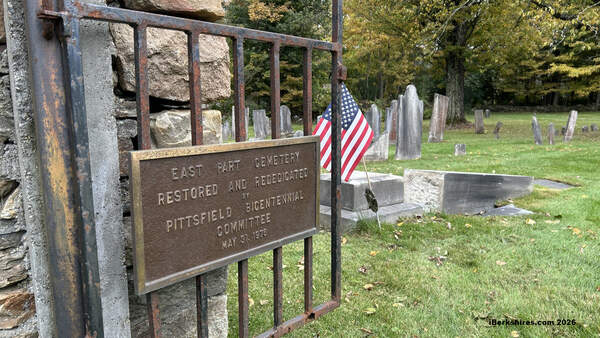
Pittsfield Considers Repairing East Part Cemetery
By Brittany PolitoiBerkshires Staff
PITTSFIELD, Mass. — The Historical Commission will consider grant opportunities for repairs to East Part Cemetery.
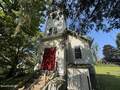
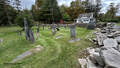
A resident reached out to the city with concerns about degradation in the half-acre burial ground at the top of Williams Street. East Part Cemetery was established in the early 1800s and has about 300 interments.
“It's a nice old cemetery, and basically, (the resident) had had concerns that the stone wall had taken some damage, the gravestones have taken some damage, and was wondering if there's anything that could be done to repair the gravestones and the wall," City Planner Kevin Rayner told the commission on Monday.
In cooperation with cemetery leadership and residents, the Historical Commission will consider applying for Community Preservation Act funds to support repairs. West Part Cemetery, on the other side of Pittsfield, has previously used CPA funds for revitalization work.
The 1080 Williams St. property is owned by the city and managed by the Pittsfield Cemetery Commission. Rayner presented photos of broken and overgrown gravestones, parts of the stone wall collapsing, and knocked-over obelisks.
Some aspects could use general maintenance and restoration, he observed.
According to the Pittsfield Cemetery and Crematory's website, East Part Cemetery was established around 1808 on land owned by Nathan Webb, who permitted and authorized its use as a public burying ground.
In 1842, Nathan Webb's son, also named Nathan Webb, deeded the property to the Methodist Episcopal Society of Pittsfield as a public burying ground, and in 1893 the Trustees of the Methodist Episcopal Society transferred their control of the cemetery to the Proprietors of the Pittsfield Cemetery. Their action was confirmed by the Berkshire Probate Court.
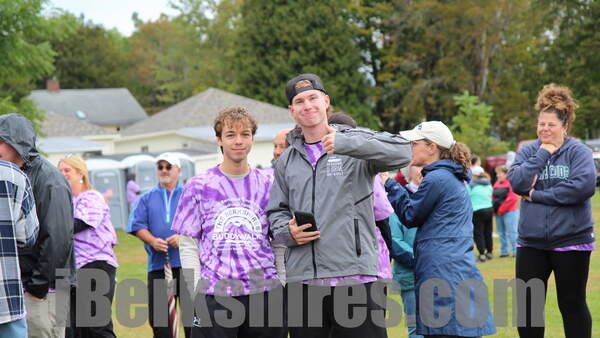
For the last 20 years, community members and organizations have taken to the streets of Dalton in their Buddy Walk attire to advocate for disability awareness, inclusivity and acceptance for all.
click for more
The park, which also has a playground and seating areas, is along the West Branch of the Housatonic River, and the work requires ConCom approval. click for more