Nurses, Patients Take Stand Against Psych Unit Closure
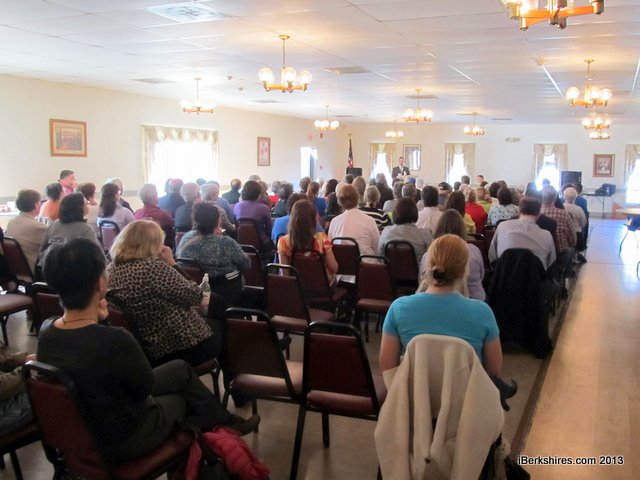 Nearly 150 people turned out for the Friday afternoon hearing on North Adams Regional Hospital's proposal to close its psychiatric unit. Nearly 150 people turned out for the Friday afternoon hearing on North Adams Regional Hospital's proposal to close its psychiatric unit. |
NORTH ADAMS, Mass. — Nurses and mental health workers testified Friday that the proposed closure of the Greylock Pavilion at North Adams Regional Hospital will put fragile community members at risk, place strain on families and disrupt and possibly endanger emergency room workers trying to deal with patients in crisis.
"As an emergency room nurse, I can tell you that there is no place more inappropriate for a psychiatric patient in crisis than the ER," said Susan Revotskie, a registered nurse at NARH, who handed over a petition calling for the inpatient unit to stay open. "We are here to say, help us help our community — give Greylock a chance."
Nearly 150 people attended the public hearing at the American Legion on Friday for the Department of Public Health, which is weighing Northern Berkshire Healthcare's proposals to close not only the psychiatric unit, but also the pediatric and critical care departments.
The focus has been largely on the fate of Greylock Pavilion, a locked psychiatric facility established 24 years ago on the hospital's fourth floor. The health system officials say the hospital has to focus on higher volume services and rethink ways to address community health needs if it's continue to be sustainable.
"We have a hospital right now that's not financially healthy," said Larry Taft, director of finance. It has been operating with less than 20 days of cash on hand. "A typical hospital has a 100 days of cash, so North Adams is in a desperate state as far as finances."
He applauded the administration for taking "bold initiatives" to keep the nonprofit going. Unless change happens, said Taft, the next hearing "won't be about closing one unit, it will be about closing all the units."
But the balance between keeping the community hospital operating and meeting the needs of the community will be difficult, as more than dozen people testified on the changes, some calling for a little faith in the hospital's course but far more decrying what they see as a calamity in the making.
The Massachusetts Nurses Association, which represents the hospital's registered nurses, has taken a strong stand against the proposal, saying the closure of the psychiatric unit will mean "dumping patients" at stressed facilities around the state and an "abandonment" of the hospital's mission. Several spoke to the growing problem of prescription drug and heroin addiction, linked to mental health issues.
Dr. Jeffrey B. Doshier, medical director of psychiatric services, explained that the hospital would be partnering with Berkshire Medical Center and the Brien Center to offer greater outpatient services, which the health care system is currently lacking, while treating critical patients in "pods" in the emergency room.
Those will be Greylock Behavioral Health Services at the hospital and with the second behavioral unit within the emergency room for those in crisis, who will be transported to BMC if admitted.
"This is still where people receive most of their care," said Doshier. "We know there's a waiting list for every psychiatrist in the county. ... We do not have outpatient service but we are committed to creating those services."
Doshier agreed that transportation for Northern Berkshire families and patients was a critical aspect that both health systems would be working on, a concern that state Sen. Benjamin B. Downing said would have to be part of any discussion.
"The demographics make health care challenging," said the senator, noting the percentage of poverty and of low-income residents in the city in particular. But he said he and state Rep. Gailanne Cariddi, after speaking with the hospital's leadership team and other mental health and state officials, were sure that "absolutely everyone involved is trying to do the best for the community."
He did hold out the possibility of delaying the Jan. 1 closing of Greylock if some type funding could be found to tide the hospital over.
According to hospital officials, the 20-bed Greylock has only been staffed for 11 beds for the past six years because of low patient volume. It's been averaging just over seven patients a day and more recently has only had a census of five, a decline of 38 percent over the past few years. To "break even," the nonprofit needs at least nine patients.
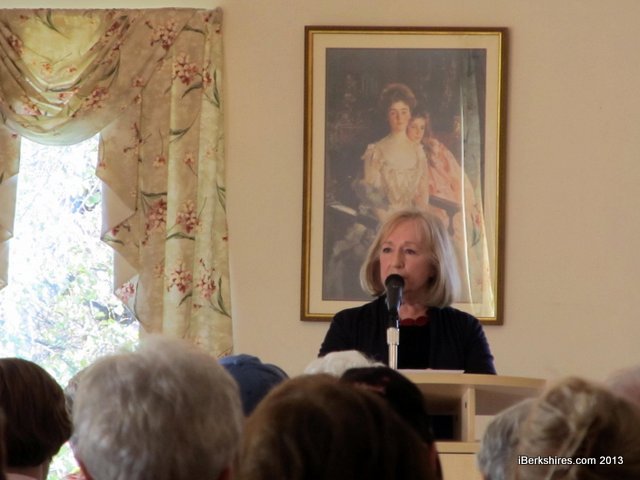
 Dr. Jeffrey B. Doshier, medical director of psychiatric services, said the health system would collaborate with other institutions to ensure services would not be lost. Dr. Jeffrey B. Doshier, medical director of psychiatric services, said the health system would collaborate with other institutions to ensure services would not be lost. |
"We are reshaping the way we think about mental health care in the county so we approach it together to provide more and better services than we do now," said Doshier. "The only thing we are eliminating are the beds that are empty now."
Nurses and mental health workers, however, said local hospitals — and those across the state — were shutting down desperately needed beds because the reimbursements for mental health patients were too low, not patient need.
"Right now, we have psychiatric patients clogging our emergency rooms across the state, some waiting for 72 hours or longer for a psychiatric bed placement," said Donna Kelly-Williams, president of the MNA.
Western Massachusetts hospitals have had the longest waits, she said. "Over the last five years, in anticipation of state and national health reform, and in response to inadequate reimbursement for behavioral health services, we have seen a number of hospitals close beds or units."
Several patients spoke to the efficacy of Greylock Pavilion in helping them through crises — often numerous times.
"We need a place close by, where our friends and family can visit us without having to go all the way to Pittsfield for help," said one man. "Please take care of basics here ... for the people who have problems here."
A woman with bipolar disorder whose family had also struggled with mental health issues over the years said she was "living proof" of Greylock's worth, having gone on to have "a rich and full life as an artist and writer."
But others said the hospital's very survival must be kept in mind.
"Everyone in Northern Berkshire needs to be able to rely on this hospital to be there for us," said Barbara Bashevkin, a sometime patient and a member of the patient and family advisory council. "In today's world, a small community hospital cannot be full service, it cannot be all things to all people.
"And if it goes on trying to do too much, it will go under and we will be left with nothing."
The Department of Public Health will answer the hospital in writing in 15 days.
Northern Berkshire Community Television will rebroadcast the hearing on Friday, Nov. 8, at 6 p.m. and Saturday, Nov. 9, at 11 a.m. on Channel 17.
Tags: DPH, hospital, NARH, NBH, psychiatric, public hearing,