North Adams Forum Looks for Solutions to Crime, Addiction
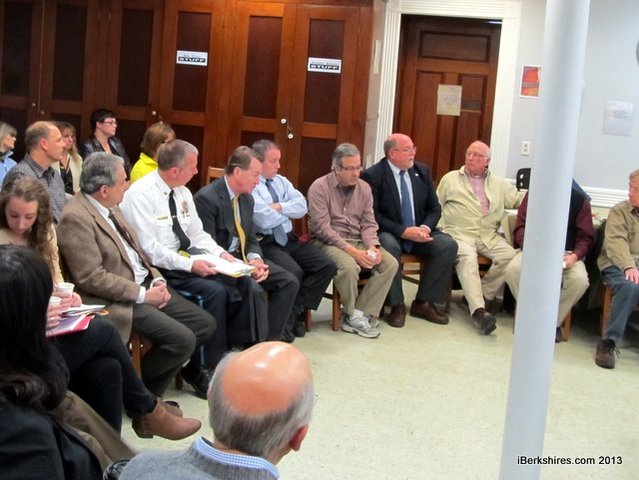
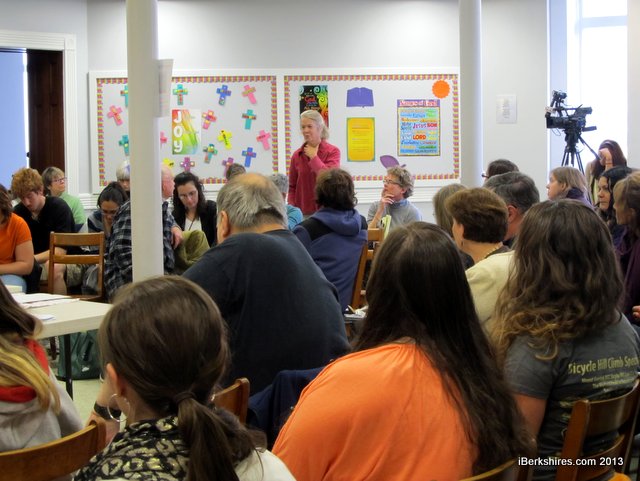 Some 70 or so community members and other discussed how to combat the root causes of crime. Some 70 or so community members and other discussed how to combat the root causes of crime. |
NORTH ADAMS, Mass. — Stamping out crime in North Adams means more than just locking up criminals.
A conversation hosted by the Northern Berkshire Community Coalition on Friday morning at First Baptist Church made it clear that the spike in crime the city's been experiencing has its roots in substance abuse, poverty and isolation and it will take a concerted effort to weed it out.
"We need to make sure the bad guy gets caught and gets punished, but we also have to be very, very proactive in how we look at the root causes of this crime," said Mayor Richard Alcombright.
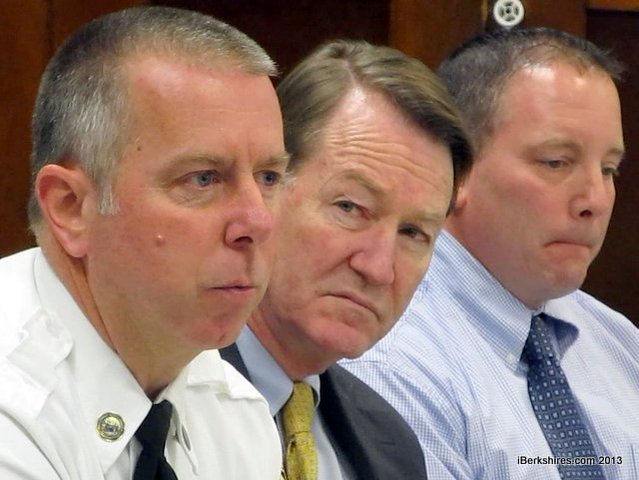
The talk was led by NBCC's Alan Bashevkin with the mayor, District Attorney David Capeless, State Police Lt. Brian Foley, Police Director Michael Cozzaglio, Superintendent of Schools James Montepare, Annie Rodgers of NBCC's Northern Berkshire Neighbors and Lois Daunis, a NBCC grants manager and member of the Berkshire Opioid Abuse Prevention Collaborative.
Over more than an hour, some 70 community members and representatives of local organizations offered insight and possible solutions to addressing crime and substance abuse.
"We need to do more, because one of the most important things is educating the community about what really is the problem and especially when we start talking about prescription drug abuse, that leading to heroin and that leading to violence," said Capeless afterward. "People have to understand it's not just other people, this is their neighbors, their family members that are getting involved in this."
In the short term, cooperation, common sense and building community will be critical to combating crime.
"We have become introverted to the point of endangerment," said Rodgers, adding that in many cases neighbors don't even know each other's names. "Neighborhoods strengthen bonds and reduce crime."
Montepare, sitting next to Cozzaglio, said that years ago, "If Mike went out the door and did something wrong, his mother would know about it before he got home."
One woman said she'd gotten to know her neighbors simply by inviting them for coffee and doughnuts. Others spoke of neighborhood watch groups or become friendly enough to share information about watching each other's houses.
The mayor and others discussed efforts for keeping children involved, such as a return of the playground summer programs and the ongoing renovations of the Armory into a youth and community center.
The most immediate way to stop crime is to lock doors and windows and don't leave valuables accessible; be aware of who is in your neighborhood and call police if you see something suspicious; and secure or properly dispose of addictive medications.
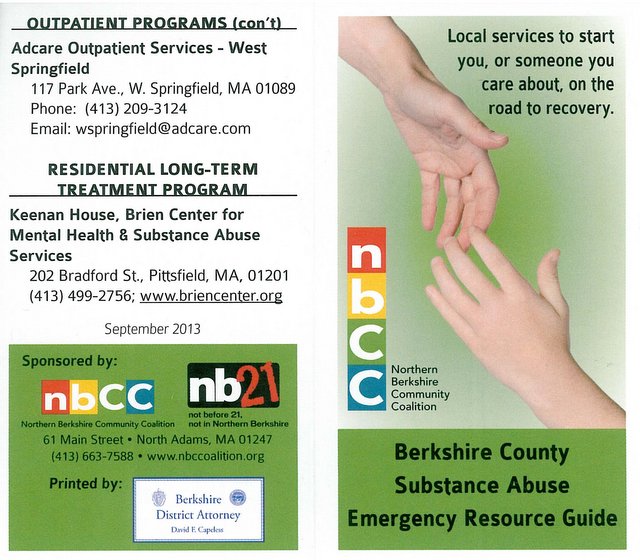
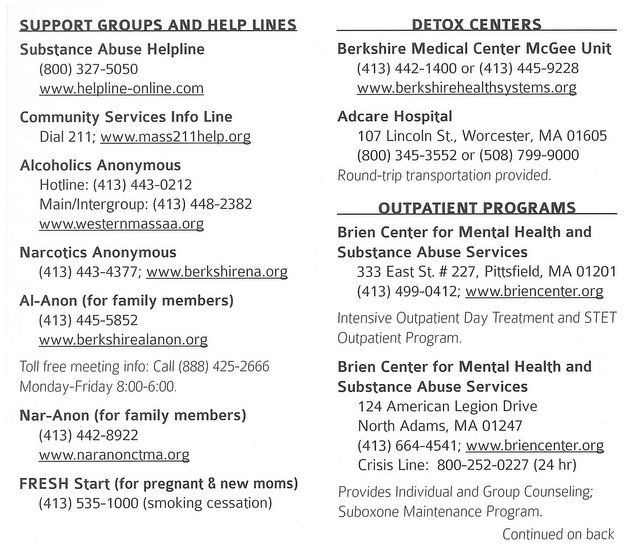
Daunis pointed to brochures and "palm" cards her group had published with listings of places to get help or information, such as Narcotics Anonymous and Berkshire Medical Center's McGee Unit, and its initial efforts to educate the medical community about the unintended consequences of prescription medication.
The group was in agreement that some help had to come from the state and federal government — funding for policing, education and social services, and putting pressure on insurance companies to cover mental health and substance abuse issues more comprehensively.
There was also support for the concept of an "intervention team," with trained mediators and social workers who could work in cooperation with police with families in crisis, and something along the lines of the old HelpLine as a central point for directing people to appropriate agencies.
The city saw an upswing in property crime this past spring and a number of violent acts, much of it fueled by drugs and alcohol, said officials. A concerted effort by police with aid from the Berkshire County Law Enforcement Task Force, state police and Sheriff Thomas Bowler's department over the summer has reined it in.
Foley, commanding officer of the task force unit, said the key has been getting people to feel safe in aiding police in their own protection.
"People were afraid to talk, until we started increasing patrols, people were afraid to talk to us," he said. The unit has run into outsider gang members setting up in neighborhoods — "wicked unacceptable" — that was addressed in a coordinated effort. "I think we were able to feel a little bit better that we were able to stop some of the gang activity."
Part of the problem is the flow of heroin into the region and the higher prices that can be commanded here compared to larger cities.
Addiction is causing a lot of the property crimes, said Cozzaglio. "We've been really trying to get a grasp on what's going on here locally, on what's going on in North Adams, and regionally, because we certainly all know that it's just not North Adams that is having these kinds of problems, this is a nationwide problem really.
"The driving force behind it, and why we're all here today, is addiction," he continued, giving the example of a man found stealing copper pipes out of a vacant home after overdosing on heroin just days before. "Heroin is now the drug of choice and it's very dangerous."
 |
 |
Capeless said changes in pain management nearly 20 years ago has given rise to overprescription of opiods such as oxycodone. "We have seen a 600 percent rise in Schedule 2 opiods being prescribed in Berkshire County over the past 18 years," he said.
Prescription medication cannot only lead to further addiction but can cause problems when taken with alcohol or with multiple medications.
"Fifteen years ago, people were coming to our shelter with a medication, they come now with a bag of medications," Deborah Parkington, of the Elizabeth Freemen Center, said. The shelter has also been working with incarcerated women whose lives are a litany of domestic violence, sexual assault and substance abuse.
In many cases, incarceration is the main avenue to substance abuse help and support programs.
"You bring somebody into detox and they release them before it's complete," said Frank Busenor, a reintegration specialist with the Berkshire County House of Corrections. "The jail has become the new treatment center in a sense."
Where once an addict might be admitted for up to 21 days, now they may be back on the street before there's a chance for recovery.
"Three days for an addict at McGee is like three days for me at Weight Watchers," said the mayor. In other words, not enough to time to make a difference.
Meanwhile, funding for educational and after-school programming for children, many of whom are at-risk or come from needy families, has dropped by half in the last decade or so.
Montepare said this year's grants are about $2.9 million, and the school system lost funding for after-school programs in two schools. "Our funding has diminished tremendously," he said, which has affected the ability for case management in neighborhoods and policing programs. The school system still has strong collaborations with regional partners, such as the district attorney's office, but is limited in what it can do.
"The biggest issues we have at this time is the drug use," Montepare said. "This is not a pot-smoking community; the things that are out there are killing kids."
Tags: community forum, Crime, drug crimes, drug prevention, NBCC, prescription drugs,