North Adams Hospital Food Waste Welcome at Pig Farm
 These little piggies will get big on scraps from North Adams Regional Hospital These little piggies will get big on scraps from North Adams Regional Hospital |
Or more accurately "almost table" to some very hungry pigs. Big pigs.
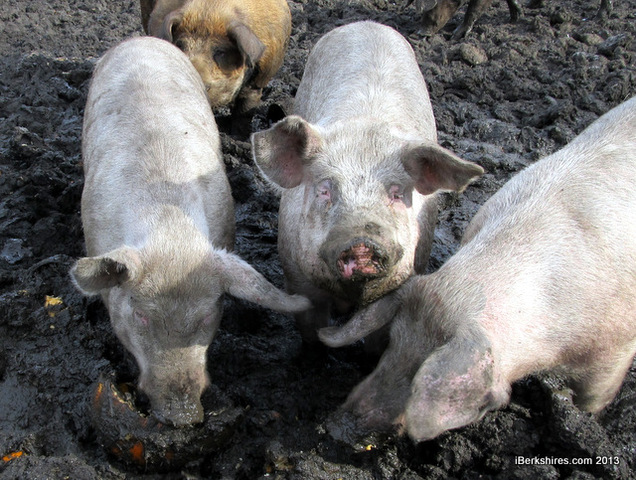
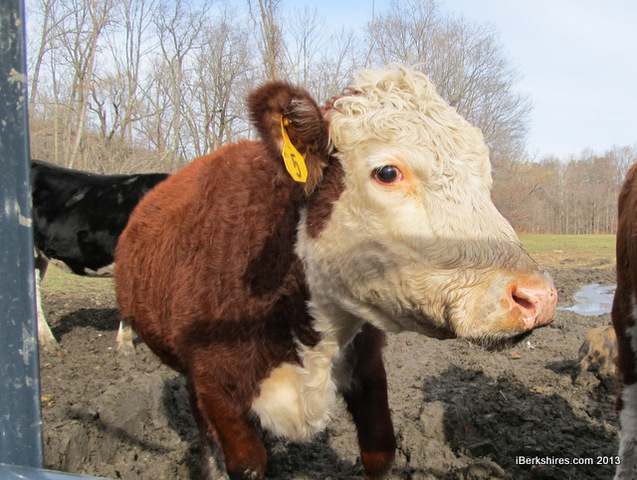
Jennifer LaValley and her brother, Peter, are continuing a farming tradition begun by their grandfather on land along the Green River, raising Hereford cattle and Yorkshire and Duroc heritage breed pigs.
"We have a novel approach ... like our cows, there are things pigs are meant to be fed," LaValley said during a visit to Big Pig Farm. "A lot of commercial farms use corn GMO grains and we don't want to do that for financial and health reasons for them.
"For our pigs, we feed waste food."
And a lot of the waste comes from an unusual partner: North Adams Regional Hospital.
LaValley is quick to point out it isn't garbage — none of the food is coming from patients' plates. It's the food that isn't used — scraps, fruits or vegetables that may be starting to turn, breads a little stale, coffee grounds, certain leftovers. Produce that isn't quite good enough to serve at the hospital but which the pigs think divine.
"We throw away tremendous amounts of food scraps and we can give them away to somebody," said hospital spokesman Paul Hopkins.
Four to 10 percent of food waste occurs before it even reaches the consumer, and a half-pound of waste is generated for every cafeteria meal, according to an article in BioCycle last year. The U.S. Environmental Protection Agency says food waste makes up almost 14 percent of municipal solid waste and is the No. 1 material in landfills and incinerators.
The main ways to reduce waste is to buy less, donate extra food to food banks and other facilities, feed animals and composting.
The hospital's project was initiated through the hospital's "Green Team," which has been working on ways to make the facility more efficient and sustainable.
Kristin Irace, a dietitian and clinical nutrition manager, said the hospital connected with the farm through Jennifer Munoz, "GET FIT" manager, who also coordinates a mini-farmer's market at the hospital. Munoz had also hooked up Big Pig Farm to the Berkshire Food Project.
LaValley was a little leery at first: "We can't support tons of food."
But the partnership has worked well over the past six weeks or so and has provided a consistent source of food. Kitchen workers fill 55-gallon drums with food waste that the farm picks up twice a week.
"It's like a full-on buffet," Irace said, adding the food would have ended up at the transfer station or down the garbage disposal. "We've been trying to make a more sustainable future for the hospital and the company."
Employees have also had a chance to see photos of "our pigs" so they know where the waste is going.
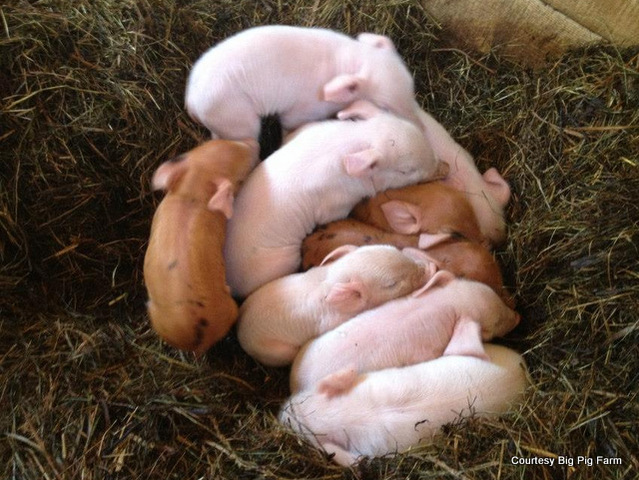
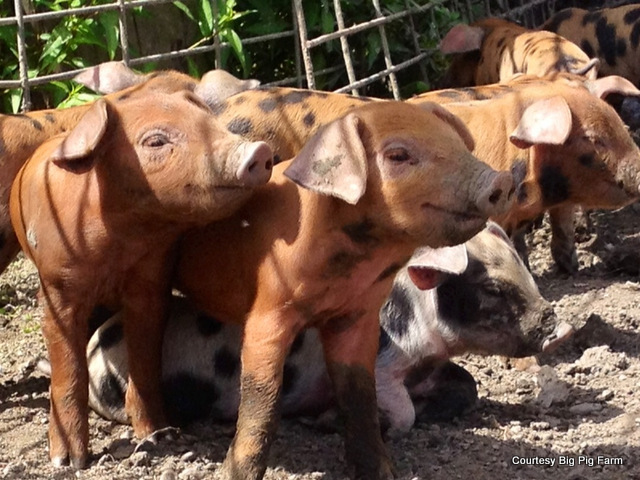
This fall, there were nine adult pigs, including a boar, and about 25 piglets of various ages.
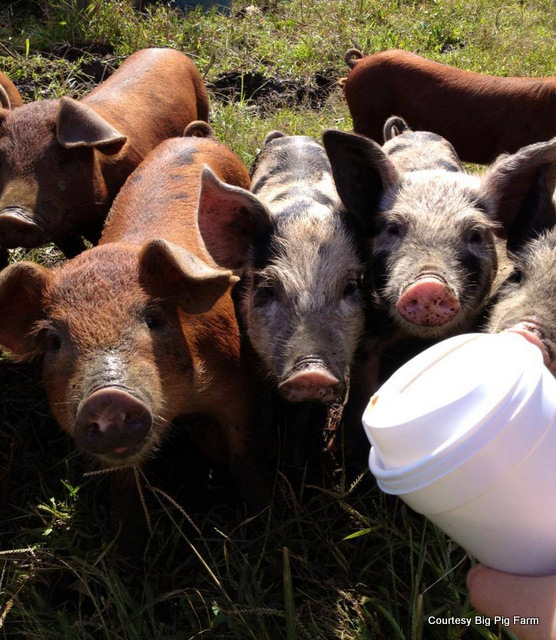 |
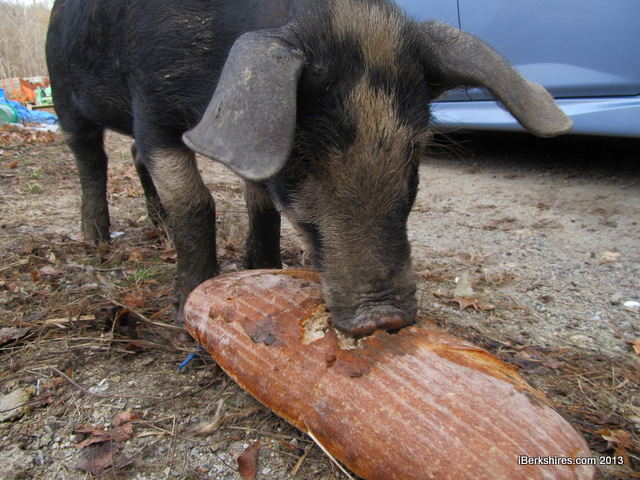
The pigs were feasting on gleaned pumpkins — though two little ones were squealing and chasing each other over a loaf of French bread.
"We're really pretty of careful of what we feed them and how we feed it," said LaValley. "They're getting pretty sick of pumpkins right now so that probably means they've gotten all the vitamin C they're going to need for the moment and we should move on."
The cattle are grass-fed and grass-finished, which LaValley said is healthier for them. The animals also have room to roam. Animals that are confined are fed a lot of antibiotics, she said, "which goes into the meat and into the food system."
The farm sells the pigs and cattle, and butchers some for their own use. "These animals for the most part were born here, they will live here until they die here and they'll go to use," said LaValley. "For us, it's a really purposeful life for them. ... We try to be as sustainable as possible."
Part of that sustainability is returning what goes into the pigs back to the food sources in the form of manure.
"The farm is going to donate some naturally fertilized soil," said Irace. "What we're hoping to do is plant fruit trees ... It's kind of a great way to give back to the our community."
The green ideas for the hospital have also resulted in sensor lighting, an intensive recycling program, and moving to be 100 percent mercury free. In the kitchen, there's a move to reduce waste, in part by initiating the room service program, which has seen waste drop dramatically, said Irace. The kitchen is hoping to track its waste to see how much has been reduced since beginning the partnership with Big Pig Farm.
For the farm, it's a chance to continue a sustainable, healthier way of operating through a network of food waste resources — to take what would have gone to a landfill and turn it into, well, bacon.
"It's nice work, it's hard work, it's seven days a week but it's really honest work and we get a lot out of it," said LaValley. "We're producing livestock and meat the right way, which is really important to us."
Tags: agriculture, farming, NARH, pigs, sustainability,