image description
The Community Development Board felt it did not have enough information to vote on a proposed electronic billboard.

Electronic Billboard in Pittsfield Raises Safety Concerns
By Andy McKeeveriBerkshires Staff
Print Story | Email Story
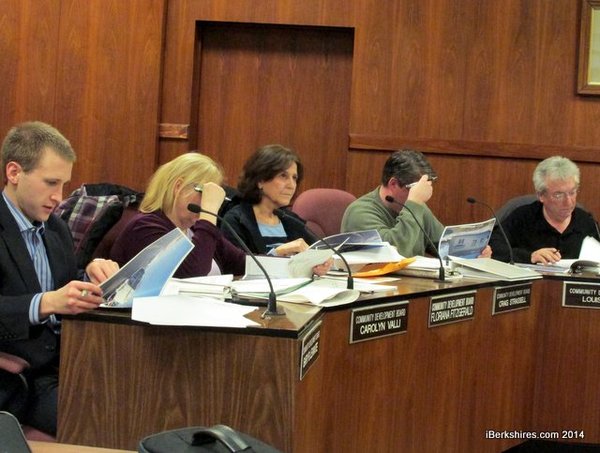
Ward 3 City Councilor Nicholas Caccamo opposed the electronic billboard at Tuesday's Community Development Board meeting.

PITTSFIELD, Mass. — The Community Development Board is worried about a proposed electronic billboard on East Street.

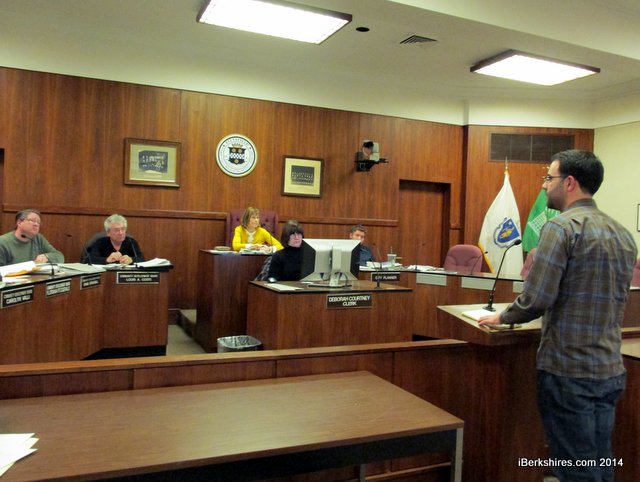
The board continued its hearing Tuesday night in hopes of receiving additional information from the developer. Lamar Advertising is proposing the county's first electronic billboard to be placed at the intersection of East Street and Elm Street.

But with a high volume of pedestrians in that area, including from Pittsfield High School, the Community Development Board is worried that it could be a hazard.

"I can see motorist being attracted to the sign and not see the children," said Louis Costi.

Board members felt the site plan wasn't specific because it didn't include the location of the posts, the size and dimensions of the billboard, and the directions it would be facing.

They asked the developer to return to the board with more specifics.

"I don't feel like I have the information to vote on this," said Craig Strassel

David Leavitt, who represented Lamar, said the sign "isn't very bright" and has never cause additional traffic safety hazards anywhere else. The sign changes every six seconds, he said, and can also be used for such things as Amber Alerts.

"It's not something you'd see in Vegas or anywhere like that. It is very subdued," Leavitt said. "It's not very bright."

But his assertion didn't alleviate concerns from residents in the area. Ward 3 City Councilor Nicholas Caccamo said he received many phone calls from concerned citizens.


"It's a high pedestrian traffic area eight months out of the year," Caccamo told the board. "I do not support the construction and placement of this billboard."

A resident who did not identify himself to the board said he is always distracted by electronic billboards when he travels.

"I can't keep myself from looking at the signs," he said. "We don't need a combination of distracted drivers and distracted pedestrians."

In other business, the board approved a special permit for a mini self-storage warehouse to be constructed at the Pittsfield Plaza on West Housatonic Street. Pittsfield Plaza had already went through the process to change the zoning to allow it and returned seeking the special permit.

"We're very excited about the project," said developer Joseph Genzano.

The 13.5-acre parcel formerly housed a movie theater and retail stores. In one corner of the property, 40,000 square feet will be redeveloped into the self-storage business. Genzano said the entire building will receive an upgraded facade to help attract other businesses to the plaza.

"We want to see a place that is alive," Genzano said.

The board also approved Tuesday night Arrowhead's request to bring farming back to Herman Melville's former home.


Tags: billboard,   commercial development,   farming,   
If you would like to contribute information on this article, contact us at info@iberkshires.com.

Social Service Organizations Highlight Challenges, Successes at Poverty Talk

By Brittany PolitoiBerkshires Staff

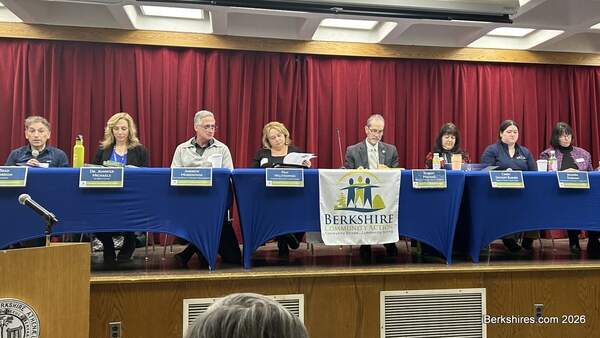
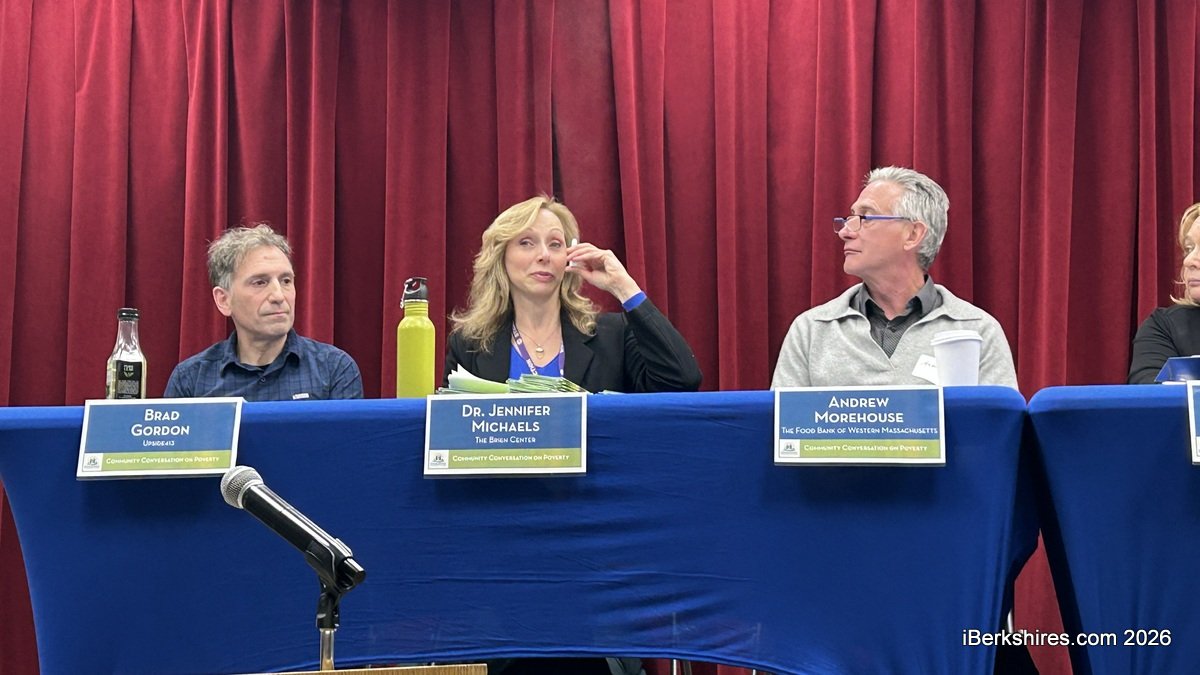
Dr. Jennifer Michaels of the Brien Center demonstrates how to use Narcan. Easy access to the drug has cut overdose deaths in the county by nearly half. 

PITTSFIELD, Mass. — Recent actions at the federal level are making it harder for people to climb out of poverty.

Brad Gordon, executive director of Upside413, said he felt like he was doing a disservice by not recognizing national challenges and how they draw a direct line from choices being made by the Trump administration and the challenges the United States is facing. 

"They more generally impact people's ability to work their way out of poverty, and that's really, that's really the overarching dynamic," he said. 

"Poverty is incredibly corrosive, and it impacts all the topics that we'll talk about today." 

His comments came during a conversation on poverty hosted by Berkshire Community Action Council. Eight local service agency leaders detailed how they are supporting people during the current housing and affordability crisis, and the Berkshire state delegation spoke to their own efforts.

The event held on March 27 at the Berkshire Athenaeum included a working lunch and encouraged public feedback. 

"All of this information that we're going to gather today from both you and the panelists is going to drive our next three-year strategic plan," explained Deborah Leonczyk, BCAC's executive director. 

The conversation ranged from health care and housing production to financial literacy and child care.  Participating agencies included Upside 413, The Brien Center, The Food Bank of Western Massachusetts, MassHire Berkshire Career Center, Berkshire Regional Transit Authority, Greylock Federal Credit Union, Massachusetts College of Liberal Arts, and Child Care of the Berkshires. 

The federal choices Gordon spoke about included allocating $140 billion for the U.S. Immigration and Customs Enforcement, investing $38 billion to convert warehouses into detention centers, cutting $1 trillion from Medicaid over 10 years, a proposed 50 percent increase in the defense budget, and cutting federal funding for supportive housing programs. 

Gordon pointed to past comments about how the region can't build its way out of the housing crisis because of money. He withdrew that statement, explaining, "You know what? That's bullshit, actually."

"I'm going to be honest with you, that is absolute bullshit. I have just observed over the last year or so how we're spending our money and the amount of money that we're spending on the federal side, and I'm no longer saying in good conscience that we can't build our way out of this," he said. 

Upside 413 provided a "Housing Demand in Western Massachusetts" report that was done in collaboration with the University of Massachusetts at Amherst's Donahue Institute of Economic and Public Policy Research. It states that around 23,400 units are needed to meet current housing demand in Western Mass; 1,900 in Berkshire County in 2025. 

View Full Story

More Pittsfield Stories