Pittsfield School, City Officials Prepping For Big Decisions
 The City Council, School Committee and the School Building Needs Commission gathered on Monday to recap what has happened in the school building project. The City Council, School Committee and the School Building Needs Commission gathered on Monday to recap what has happened in the school building project. |
The School Building Needs Commission invited both the City Council and the School Committee to a joint meeting on Monday to detail the steps that have been taken in an effort to keep the boards apprised of the process.
"We think this is too important. [This meeting is] for all us to hear the same thing at the same time," said Kathleen Amuso, who co-chairs the School Building Needs Commission.
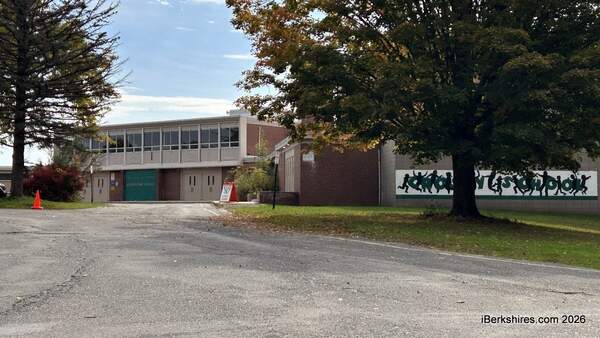
Building a new Taconic High School dates back about a decade, when concern for the facility was cited as lacking by the New England School Development Council.
Since then city officials went through various planning and discussion — particularly around the number of schools the city should operate — and last year decided on a concept. In July, the School Buiding Needs Commission selected building a new school over two options to renovate.
"That brought us down a long road," said state Rep. Tricia Farley-Bouvier, who used the open microphone before Monday's meeting to voice her opinion that the City Council is going to be asked to make the "most important vote in a generation."
"We are in the red zone," she said. "It is my great hope that we cross into the end zone."
The Massachusetts School Building Authority invited the city into the reimbursement program and the School Building Needs Commission has been working with consultants through that process.
"This is something that involved the entire city of Pittsfield," said School Committee Chairwoman Katherine Yon. "We are getting to crucial time periods now."
With those decisions coming, the groups want everybody to know exactly what they are getting into. The project is expected to cost $115,700,000 at this point, based on estimates generated by Drumney Rosane & Anderson Architects Inc.
DRA has worked with the School Building Needs to first develop an educational plan, which includes the number of vocational labs, then come up with enrollment estimates and then ultimately come up with a plan to build a brand new school.
The School Building Needs Commission opted for the new school option because they saw more "value" than any type of renovation project. The option to build new was chosen because it improved educational outcomes, had lower ongoing maintenance costs, was less disruptive to the students during construction, had a greater certainty to hit the budget target, allowed for more expansion and didn't require as much "temporary costs."
"We are at the end of that preferred schematic report phase," said Carl Franceschi.
Next, the consultants will move to the schematic design that will further firm up the cost estimates, construction time and fully detail the scope and specs of the work. The school is being designed for 147,770 square-feet to accommodate 920 students.
"This school is going to house all of Pittsfield's career and technical programs," Franceschi said.
Mayor Daniel Bianchi said the state has looked favorably with the design DRA crafted.
"A lot of the things we've talked about like flexibility, they were really impressed with," Bianchi said.
The cost is a particular area the School Building Needs Commission wanted to make sure the other two government bodies understood. The total project is expected to cost somewhere close to $115 million with the state reimbursing nearly 80 percent of that. But, that reimbursement is only for items deemed eligible. Towns with similar projects ultimately ended up paying about 35 percent of the entire cost.
In this project, that would break out the the city bonding about $41 million, with the state paying the rest. To add another level of complication with the votes that need to be taken, the City Council will be asked to approve borrowing the entire project amount because of the way the reimbursement system is set up. The city pays the bills and the state pays the city a portion of the submitted invoices.
"We get a brand-new school for $41 million or so," said Ward 6 City Councilor John Krol.
When asked about security, Franceschi told the boards that the MSBA will reimburse for hardware and software for security equipment and encourages school officials to determine their needs by working with police, fire and other first responders.
"Security is not just a design issue, it is an operational issue," he said.
When asked about disruption on education during the two years of construction, Franceschi said there will be some noise but most of the potential disruption will be mitigated. The contractors won't be able to have excessive noise on certain testing days, a fence will separate the current school from the new one, a new driveway will be built on Valentine Road for contractors and workers will go through background checks.
Superintendent Jason McCandless described the project as a "one high school project in a two-school district." Both Taconic and Pittsfield High School need to be renovated, with Taconic being the first to undergo work. He said the one-school option had been fully looked at and it is now too late to go back to starting over again.
Tags: MSBA, school project, Taconic High,