Plan to Remove Pittsfield's Mill Street Dam Moving Forward
By Andy McKeeveriBerkshires Staff
Print Story | Email Story
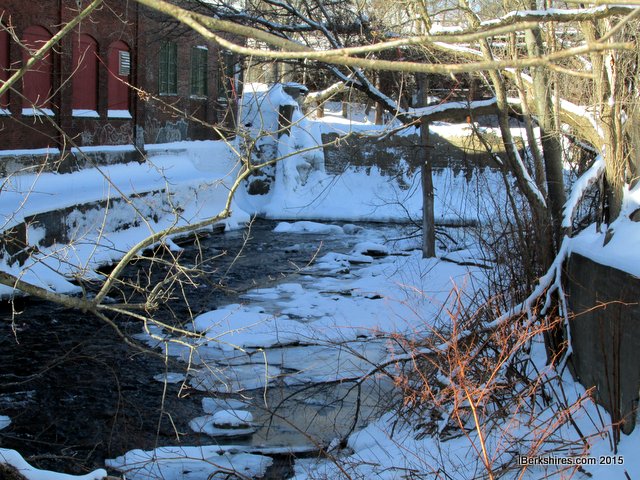
The dam on Mill Street, next to the Hawthorne Mill, is slated to be removed next year.
PITTSFIELD, Mass. — Plans to finally remove the Tel-Electric dam on Mill Street are being crafted.
 
The city and the state have been looking to remove the century-old dam for a decade and now has the funding to do so.
 
The state Department of Fish and Game won a $1 million federal grant through the U.S. Department of Interior's Hurricane Sandy Coastal Resiliency Competitive Grant Program for the demolition in 2016.
 
"The removal of the dam will have a big impact on the health of the river," said Alex Hackman, a restoration specialist with the Department of Fish and Game's Division of Ecological Restoration.
 
"Our role in this project is to lead the engineering effort to remove the dam."
 
The free-flowing river is better for water quality, fish are allowed to swim a greater distance, and all of the food and sustenance flows downstream — all creating a better ecosystem.
 
Engineers from Princeton Hydro are currently designing the removal plans. 
 
"They are very experienced in dam removals, particularly dam removals in urban environments," Hackman said, explaining how the hydrology of the flooding and flow impacts nearby structures.
 
"The sediment that has built up behind the dam is also backed up on those structures ... we are creating a very detailed typographical map."
 
Dam removals pose many challenges, Hackman said, because of the change in sediment and water flow has on nearby infrastructure.
 
For a century, sediment has built up behind the dam and upstream, so engineers need to look at the integrity of the bridges and roads upstream to determine how they'll be impacted when the sediment is gone, the river is flooding in new places and riverbed is changed. Then craft additional plans to reinforce the infrastructure or redirect waterflow if needed. 
 
Some of that sediment will be dredged out of the west branch of the Housatonic River, removing pollutants. The removal became feasible only recently when the price went down because the pollution behind the dam wasn't as bad as previously thought.
 
Hackman said the pollution is mostly heavy metals and petroleum products from local industries of old. At first the department was expecting a heavy amount of removal would be needed. But it was determined that the sediment behind the dam is just as polluted as the rest of the river so keeping the sediment there wouldn't be making it worse.
 
"The river has a long history of cleanup activities," Hackman said.
 
The West Branch of the river has been an ongoing priority for the city as it works on multiple "greenway" projects to restore it.
 
According to Parks and Open Space Manager James McGrath, the city has put in a canoe launch at Wahconah Park, installed wildlife feeders, upgraded Dorothy Amos park and is designing a River Park on Dewey Avenue as part of these efforts. 
 
"We've been trying to implement discreet projects in the West Branch of the river," McGrath said.
 
Berkshire Environmental Action Team and the Housatonic Valley Association have been holding cleanups of that section of the river to cull out garbage and other items tossed into the river. 
 
"They've been great river stewards," Hackman said.
 
Recreation is eyed to return to that section of the river, improving the living quality for the neighborhoods from Wahconah Park to Clapp Park. Hackman added that "you'll be able to kayak all the way from Wahconah Park to Woods Pond."
 
The dam removal is a next step toward restoring the West Branch but McGrath adds that the removal is a public health issue, too.
 
"This is a privately owned dam that has exceeded its life," McGrath said. "We don't want to see this fail ... There is a public safety aspect of it."
 
The city was awarded $750,000 in 2006 from the Natural Resource Damage Trustees, which oversaw funds from the General Electric consent decree. That $750,000 is being added to the $1 million the state was awarded to complete the project in 2016.
 
"We're expecting it to cost about $1.25 million up to $1.5 million," Hackman said, but those numbers are far from being finalized.
 
A breached dam would send rushing water downstream and endanger roadways and the ground around West Housatonic Street neighborhoods. The city will be overseeing the removal of the dam and helping with permitting.
 
The state is handling the permitting, which is expected to include MEPA (Massachusetts Environmental Policy Act) review, dredging 401 water quality permit, chapter 253 permit from the Office of Dam Safety, and a 404 permit with the Army Corps of Engineers.
 
"It's not a challenge anymore. It just takes time," Hackman said of that process.
 
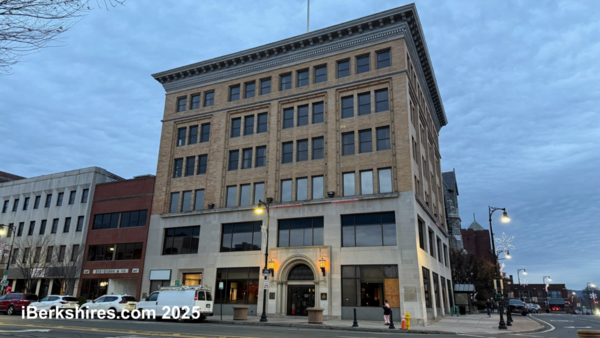
The dam is attached to the Hawthorne Mill Building, which used to house the Tel-Electric Piano Player Co. factory.

Tags: dam,   Housatonic,   river restoration,   
If you would like to contribute information on this article, contact us at info@iberkshires.com.

BRTA Focuses on a New Run Schedule

By Breanna SteeleiBerkshires Staff

PITTSFIELD, Mass. — The Berkshire Regional Transit Authority is still working on maintaining its run schedules after dropping the route realignment proposal.

Last Thursday's meeting was Administrator Kathleen Lambert's first official meeting taking over the reins; retiring director Robert Malnati stayed during a transition period that ended last month.

Lambert is trying to create a schedule that will lessen cancellations. There was a two-hour meeting the week before with the drivers union to negotiate run bids and Lambert is working with the new operating company Keolis, which is taking over from Transdev.

The board spoke about anonymous emails from drivers, which Lambert said she has not seen. iBerkshires was not able to see those letters, but has received some. 

"They were lengthy emails from someone describing themselves as concerning BRTA employee, and there was a signed letter from a whole group of employees basically stating their concerns. So, you know, to me, it was a set of whistleblowers, and that, what my understanding is that this really triggers a need for some type of process to review the merits of these whistleblowers, not going to call them accusations, but basically expressions of concern," said member Stephen Bannon.

A letter iBerkshires received spoke of unhappy drivers who were considering quitting because of decisions being made without "input from frontline staff," frustration and falling morale, and the removal of the former general manager shortly after Lambert came in.

Lambert said it's difficult to navigate a new change. She also noted many drivers don't want to do Saturday runs and it has been hard negotiating with drivers on the new runs.

"I would like you all to keep in mind that the process of change is super difficult. Transdev has been here for 20 years, and some of these drivers have never known any other operating company, the way some of the operations have been handled has been archaic," she said. "So getting folks up to speed on how a modern transit system works is going to be painful for them. So I don't want to say that I'm unsympathetic, because I am sympathetic, but I am trying to coax people along with a system that's going to seem very strange to them."

The board spoke about better communication between them and Lambert, citing cooperation will be best moving forward.

"There's just a lot of stuff in the air right now, and there are a lot of fires to put out to make this a coordinated effort. And if we don't keep our communications open and be straightforward, then you get blindsided about how you know the input that you could get from us about your position, and how you know what's going on in your direction, and we get blindsided. And I think that we have to make sure that this is a collaboration," said member Sherry Youngkin.

"Both sides have responsibilities, because in the long run, this advisory board is going to have to make decisions as to how we brought forward and if we've gone forward in a fair and helpful way. And I think that's hopefully what everybody is looking for also." 

Transdev and Keolis held a three-day recruiting event interviewing almost 40 candidates and offering jobs to eight, but only three stayed on to start training. Lambert said it was disappointing but she will keep trying to retain more people.

In her first report to the board, she noted that ridership dipped a little over 10 percent, but still remains higher than last year, adding that was because of cancellations of services because of the lack of drivers.

Like the last meeting, some of the advisory board members were torn over the start of the Link413 service, worried that the start of the service took drivers away and the numbers of riders are low.

Lambert, however, said the ridership has doubled from last month.

"As I've spoken before, we have, generally, a six-month adoption for brand-new service before you can really go in and evaluate, are you being successful based on the grant that my predecessor wrote along with the team for PBTA and RTA, we are ahead of schedule, which is pretty good, so I'm hoping that will continue to improve," she said.

Member Renee Wood said the board never approved the service, adding the only thing she could find in the minutes was a vote to accept the equipment. She said it was supposed to be put on the agenda to discuss.

"The Link413 service has been three years in the making. It's been a grant that was accepted and has been working with our partners, PVTA and FRTA, to put into place. So I don't have the entire history of how that process worked, but it's been three years in the making, and did we not understand that once we accept that grant that we were going to put in new service?" Lambert said.

The board discussed if Title VI, the Civil Rights Act, was followed with an accurate review and accurate amount of time for public comment period on the service changes and if its attorney should review if the  grant conditions were properly followed.

Lambert said changes had the 60-day comment period included in the proposed route realignment packet, giving the opportunity for the community to respond to that as well but will look into the legality of the situation with their attorney.

View Full Story

More Pittsfield Stories