Rep. Mark Files Massive Bill Aimed at Reducing College Debt
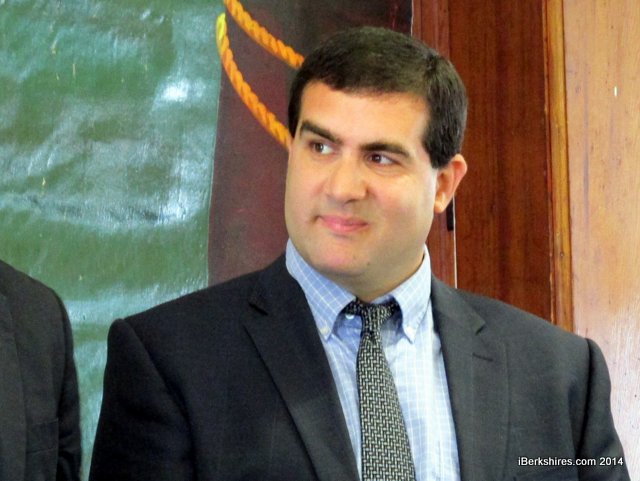 State Rep. Paul Mark co-sponsored the bill with higher-education committee leaders. State Rep. Paul Mark co-sponsored the bill with higher-education committee leaders. |
The Peru democrat headed a joint subcommittee to research and make recommendations on how to make college more affordable last summer.
That report was issued citing the need for more financial literacy and loan forgiveness programs, an effort from schools to lower costs and that the state should increase funding for colleges and universities.
With the start of another two-year legislative session, the leadership of the higher education committee has filed a massive bill to do just that.
"We sponsored a comprehensive higher-education bill that is going to try to implement the recommendations of the student loan and debt subcommittee last session," Mark said on Thursday.
"It is all one bill and obviously some things can taken out. It will be amended. But we want to start the full conversation."
The issue of college debt has been growing across the nation and students from public Massachusetts colleges are averaging close to $30,000 in debt by the time they graduate. Contributing factors include tuition and fees more than doubling in Massachusetts over the last decade and the state's low ranking in offering financial aid programs.
The investigation found that the need for financial literacy rose to the top. At hearings across the state, the panel consistently heard that students were enrolling without fully understanding the debt they were incurring.
One aspect of the bill aims to combat that by requiring all state schools provide a uniform information packet that outlines exactly what the costs are, how and when it would be paid, and a list of options for financial help, such as income-based loan forgiveness or similar programs.
"There are a lot of programs that already are out there that people don't know about," Mark said. "We already have these programs in place so let's make it better. Let's make it more accessible."
The omnibus package also calls for all public K-12 schools to build financial literacy programs into their curriculum.
Further, the bill would establish savings programs in which the state could contribute for those who begin saving for college at an early age.
In a separate bill Mark filed, the state would create a loan forgiveness program for doctors working in rural areas. State. Rep. William "Smitty" Pignatelli filed a bill for a similar program for social workers last session and again for this one.
Beyond creating programs to address areas of need, the omnibus bill includes the establishment of new tax breaks for students and employers who contribute to an employee's education.
For students, the bill creates an option of deductibles or tax credits. Employers would receive 25 percent of their contribution — up to $1,000 — to their employees' education.
"Right now, there are tax savings at the federal level. We'd be bringing in tax credits on the state level," Mark said.
The bill also pushes the colleges to decrease costs, including providing for partnerships for schools to work collaboratively on efforts like group buying. And it requires that all course credits can be transferred among state schools in an effort to cut down the time it takes to graduate.
It also includes funding to help build those types of programs.
Over all, the bill features 34 sections focused on different aspects of higher eduction costs. Mark expects some of it to be altered through the legislative process but hopes the majority of it will be passed into law.
"I feel really good that the conversation was started and is taking hold. There is a lot of support for actions like this on the campuses themselves," Mark said.
Tags: college costs, higher education, legislation, paul mark, public education,