Nuclea To Close Pittsfield Lab
PITTSFIELD, Mass. — Nuclea is closing its Pittsfield lab.
The company announced "a major internal reorganization" on Monday that transfers its primary focus from research and development of products to commercialization. With that, the CLIA laboratory in Pittsfield will close.
"Nuclea's senior management is in the process of developing a new strategy aimed at rapidly expanding sales of its existing products, and introducing new products and services in 2016. The company’s commercial focus will remain on diagnostic and prognostic products for the management of cancer and metabolic disease, especially diabetes," reads a statement from the company.
The company says a new leadership team "is being assembled to implement the aggressive strategy. As part of its reorganization, the company is streamlining its operations which required eliminating position in both its Pittsfield and Cambridge locations."
"Since its inception, a major area of focus for the company has been economic development and job creation. The new plan will position the Company to grow rapidly, and to continue providing essential diagnostic kits and services for the management of patients in oncology and diabetes," the statement reads.
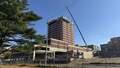
In Pittsfield, the company has two locations — office space on Kellogg Street and a larger facility on Elm Street. The statement does not say much about the future of the Pittsfield locations other than the closure of the lab. It is unclear how many positions will be lost or what will happen to either properties.
The move comes a month after one of the founders, Patrick Muraca, left the company. The board hired Don Pogorzelski as the new president and chief executive officer. At the time, Muraca said the company is "not leaving Pittsfield" in an interview.
The Pittsfield company has previously been lauded by state officials including the governor as examples of the state's emerging advanced manufacturing industry. The company was at one point envisioned to be a member of the Berkshire Innovation Center but later backed out.
In 2014, it was announced that the company would receive $510,775 in state tax incentives from the Massachusetts Life Science Center. The incentive came with a provision that the company would create 25 jobs in 2014 and maintain them from five years. It is unclear what will or has happened with those funds.
On Tuesday, Mayor Linda Tyer responded to the news expressing concern for those will be impacted by the closure.
"Naturally, we are saddened to learn of the closing of Nuclea Biotechnologies. The company played a vital role in the advancement of the sciences in the City of Pittsfield, and throughout Berkshire County. Our focus is set on ensuring that those who are directly impacted by the closure will have the necessary support and assistance they need to move forward through this difficult transition," Tyer said.
"But as we look ahead, it is important to recognize the many successful small businesses that are still here, and that serve as the strength of our local economy. As a city, our focus is to create the optimum conditions for not only their success and viability, but for that of new businesses as well."
As of 5 p.m. Tuesday the company still have not responded to questions regarding further details of the closure or job lose.
Tags: closure, Nuclea,