New Committee Digging Into Pittsfield Airport Financials
.JPG)
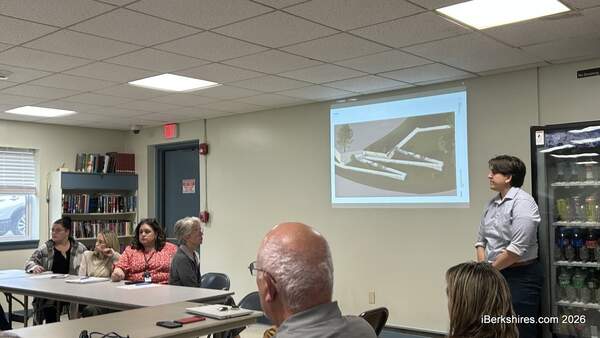
The two airport employees, Robert Snuck and Brien Spencer, arrived with a stack of documents outlining lease agreements and revenues to give to the committee.
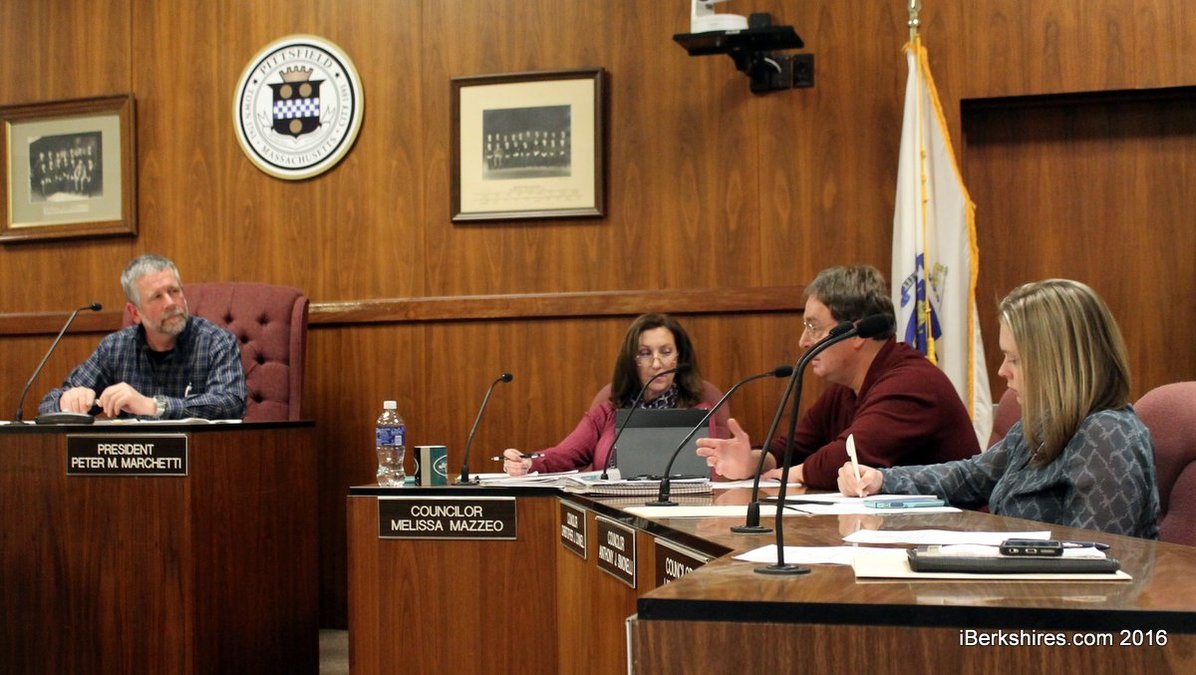
Three city councilors requested a cost/benefit analysis for the airport, which has been operating in a deficit annually. A nine-member group met for the first time Thursday in hopes to submit a report in May.
"We are not here to replace the Airport Commission or do anything the Airport Commission does," Sakshaug, who will serve as chairman, said.
The commission consists of Councilors Donna Todd Rivers, Melissa Mazzeo, and Christopher Connell; former City Councilor Jonathan Lothrop; Jeffrey Cook; Michael Lyon of Lyon Aviation; Ashley Sulock; and Airport Commission Chairman Chris Pedersen. Sulock will serve as secretary.
"It is basically the finance which is the basic reasoning behind the whole formation of this group," Connell said.
The group hopes to meet every two weeks. At its next meeting, the commission will dig deeper into the revenues coming into the airport.
At the first meeting, discussion centered around the history of the airport and leases — specifically the leases for Westwood Industrial Park, which is on airport property.
Airport Manager Robert Snuck suggested an entire meeting could be focused on Westwood.The Federal Aviation Administration purchased the property for easements and then the city used federal funding to build the lease in conjunction with Pittsfield Economic Revitalization Corp. He said there are seven different leases in which 85 percent of the funds go to PERC.
"There were a lot of things done under the table," Snuck said.
He said two of those leases are $1 each for 40 years with renewals for 40 more years at the company's option. He said there are leases that former mayors had refused to sign and then the followup administration approved. He said there is a shortage of state approvals in many of the leases. He said he's found letters from the FAA warning the city not to enter leases or else future funding would be jeopardized.
"It is a bad agreement," Snuck said.
The leases are for the land and the companies constructed the buildings. The companies do pay personal property taxes to the city.
Outside of the park, there are a number of leases with Lyon Aviation, the airport's fixed-based operator. Lothrop volunteered to work with Snuck to review all of the leases and develop a document for the next meeting.
There are also fuel sales and tie-down fees among the sources of revenue.
The airport receives $150,000 per year from the FAA as well. Assistant Airport Manager Brian Spencer said most of that money in recent years has been spent to offset the city's share of the runway expansion project.
"We've always rolled these funds toward the projects that the city does have to fund a portion of that comes up every year," Spencer said.
Currently, the airport has $300,000 saved up for the city's share of an upcoming runway resurfacing project.
The airport has only two city employees working there — Spencer and Snuck.
Lyon said his company served as the airport manager in the 1990s under a contractual basis, as is the case in many small airports. The city opted then to hire a city employee to run the airport while much of the maintenance work was being done through contracts. About nine years ago, the city created a second position and Spencer says he'd been there for the last six years and handles all of the maintenance work with Snuck.
"We are currently understaffed. We take care of about 550 acres of properties, two runways and all the lights and signs," Spencer said. "With just the two of us, we do a pretty bang-up job."
Lyon Aviation is in charge of billing users of the airport and while there are no specific records of which companies are using it and for what reason, Lyon says there are a lot of people going to Williams College and Canyon Ranch. He said the airport has a "regional draw."
Snuck added that there are regulations in the pipeline limiting jets from landing on runways smaller than 5,000 feet, which will increase traffic to Pittsfield because the planes won't be able to land at the smaller airports.
The commission will also want to look at the expected lifetime of assets there, any liabilities, or any legal issues that may be coming down the line. The group also hopes to have a look at the capital improvements planned in coming years with the expected funding from the FAA, which provides between 90 and 95 percent of the cost for most projects.
"We really need to know from nuts to bolts what it is taking in, what are the expenses on a yearly basis and long term, and the long-term expenses that are not reflected in the budget," Connell said.
Thursday's meeting was the organizational meeting and touched briefly on an array of the issues. The group will now dig deeper into the management to come to a determination if the benefits of the airport outweigh the cost of operating it.
Tags: airport, Pittsfield city council , revenue,