image description
The Select Board hopes to vote on a Complete Streets policy following a public hearing in April

Clarksburg Looking to Adopt 'Complete Streets' Policy

By Tammy DanielsiBerkshires Staff
Print Story | Email Story

Amanda Chilson of Mass in Motion says the town is a good position to submit its policy to the state.

CLARKSBURG, Mass. — Clarksburg is seeking to adopt a "Complete Streets" policy that would guide its future road construction and open up state grant funding.

The state Department of Transportation has been pursuing the concept of Complete Streets, which envision ways to accommodate pedestrians and bicyclists along with motor vehicles. The guidelines encompass sidewalks, crossings, bike lanes, signage, striping and intersections.

Some $12.5 million in funding is available in fiscal 2016 and 2017; eligible communities can receive from $50,000 to $400,000 toward technical assistance or construction.

Amanda Chilson, local coordinator for the state's Mass in Motion program, explained the policy as being about connectivity and feasibility.

"It's not saying all this has to be done immediately, it's saying as you're repairing or maintaining an area of road, does it make sense to take a look over ... is there a shoulder wide enough?" she said.

"If it's not feasible, then it doesn't make sense."

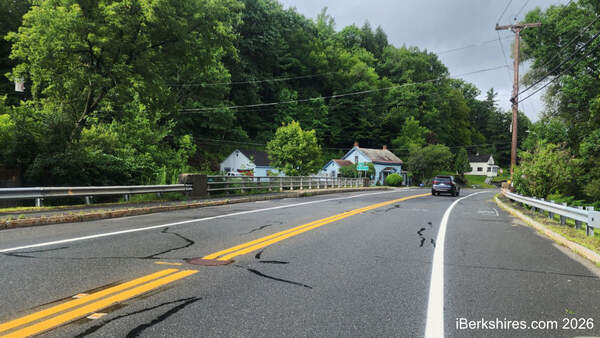
The idea would be to use West Cross Road (which is being redone to add a bike lane that was not included during last year's construction) as the "spine" and work out from there.

And it doesn't all have to be construction. Because the roads are very rural, an alternative could be as simple as posting signs or other markers cautioning drivers to "share the road," said Chilson, if the shoulder isn't wide enough for pedestrians or bikes.

The proposed policy states that the town "envisions a transportation system where all modes, users, and abilities can move safely and efficiently. ...

"The Town of Clarksburg recognizes that all roadway projects, including new construction, maintenance, upgrades, and reconstruction, are opportunities to apply Complete Streets design principles."

The four-page policy broadly outlines implementation and goals; best practices to follow; incorporation into current zoning and other bylaws; and the need to inventory and update infrastructure gaps and improvements.

Town Administrator Carl McKinney said he initially envisions going south at the intersection of West Cross and Middle Road because of the unresolved bridge issue on Cross Road.


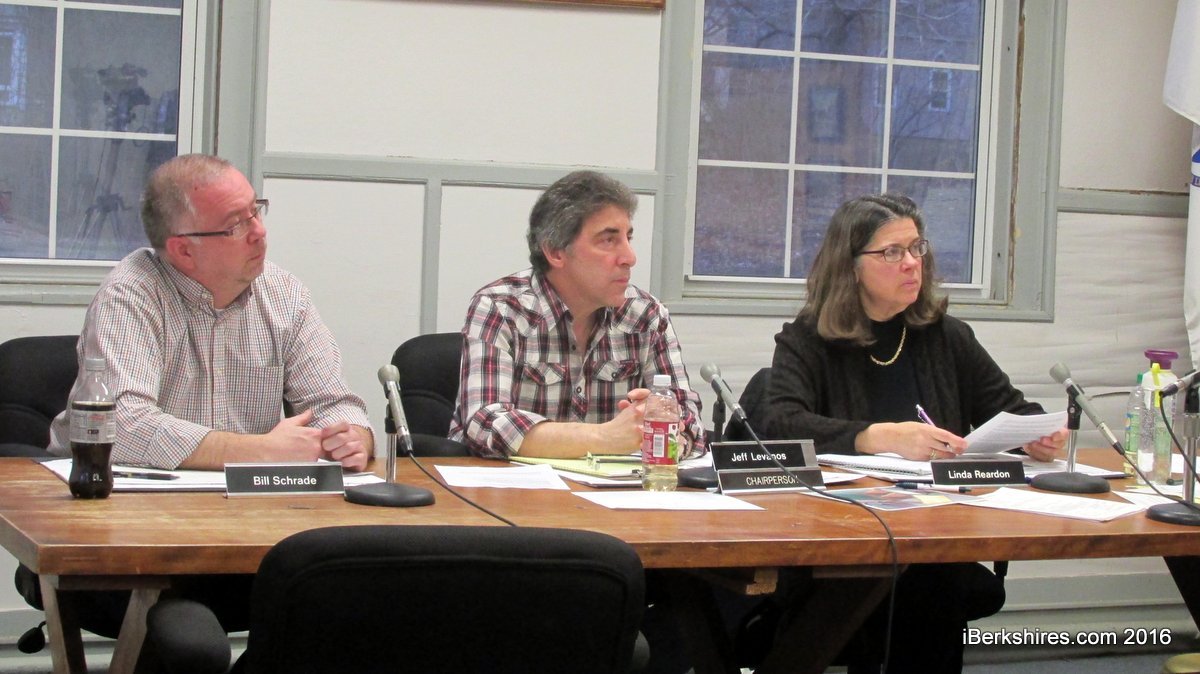
Selectman William Schrade Jr. asked if the town has to be focused on a priority project, if a continuous bike or walking path accomplishes what the state is looking for.

Chilson said the program is centered around what the town wants to do.

"The first round of funding helps to bring in technical assistance to actually what you're looking for and a timeline based on your plan and exactly what you need," she said.

The primary requirements are that a municipal employee attend Complete Street training; that the policy scores 80 out of a possible 100 points; and the development of a Complete Streets prioritization plan. Meeting these criteria puts a community in line to apply for construction funds.

As a Community Compact member, Clarksburg is already awarded 4 points.

There is no specific deadline, but the state is encouraging policies be submitted on a seasonal basis.  

"You guys are in a great position moving forward," Chilson said. "There are only a few other communities in Berkshire County that have submitted their policies."

Residents are being encouraged to read over the policy in advance of a public hearing to get community input that is expected to be Wednesday, April 13, at 6 p.m. in the Selectmen's meeting room at Town Hall. The document will also be available at Town Hall, the school and the Senior Center.

In other business, Chairman Jeffrey Levanos read off again the offices up for election this year. The last day to take out nomination papers is Friday, April 1; they must be returned with signatures by Tuesday, April 5.

McKinney reported that he would be meeting with state Rep. Gailanne Cariddi, D-North Adams, on accessing small-bridge money.

Approved the installation of a bookhouse at the library. The "Little Free Library" is part of an effort by the Berkshire United Way and Saudi Arabia Basic Industries to install 50 of them across the county.

Clarksburg Complete Streets Policy by iBerkshires.com


Tags: bike lane,   complete streets,   MassDOT,   pedestrians,   public policy,   roads,   state grant,   

If you would like to contribute information on this article, contact us at info@iberkshires.com.

The Round Stone Barn is 200 as Hancock Shaker Village Celebrates

By Breanna SteeleiBerkshires.com

PITTSFIELD, Mass. – Hancock Shaker Village shared a bicentennial birthday, inviting the community to take part in the festivities.

On Sunday, Hancock Shaker Village celebrated the 200th birthday of their signature Round Stone Barn, the only circular barn ever built by the Shakers.

"The Round Stone Barn turned 200 this year," Hancock Shaker Village CEO Carrie Holland said. "It was erected in 1826, so we thought we would celebrate with the whole community. We'd do some cupcakes, and then we're lucky to work with Yo-Yo Ma's team to curate some special performances in the Round Stone Barn."

The community was invited to come to the village for free and take part in a wide range of activities including tours, live music from Ida Mae Specker Trio and Tanglewood, demonstrations, and more. 

The Round Stone Barn is widely recognized as an architectural icon and agricultural wonder. 

The Shakers operated a working dairy farm at Hancock until the 1950s, and the barn was originally a stable for its 52 milk cows, according to the museum's website. 

It has ground-level access on all three levels so, wagons could enter on the upper level to deposit hay into the central haymow on the main floor below, then the empty wagons would be driven around the circular barn floor and exit the same door it came in, eliminating the potentially dangerous activity of backing wagons out of a barn, the website said. 

The cows stabled on the main floor faced inward toward the haymow for ease of feeding and manure was shoveled through trapdoors to the cellar, where it was stored until needed as fertilizer in the gardens.

"Every time anyone comes into the timber frame, it's the very first thing that they see, and they always say, 'It's just like a photograph,' and it is," Director of Collections Kathleen Lynch said. "It's beautiful. People want to get married in front of it. We did our Christmas the festival of trees in here, and the mechanisms of it are so phenomenal."

Hundreds enjoyed music in the round barn and celebrated with free cupcakes and food trucks while listening on the history the village portrays.

"I think this is one of our most iconic buildings, and a lot of people have their own memories tied to it," Holland said. "We do baby animals here, and so there's personal history. ... But it's also a fantastic opportunity to share a bit about the Shakers, their design techniques and practices, their  sort of obsession with making operations efficient, because this is used as a dairy barn, and so they created these three layers to make their operations more efficient."

"So you can talk about their innovation. Of course, they're the longstanding legacy of agriculture here. So it provides us an opportunity to kind of share the Shaker history in this beautiful space, tied to folks who have their own personal memories here as well, and it's such an impressive, beautiful spot. I have such appreciation for what it took to build this 200 years ago, and whenever we can do fun things and throw good parties here, it's a great day.""

Holland helps build momentum for the unveiling of Hancock Shaker Village's new visitor center that is planned to take place next month.

The new facility will include updated galleries, community event spaces, collection storage, and research areas for the museum's collection of over 22,000 Shaker artifacts and ephemera. The renovated building aims to enhance the visitor experience through improved orientation, expanded program offerings, closer access to collection items, and views of the surrounding landscape. 

"Part of what we're also celebrating is past, present, future, and the future," Holland said. "We're very excited for expanded programming. We're opening our new visitor center, our Center for Shaker Studies, so that creates a whole new opportunity for our visitor experience, our galleries, our stewardship, and then that relates also to the programming that we can do in the historic village."

View Full Story

More Clarksburg Stories