Pittsfield Police Officers Focus Efforts on Building Community
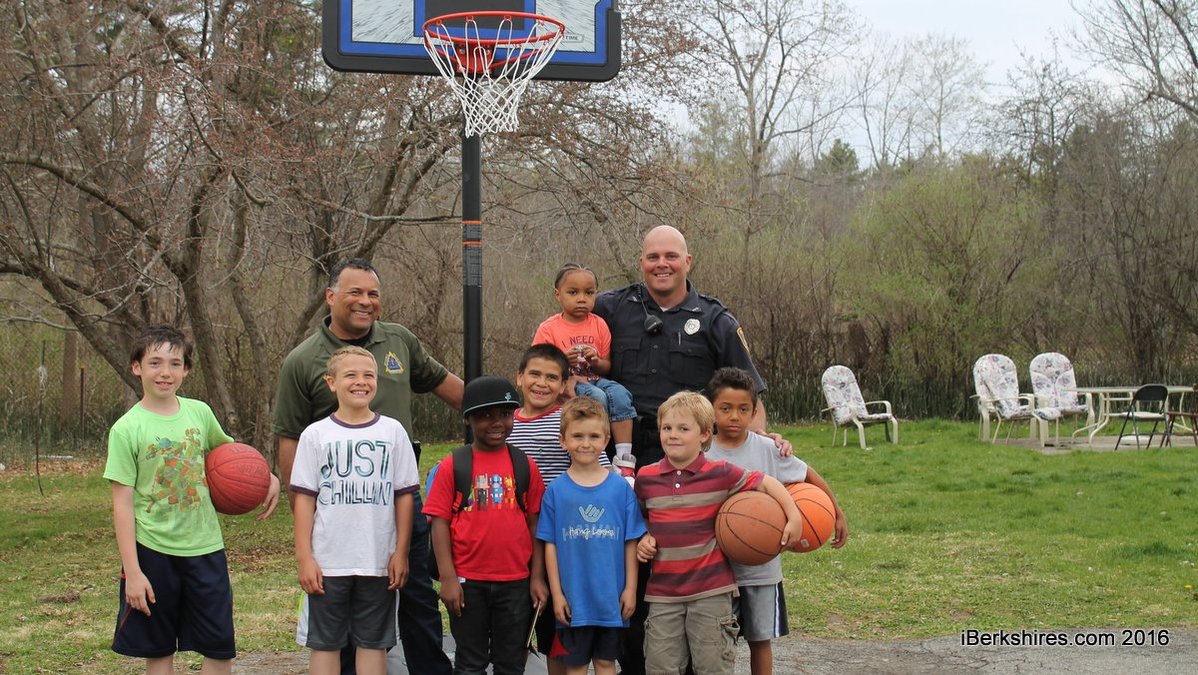
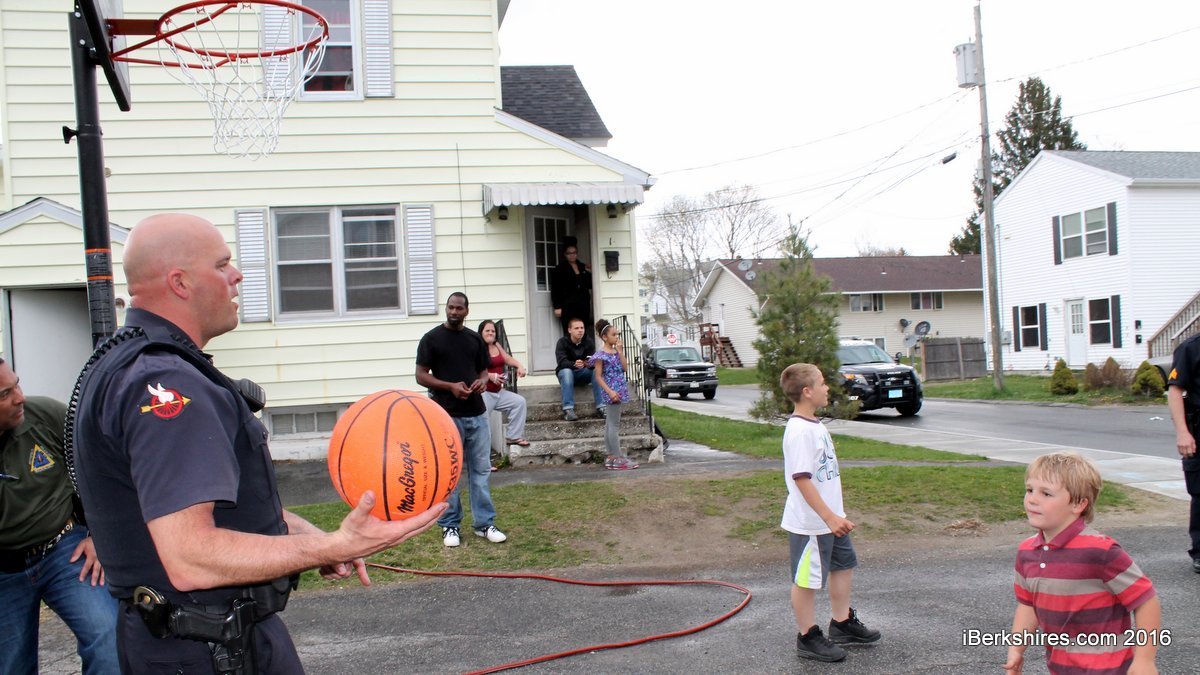
Officer Darren Derby after delivering a new basketball hoop for the children who live on South Atlantic Street.
Officer Darren Derby was doing just that when an elementary pupil looked up to him and asked why cops beat and shoot innocent people.
"They were throwing questions at me and saying things like 'my parents told me not to talk to police officers because they shoot people with their hands up or beat people,'" Derby said.
"I was kind of taken back by that. You didn't realize that a 5-year-old is going to say that to you. From that point on, you couldn't turn around and not walk back into the school again."
Derby kept and keeps going back. He'll eat lunch or breakfast and talk about the student's life and day. He's there to be a friend, not for discipline.
After three years, instead of being greeted with a leery eye, the students now run up to him for high fives and hugs.
"They look up to us. We are role models for these kids. It is absolutely remarkable to witness these kids, who would probably never have talked to the police, now come up, hold your hand, hug you, high five you. They have a comfort level and awareness of who we are and that we are not the awful people they thought we were. We're not scary," Derby said.
Derby and Officer Sean Klink have become the most active in community policing efforts and more and more officers are finding time to give a little more.
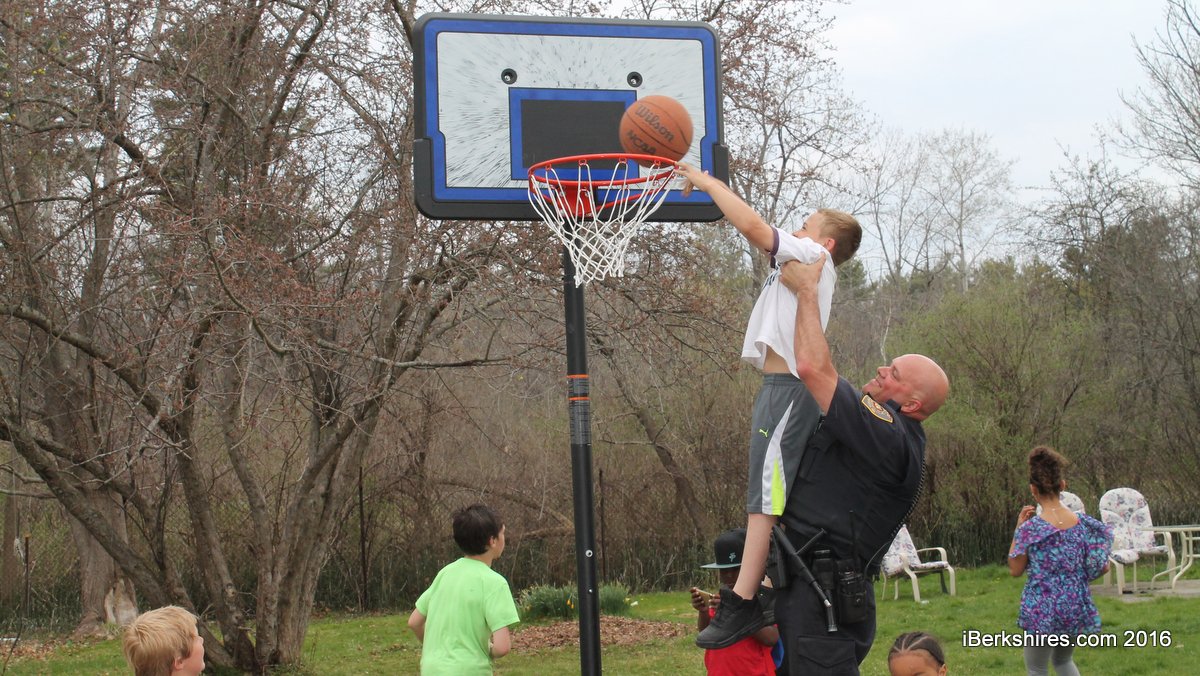
When officers see a group of the city's youth playing basketball, they stop to throw some hoops. Derby recently had a video of himself driving the police motorcycle and tossing a ball into the hoop in front of a group of young men go viral. (You can see it further down in the story)
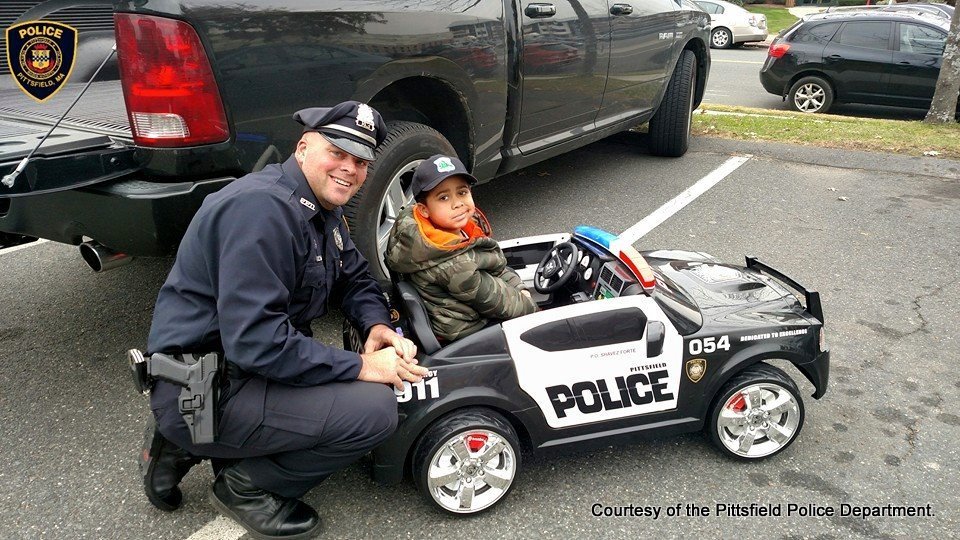
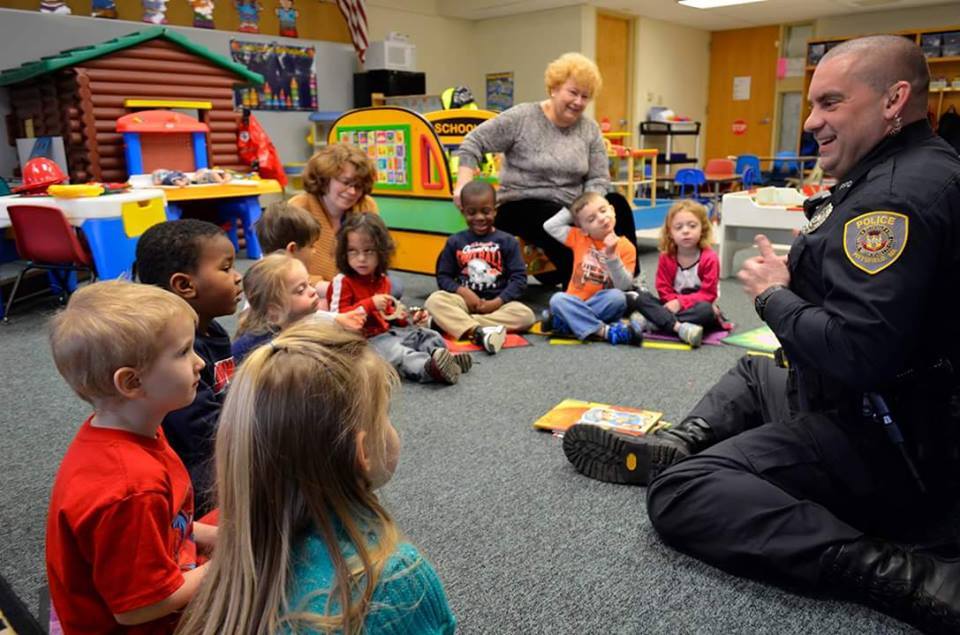
In every elementary school, they are stopping in for chats or to read to students. The officers travel with teddy bears, stickers, badges, and other items to give away.
They're gathering donations of toys to give children at Christmas. They're entering Pinewood Derby car races. Derby has even tried his hand at longboarding.
"The officer's initiative has been the driving force. The supervisors and command staff, obviously it is encouragement on our level, but it is really the boots on the ground getting into the buildings where we get the most benefit," Lt. Gary Traversa said.
Recently, Derby saw a video on Facebook of the Florida "basketball cop" who brought former NBA star Shaquille O'Neal to shoot hoops with a group of young men. Derby reached out to the officer, shared his own video of the motorcycle dunk, and the basketball cop sent the department balls and two hoops to give away. John Bilotta from John's Automotive later donated more basketballs.
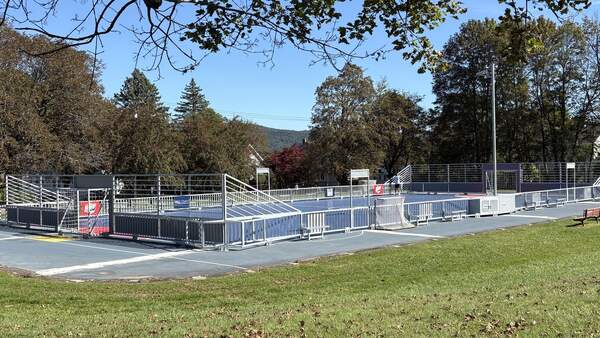
Derby was joined with Chief Michael Wynn and Sgt. John Soules to deliver a new hoop and ball on Friday to the children who live on South Atlantic Street. Earlier in the day he saw the children playing on an old, decrepit hoop and promised to return with a surprise.
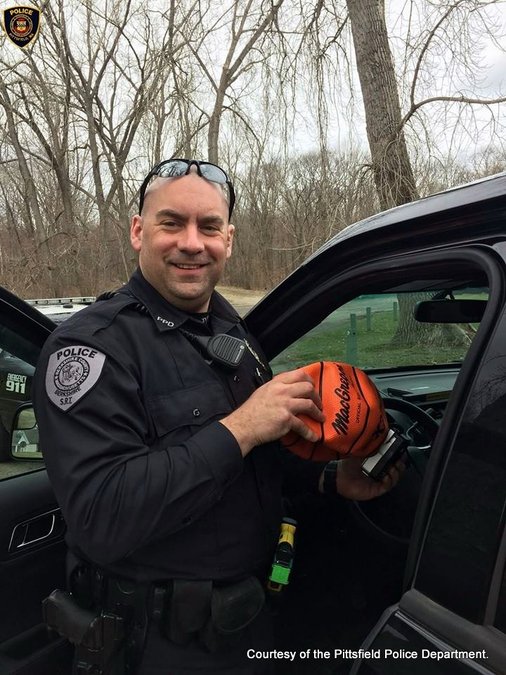
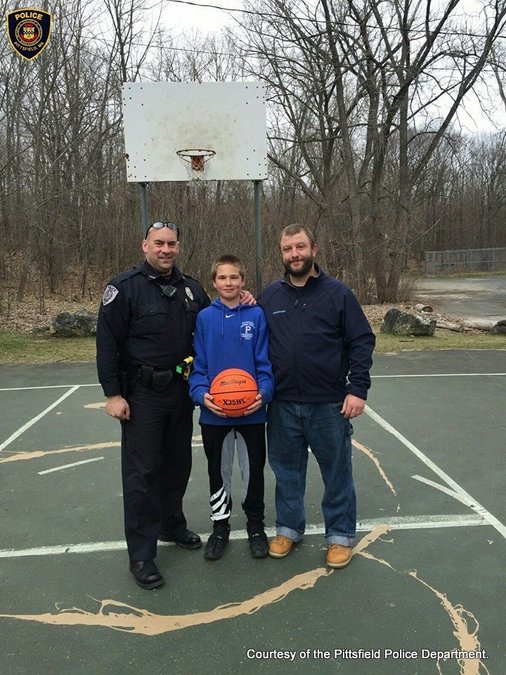
When a local boy had his basketball stolen at a park recently, Klink arrived armed with a new one and an air pump. The basketball-focused effort is part of a national "hoops not crime" movement among community policing officers.
"Would you rather have them our there shooting hoops or doing something? I was never a huge fan of basketball but it is not about the basketball. It is about so much more," Derby said.
Traversa said the officers aren't required or even asked to stop in at the schools, attend events, or get out of the cruiser to play and socialize with the city's youth. The officers are still required to report to all calls as normally required. But, there is a growing trend among officers to make those moments between calls matter even more.
"It is more or less just encouraging officers who are willing to do it and giving them the freedom to do it," Traversa said.
Community policing isn't a new concept but is seemingly finding a resurgence throughout the country. Those efforts have been scaled back over the years because of economic conditions but is now coming back stronger and gaining momentum partly because of an increased visibility through social media.
"It is allowing the community and police to be one. I think almost all of the departments, with the exception of a few, had gotten away from that because of staffing levels. There hasn't been the funding to allow that to occur," Derby said.
The community engagement isn't just eyed to combat an increasingly difficult public relations battle but brings tangible results.
"You only hope that in five to ten years, when they are in their young adolescence stage where they are making mistakes and bad choices they remember that interaction. When there is an issue and you arrive on scene, they are more willing to talk to you rather than shying away," Derby said.
Derby said many of the interactions he has are with children from broken homes or from families stuck in cycles of criminal activities. He hopes to help those children "break the cycle" and move on to productive lives — maybe even as police officers themselves.
Traversa added that by being more approachable and out of the car, parents or juveniles can tell officers about things happening in the area that otherwise they wouldn't report.
Since officers started putting more of an emphasis on these efforts, Traversa said there has been an increase in the number of community events the department has been asked to participate in, not just to provide security detail.
Further, he said the department is going to make a stronger effort within to coordinate and improve the community outreach efforts.
The biggest community outreach comes through Facebook. A few officers have been given the Okay to use the department's page to share these stories. Derby watches the shares and likes and says one positive story about something an officer did will reach thousands of people, whereas just a decade earlier few would hear of it.
"Any law enforcement agency is skeptical of joining social media because it can hurt you. But, I think it more helps you than hurts you," Derby said.
There is not set of protocols outlining how community policing is supposed to be done. That falls onto the whim of an individual officer when the opportunity arrives. For Derby, that's what makes it that much better.
"We are not forced to do it. Those of us who are doing it are doing it because we want to do it which, I think, makes it that much more powerful," Derby said.
"There is really no book for it. It has to come from within and it has to be voluntary."
Tags: community policing, Pittsfield Police,