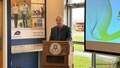
BMC Opens Center For Long-term Addiction Treatment
PITTSFIELD, Mass. — Half of BMC's new Clinical Stabilization Services center is filled just hours after it opened.
The new center at Berkshire Medical Center is a "step down" level of care for those who just went through detoxification. Instead of being waitlisted at outpatient services or released back home, those struggling with addiction can now stay up to 30 days in the new unit to continue fighting the disease.
"It is really good that we can offer these services because there is such a gap," Shannon McCarthy, program director of the McGee Recovery Center and director of the new center, said.
The new unit, which opened on Thursday, is "clinical" instead of medical. Currently, someone entering the McGee unit gets short-term care for just three to five days, being monitored for detoxification withdrawals. Now, once completing that instead of being sent back out, the new unit provides support groups, wellness programs, Suboxone or Methadone treatments, and programs intended to address underlying issues to the substance abuse.
There will also be family support programs and helping the patients find sober housing and teach life skills. The staff will provide the next level of care for someone overcoming addiction and connect them with social services or structured outpatient programs. The closest centers providing such services were located in Springfield and Holyoke.
"Twenty-two employees were hired for this unit," McCarthy said. "It is more of a clinical team."
From there, the patients can transfer to the Keenan House, which is operated by the Brien Center, or other programs.
The 30-bed unit was made possible through the Department of Public Health, which approved the hospital's proposal to create the long-term care unit. The state provided start-up funds in the form of furniture, beds and a two-week orientation.
Additionally, the state will reimburse costs for a period of six months as a last resort for patients without an insurance policy to cover the stay, though McCarthy said most of the patients have sufficient coverage because of a change in laws requiring providers to cover more of the recovery.
"About 12 years ago insurance providers paid for a longer detox," McCarthy said, adding that over time insurance companies began to scale its coverage back to only essentials such as short-term detoxification.
But now, companies are covering more and in the new unit patients can stay on site 24 hours a day for 14 to 30 days.
The need is particularly striking in Massachusetts and in Berkshire County, which led to the state asking for proposals to increase the number of beds. The request was for "hot spots" of shortages, which includes Berkshire County.
"There are other CSSes across the state but there are few beds," McCarthy said.
Locally, McCarthy said a decade ago 70 percent of entering the addiction programs were for alcohol. That has changed, and now 60 percent is for opioids. Further, the McGee unit is saw 300 more patients in 2015 than the previous year.
The unit is voluntary but will also have an option for courts to mandate as conditions on such things as parole. The unit is available to all of Berkshire County and McCarthy said 15 patients are already on the unit. The hospital isn't sure if more beds will be needed but will be monitoring the progress of the new unit as the year goes on.
"Right now 30 beds should fill a need not available right now," McCarthy said.
The new unit is located on the first floor of the Edward A. Jones Memorial Building and was put together in 45 days. The hospital sent in its proposal to the DPH in November and was given the approval in April. Since then, the space was renovated and the staffing hired.
BMC is the first to open the additional beds under the request for proposal.
Tags: addiction, addiction recovery, BMC, opiods,