Pittsfield Delays Needle Exchange Vote Until March, Maybe Longer
PITTSFIELD, Mass. — At the request of the mayor and City Council, the Board of Health has put the brakes on the opening of a needle exchange program.
Just one month ago the board was ready and planning to vote in favor of giving the authorization to allow Tapestry Health to pursue opening one somewhere in the city in tandem with the state Department of Public Health.
But Tapestry had just presented to a City Council subcommittee and received positive feedback from the members. The Board of Health opted to wait until that subcommittee report was filed with the full council just in case there were any additional thoughts or opinions from the other city leaders.
The Board of Health scheduled a special meeting on Dec. 14, the day after the City Council meeting, intending to vote. And then it was canceled.
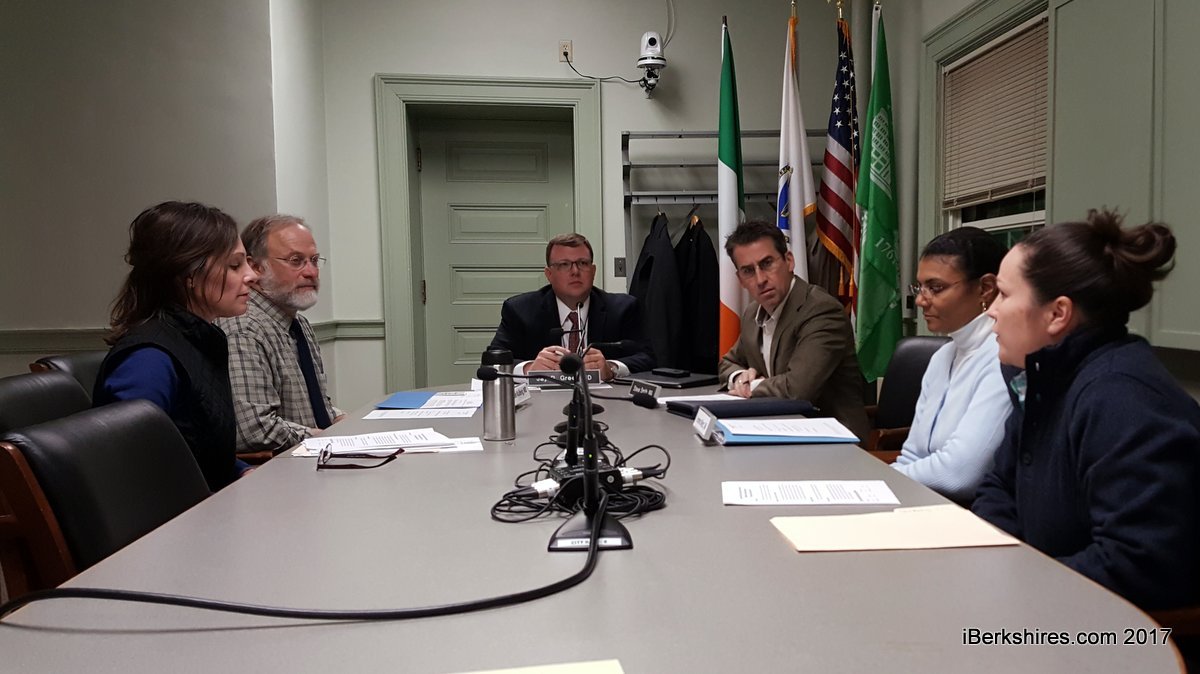
According to Jay Green, who is assuming the chairmanship role after the resignation of the former chairwoman, the board heard from both Mayor Linda Tyer's office and members of the City Council asking for more time.
"The board received feedback from the mayor's office and the City Council and requested we act in unison," Green said. "We want to make sure all of the relevant public boards fully understand what it is... we are being respectful and collaborative with the mayor and the council."
The three bodies are now planning a series of public outreach efforts to explain the program, according to Health Director Gina Armstrong. The first of which is a panel discussion about the topic at the library in February. Armstrong said speakers are being lined up now. From there, the city will be using radio and television to solicit feedback and spread information.
The public outreach efforts are expected to progress in February and the Board of Health could make the decision in March.
"We may not be ready in March but I'd like to keep the conversation going," Green said.
The issue has been talked about on many forums since August. The main focus of the program is to tackle a growing number of Hepatitis C cases.
According to Berkshire Opioid Abuse Prevention Collaborative Coordinator Jennifer Kimball since 2010 Berkshire County has seen an increase of 1,100 cases and that countywide 8.7 out of ever 1,000 people have the disease. Halfway through 2016, there were 150 new cases of Hepatitis C, 71 of which in Pittsfield. If those trends continue, the county will have 2,000 infected individuals which is double the national average.
Diseases like Hepatitis C and HIV are often spread through intervenous drugs, and all of Berkshire County has seen a drastic increase in heroin use — in 2015 there were 17 confirmed overdose deaths up from just 8 in 2012 and that isn't including suspected but unconfirmed deaths. Earlier this week, state police reported that its department had responded to 877 suspected overdose deaths throughout the commonwealth in 2016.
With such numbers, much of the criticism for needle exchange programs is that enables heroin users by giving them the tools to take the drug.
Proponents of needle exchanges say the user will do it anyway and the needles just help prevent them from getting and spreading diseases from sharing dirty needles. Needle-exchange programs are able to reach a difficult-to-reach demographic, current users who aren't quite ready for treatment and those who relapsed, and help guide them into treatment programs. Those utilizing the program are anonymous.
Liz Whynott, director of the Syringe Access Program for Tapestry Health, says at the first meeting with the client, the organization performs a risk assessment, and provides education on various recovery programs — making referrals as needed — and teaching healthier behaviors. Then, there is a round of testing for various diseases and helping connect those who are positive with the health care needed. The tests and consultations are done every six months, and even more frequently with the higher risk populations.
Whynott said those who use the needle exchange program are five times more likely to enter a treatment program.
Adding to the public health concerns, needles are being left throughout the city, tossed out of car windows, or discarded in public parks. The needle exchange program disposes of used needles.
Location becomes another issue. Tapestry can't move forward until it gets the letter from the Board of Health and funding from the state. The state has placed a priority on opening exchanges because there are only 11 cities or towns with one and transportation is difficult for addicts, Whynott said in November.
Armstrong expects that once a location is identified then another round of public outreach will be needed.
"People want to know if this is going to have any potential effects on us and our neighborhoods," Armstrong said.
Board of Health member Steve Smith visited the program Tapestry runs in Holyoke and reported that his worries about the impacts were put at ease.
"I think my visit there assuaged some of my misgivings," Smith said.
The city will also have a chance to see what happens in North Adams after a program opens there in the coming weeks.
The Board of Health was fully behind the program but had learned some lessons from its roll out of tobacco regulations. The board adopted new laws for tobacco sales to curb smoking prevalence in the city and it had the full purview to do that. But in multiple ways, it impacted other aspects of city government — most notably the cap on the number of tobacco retailers. Now the board is being much more cognizant of those other municipal areas.
"I think we learned a lot from the tobacco issues... There are issues the board takes on that does impact other aspects of the city," Green said.
The Board of Health is going through a massive transformation right now. Three of just five members resigned from the board, including the former chairman who served 12 years, and the brand-new board met for the first time on Wednesday.
The mayor appointed Yvonne West and Alan Kulberg to the board, bringing the membership up to four members. The mayor still needs to reappoint a fifth member and both Green and Smith's terms end on Feb. 3. For now, Green and Smith are serving as co-chairmen and waiting for a full board for reorganization. West and Kulberg were both given copies of the needle exchange presentations to get up to speed before having to cast a vote.
"We are going to keep this topic on the front burner," Green said.
Tags: board of health, drug abuse, needles, Opioid abuse, tapestry,