Berkshire Delegation Supports State Library Funding
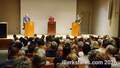
STOCKBRIDGE, Mass. — At Friday morning's Berkshire Library Legislative Breakfast, the theme was state aid and its impact on local libraries.
But state Rep. Tricia Farley-Bouvier, D-Pittsfield, put a national spin on things.
"Fake news," Farley-Bouvier said. "I believe it's one of the core things we need to make a correction on as a society.
"I'm counting on libraries to be at the forefront of teaching the rest of us how to spot fake news and how to get real information."
What's true, library advocates say, is that diminishing state funding is putting local libraries at risk.
"It's shocking the way funding to public libraries has gone down and down and down," said Lynn Coakley, the president of the Western Massachusetts Library Advocates. "In North Adams, from 2007 to 2016, there was a 26 percent cut in state aid. In Pittsfield, there was a 17 percent cut. Here in Stockbridge, there was a 41 percent cut.
"Think about all the things that could be done if that line was fully funded."
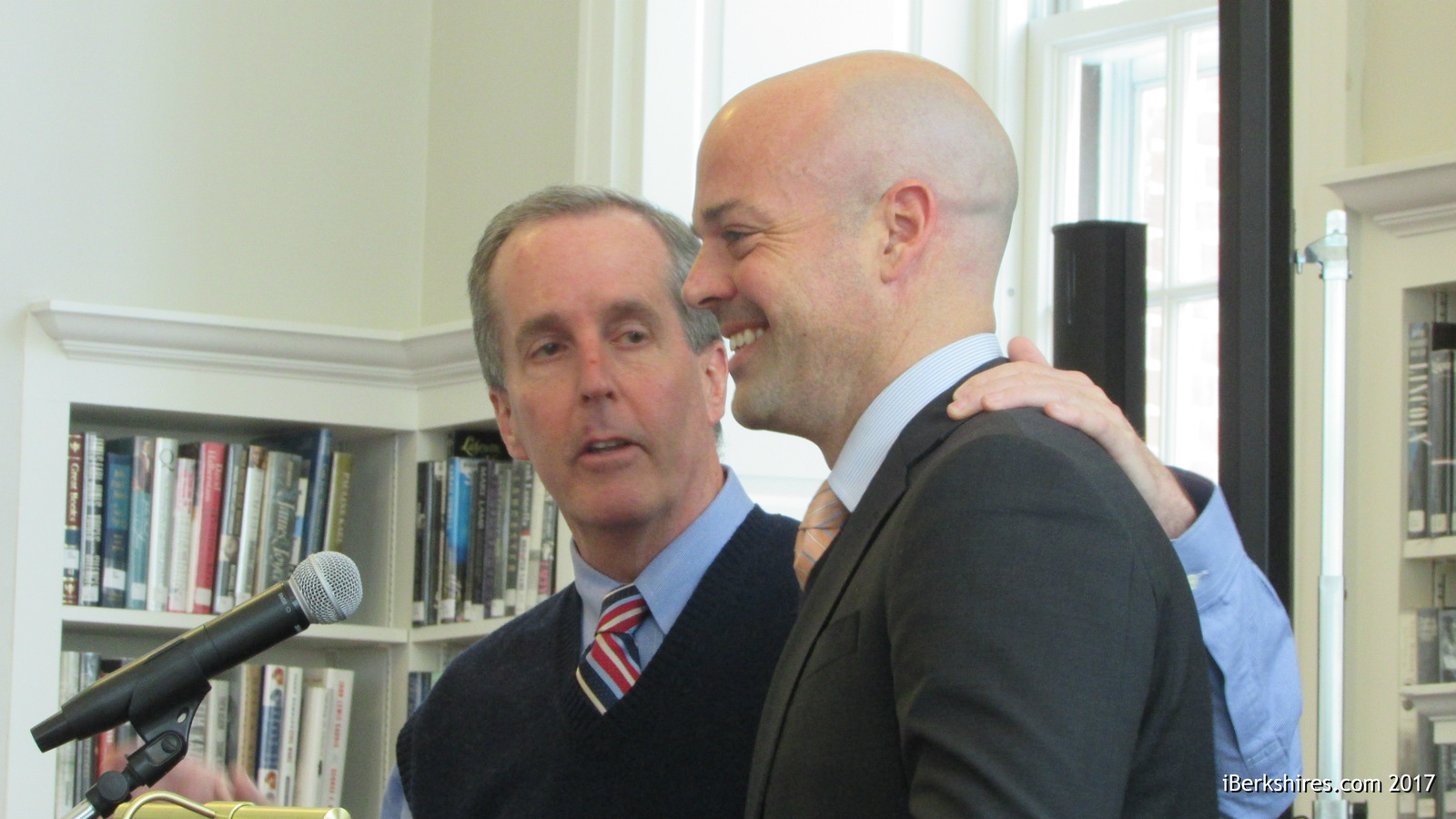
Four members of Berkshire County's state legislative delegation attended the 19th annual breakfast, held this year at the Stockbridge Library. As usual, Farley-Bouvier, Rep. Gailanne Cariddi, D-North Adams, Rep. William "Smitty" Pignatelli, D-Lenox, and the delegation's newest member, Sen. Adam Hinds, D-Pittsfield, said they are big fans of libraries and would do what they can to maintain and hopefully increase state funding in the fiscal 2018 budget.
But the library trustees, Friends group members and staffers who attended the event were reminded that courting the local delegation is not enough.
"Help your fellow trustees, staff and Friends realize that your local legislator is only the first step in the process," Massachusetts Library Commissioner Jan Resnick said.
Resnick encouraged Berkshire County residents to direct their appeals not only to their own elected officials but also to the leadership of the relevant committees and the legislature itself on Beacon Hill.
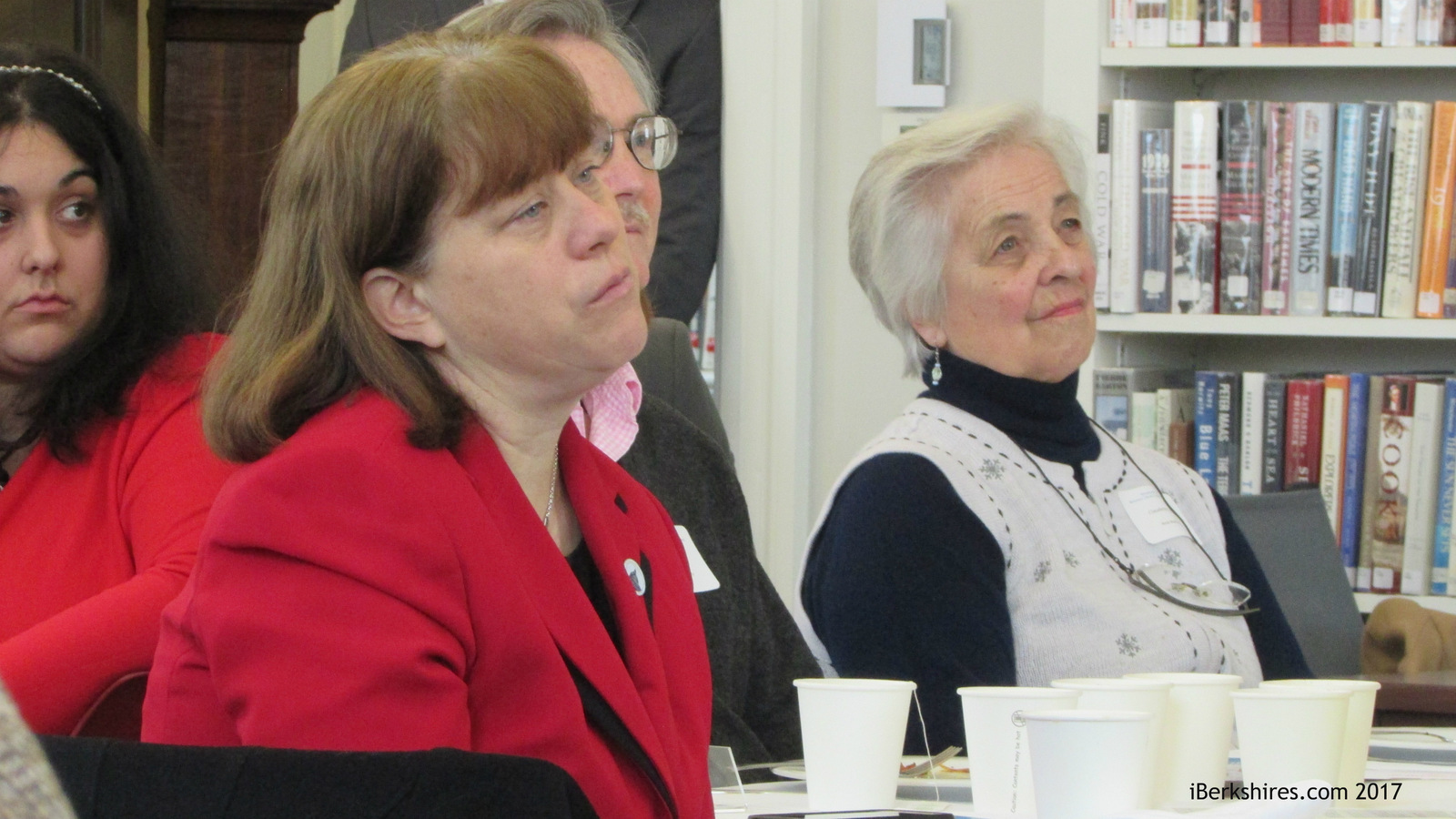
"It doesn't take much time to write a handwritten note or make a phone call," Resnick said. "Although we don't grab the headlines like the opioid crisis or state budget shortfalls, we are crucial to our state's prosperity and success."
The executive director of the Massachusetts Library System, which annually delivers 6.4 million items in the commonwealth's interlibrary loan system, said his non-profit has been hit hard by declining revenue and rising costs, chiefly in the form of an increased minimum wage.
In 2002, the commonwealth funded MLS to the tune of $17.6 million; in FY17, that number was $9.9 million, a drop of 44 percent.
"Over three years of squeezing, manipulating and finding discounts here and there, we have been able to maintain level services," Greg Pronevitz said. "But that is about to end."
He said the service is set to end Saturday delivery on July 1, a move that will delay the delivery of 800,000 items throughout the commonwealth.
And another crucial MLS service — the maintenance of online databases of magazines, newspapers, scholarly journals and books — also is in jeopardy, Pronevitz said.
"Because of cost increases, we're going to have to cut funding for the database by 60 percent, down to $400,000," he said. "And the chief users of the databases are students, both in higher education and K-12."
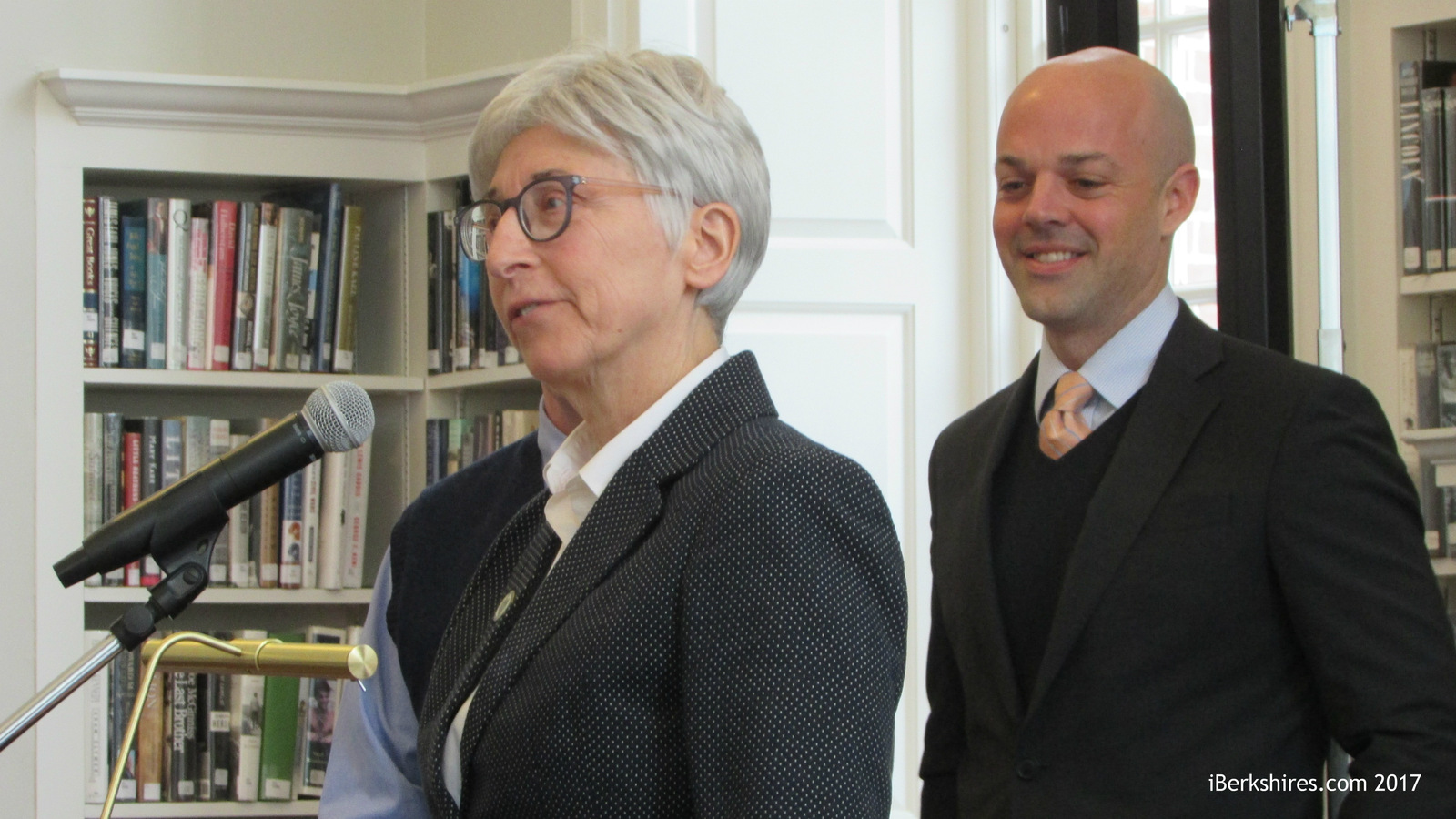
The Board of Library Commissioners is seeking $28.8 million in state funds in FY18 with the biggest chunk, $10.1 million, coming in state aid to local libraries. In FY17, all state funding for libraries totaled $25.2 million. Even if the commissioners get the full ask, libraries would represent just .06 percent of the state budget.
"We would love to be 1 percenters," Resnick joked.
The Berkshire County legislators were united Friday in their concern for the libraries' cause.
"The Lenox Library was my first classroom and first teacher outside my own home," Pignatelli said.
Hinds echoed that sentiment.
"It's those educational experiences outside the classroom and outside the home that are so critical," Hinds said. "Why would we put them at risk?"
Tags: legislative breakfast, library,