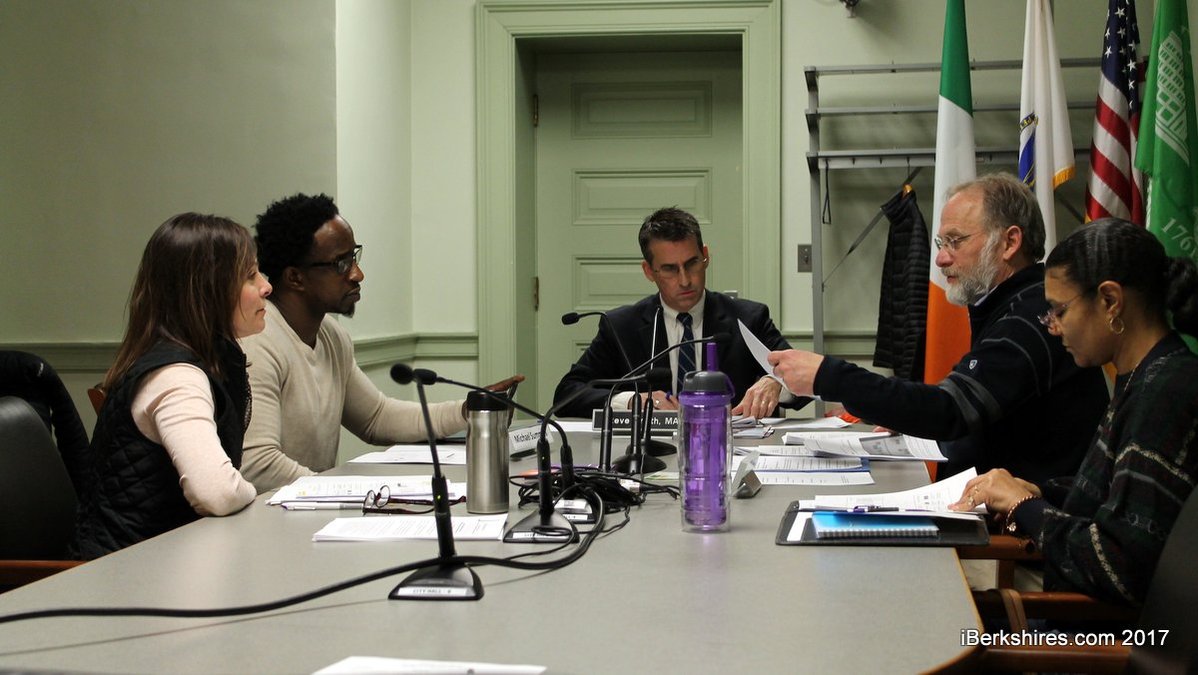
Pittsfield Holding Public Forum On Needle Exchange Program
PITTSFIELD, Mass. — The first public engagement session about a needle exchange program is scheduled for Tuesday.
The city is considering authorizing the program to operate in the city and the Board of Health was close to voting to give that authorization last month. But, the board decided to hold off and, in conjunction with the mayor's office, launch a series of public sessions to gain additional feedback and inform citizens about the program.
The session will be at the Berkshire Athenaeum on Tuesday, Feb. 7, at 6 p.m. A panel of experts will present the concept and provide a question-and-answer session. Those sitting on the panel are Jennifer Kimball, a public health planner with Berkshire Regional Planning Commission;, Dr. Jennifer Michaels, medical director at the Brien Center; and Liz Whynott, direct of HIV health and prevention at Tapestry Health.
"We purposely have been thinking about voting on this in March," said board member Steve Smith.
The Board of Health would just authorize the state Department of Health to pursue opening the program. The state would then solicit requests from operators and then license and fund the operations. The goal of the program is to curb a growing number of Hepatitis C cases.
Tapestry Health has already made multiple presentations to city officials about the program and would likely be the chosen vendor. The company currently operates programs in Holyoke and Northampton and just opened one in North Adams.
"I'm not sure if any other organization had applied but we know Tapestry Health is very experienced," Health Director Gina Armstrong said of the North Adams location.
The North Adams site operates out of a city-owned building. The location of the Pittsfield program, however, is still undetermined. Tapestry does have an office on Wendell Avenue but that isn't necessarily where a program would operate. It's not clear if it will be a standalone office or a mobile vehicle.
"They may consider some alternate locations as well," Armstrong said.
Smith had visited the Holyoke program and reported that it was a well-run operation, much like any other clinical site, alleviating his concerns about the impacts a program would have on a neighborhood.
The Hepatitis C numbers in Berkshire County are staggering for Smith.
"If we don't do something to curb this, we could be looking at some real problems down the road," he said.
Kimball has previously said there have been 1,100 cases of Hepatitis C diagnosed since 2010. Halfway through 2015, there were already 140 new cases. The trend shows that there could be around 2,000 confirmed cases in the county, which is double the national average.
And that's only the half of it. Literally.
Those numbers are only reflective of the confirmed cases. She estimated an equal number go unreported or undiagnosed. Another alarming trend is that the demographics of those infected are getting younger and younger - which is driven by the opioid crisis and heroin use.
"The big challenge here is case detection," said Board of Health member Dr. Alan Kulberg. "It affects a lot of segments of the populations."
Kulberg suggested more can be done such as providing additional information to doctors and nurses. Armstrong said the department is currently working on developing materials about the prevalence and best practices to distribute to providers.
"Now is the time we really have to have it on providers radar that the demographic trend has really shifted," Armstrong said.
The needle-exchange program is considered one piece in combating the issue by reducing the number of shared needles. But it is controversial with many who oppose the program feeling as though it is giving drug addicts a tool and will create a nuisance and crime.
Health officials, however, refute that and say places that have needle exchange programs have not seen increases in crime, decreases in property values, or other negative repercussions. The program does, however, reduce the number of dirty needles thrown into the street or in parks.
"They are not seeing adverse effects on the community at all. We want to make sure that message is out there," Armstrong said.
As for furthering drug abuse, Tapestry officials have said those who use needle-exchange programs are five times more likely to enter drug treatment programs. The exchange isn't simply a one-for-one exchange but rather acts as an outreach for users to sit with a health professional, take health screenings and tests for diseases, and receive counseling.
The controversial nature of the program is why health officials opted not to vote on the matter despite having the authority to do so. Instead, Tuesday's forum is eyed to be the first of three public engagements before the vote in March.
Tags: drug prevention, needles, Opioid abuse,