Pittsfield Refugee Resettlement Uncertain After Federal Changes
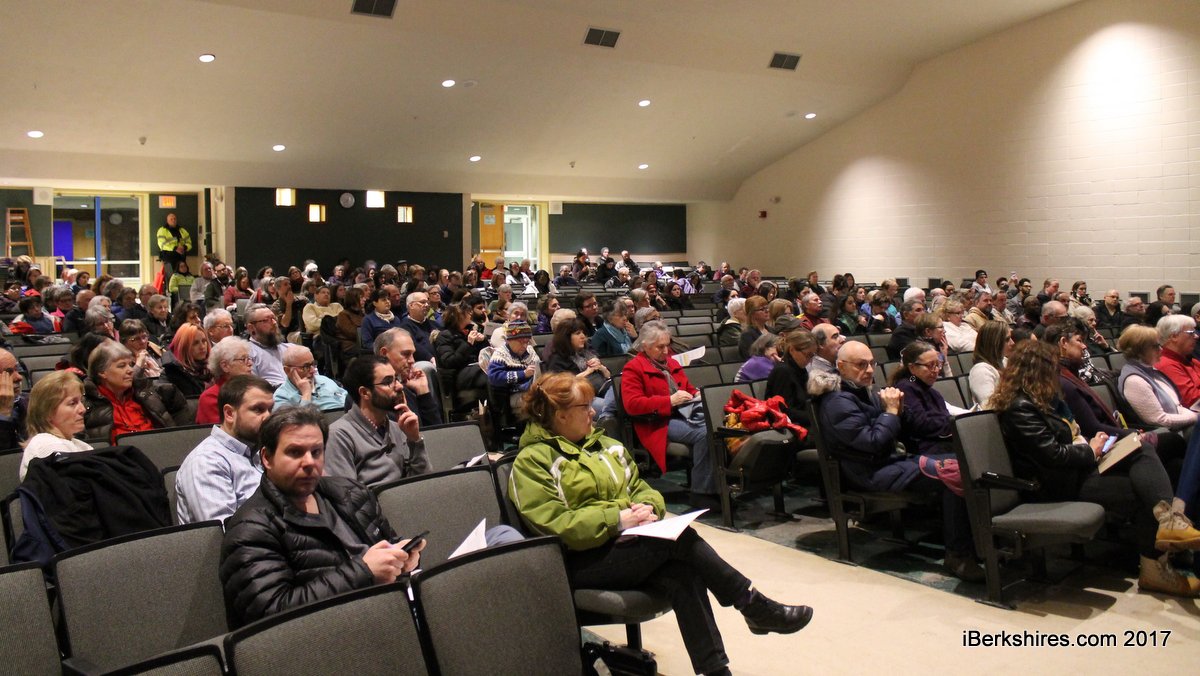
A large crowd attended the meeting Monday night at Herberg Middle School.
Jewish Family Services of Western Massachusetts is still planning to bring 50 refugees, likely from Syria, to the city this year.
But there is no timeline on when that will happen and a severe reduction in the number of refugees being taken in by the United States could mean none move to the city.
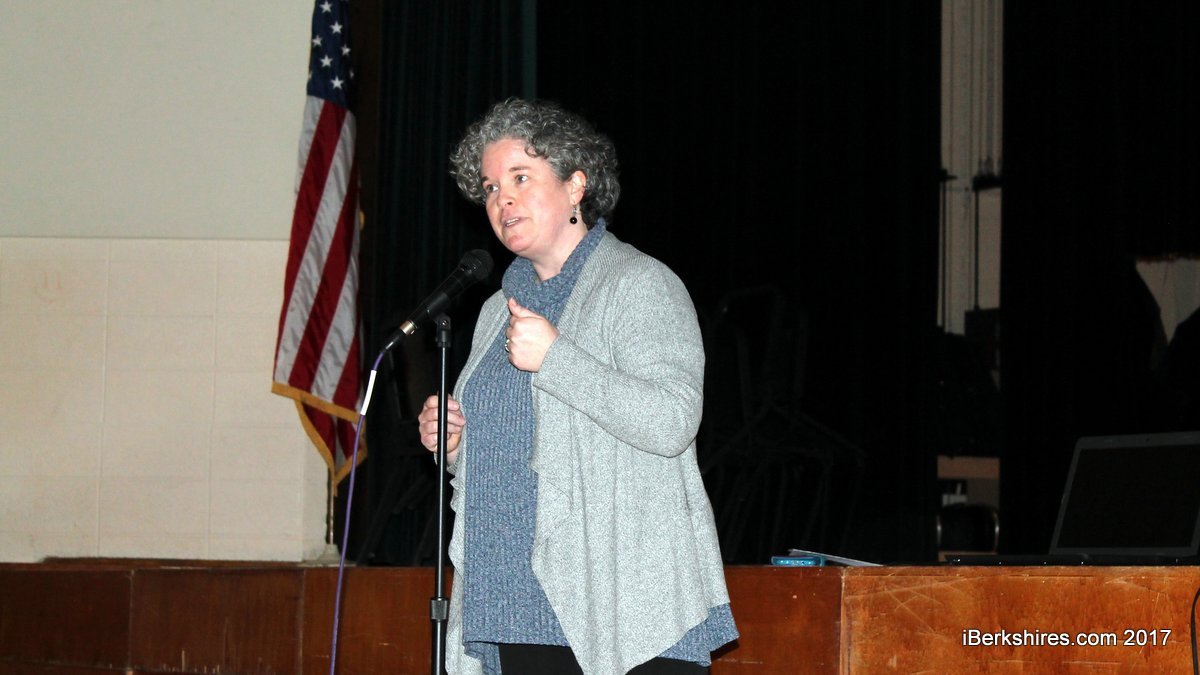
"I'm very optimistic that Pittsfield will become a refugee resettlement community. When they will be here, we don't know," said Maxine Stein, president and CEO of Jewish Family Services, on Monday during a community conversation at Herberg Middle School.
The plans were in the works for the Springfield-based organization to resettle the families here since last summer. In the fall, the organization announced its intentions publicly and held a community meeting at the library. Hebrew Immigrant Aid Society, which runs the federal program alongside the State Department, approved Pittsfield's application to become a resettlement community.
And then the election placed Trump in office. After moving into the White House, he signed an executive order placing a travel ban on people coming from seven Muslim countries, and halting the resettlement program. That order has since been suspended by the courts.
"We were nervous after the election. The executive order was signed that Friday at 4:30 in the afternoon," Stein said. "Everything is currently on hold. Then the 9th Circuit Court of Appeals put the executive order on hold."
A judge ruled against Trump's travel ban and the refugees who had their travel plans canceled were re-booked on flights to America.
But, in that order, Trump had also cut the number of refugees the country would admit by more than 50 percent. Former President Barack Obama had set a cap at 110,000 and Trump reduced that to 50,000.
Stein said 35,000 refugees have already been resettled, leaving just 15,000 more before the country hits the cap. Another group of refugees will land in Massachusetts next week, but beyond that, there are no more currently scheduled to arrive here. The remaining refugees planned to be settled may end up going elsewhere in the country.
Stein doesn't know whether or not all or some or any of 50 individuals eyed for Pittsfield will be placed. The city is getting prepared nonetheless to welcome the families.
Director of the New American Program Deirdre Griffin called the efforts a "public and private partnership" among the agency and community groups. The goal is to bring the families escaping areas of war or natural disaster to America and help them re-establish lives.
Stein said once HIAS provides the information about the individuals, Jewish Family Services finds a suitable apartment. She said the organization works with local landlords on lease agreements and then gathers donations from the community to furnish it.
The group is then informed of when the individuals were coming, not all at once but a family at a time, and greets them at the airport. Staff gets them to medical appointments, enrolls children in schools, signs them up for any needed public assistance. Then it helps those who are able to work to find jobs and into programs to learn to speak English.
"If you are not financially independent and have no means to pay your rent, you are not going to succeed easily," Stein said. "We are working very intensely with these families for the first three months."
The federal government gives the individuals $925 when they arrive but that's it.
"This money has to last them until they are standing on their own two feet," Stein said. "They don't want to be living off of a system. They don't want to be living off of JFS. They want to be standing on their own."
The group has translators and runs culture orientation programs to help refugees integrate into American culture. They work with community partners such as the Berkshire Immigration Center. But what they need from the community is to be welcoming and to help those individuals adjust.
"We will do all of the heavy lifting," Stein said. "The most successful programs are the programs in which communities and agencies work together."
Griffin addressed the two biggest questions her organization receives: medical and security. She said the United States has a rigorous process of vetting refugees and the program takes some two years from the time an individual applies to traveling to a new country.
Once given refugee status, there is a medical screening to identify any medical conditions. Twenty-four hours before they travel there is another. Once they arrive, there are two medical appointments scheduled to follow up again. She said the most common health issues are malnutrition, tuberculosis, or significant cases of diabetes. And psychological trauma. The organization makes sure the appointments and plans are in place for any medical issues.
"They have experienced trauma. They have experienced violence and there is behavioral health problems as well," Griffin said.
Security screenings are done throughout the process. The United Nations performs one. The State Department does interviews and background checks. And then another check. And then another check. There are three rounds of fingerprinting and running those across FBI, Homeland Security, and international watch lists. It is only after Homeland Security clears them that they can start the medical screening. Before they travel, yet another check is done to make sure nothing has changed in the meantime.
A large audience attended the presentation at the school but just about all of the comments were in support of the program. The majority of those wanted to know more about how to help, and not oppose, the program. There were faith groups and employers all asking who to contact to become involved. There were a few pointed questions, though.
One woman voiced support for the program but then said there are currently people in the community who are homeless, there are people who can't find work, and the food pantries are feeding some 500 families and running out of food. She asked how could resources be available to support refugees when the community has current needs to address.
State Rep. Tricia Farley-Bouvier is supportive of the program.
State Sen. Adam Hinds handled that one, saying, "They can both happen at the same time. They will happen at the same time. They are designed to happen simultaneously."
He said there is still a need to get things right for those who are currently struggling but that is a separate issue from the refugee program.
Another questioned the success rate, to which Griffin responded that 85 percent of the refugees get jobs within a year. She said she has only had two families decide to leave the country and go back home because re-establishing a life in the United States was too difficult.
Ward 7 Councilor Anthony Simonelli asked about Springfield Mayor Domenic Sarno's recent criticism of Jewish Family Service's program. Sarno is fighting against the resettlement, saying the program is creating concentrations of poverty in Springfield.
Stein and Griffin said it was not their organization that caused issues in Springfield. There was an issue with a different resettlement group, they said, and that their program always has an open-door policy with officials to discuss issues.
Mayor Linda Tyer said she doesn't have those fears. Tyer supports the program on a humanitarian level and doesn't see the 50 individuals putting a strain on city services.
"This is our responsibility as global citizens who have an abundance to be able to provide safe harbor," Tyer said.
As for the local services, she said, "They will get the same level of service as everyone else ... I don't see the added strain on local government." The mayor does see a benefit in bringing in the refugees by creating a more multicultural city.
Others asked how neighbors will be engaged, Stein responded saying the organization would meet with neighbors who have concerns. She said if a certain neighborhood was particularly hostile, then the refugees wouldn't be moved into that apartment.
At this point, though, all of that is a question mark. But if the organization gets notice that a refugee family is traveling into Massachusetts looking to be resettled, the organization will have everything in place to make sure things go smoothly.
Tags: refugees,