Pittsfield Approves Needle Exchange Program
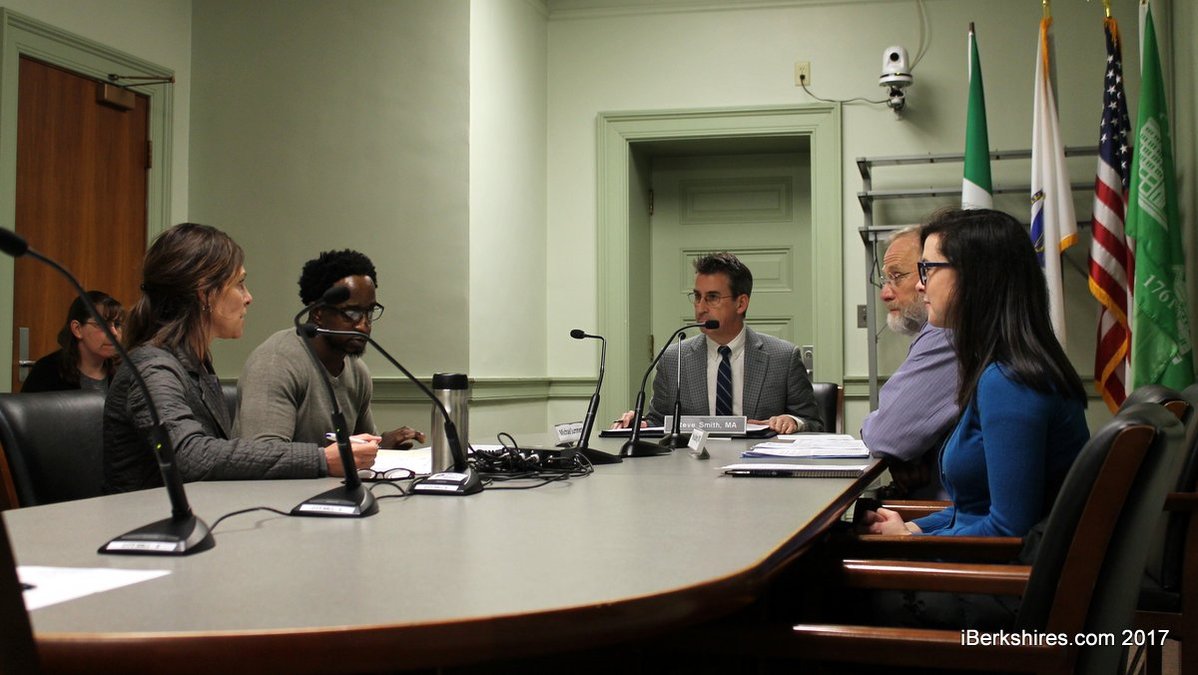
PITTSFIELD, Mass. — It took seven months to make the decision but on Wednesday, the Board of Health approved a needle exchange program.
The board approved the letter authorizing the state Department of Health to pursue a vendor for such a program. The state will now take over the process of funding, issuing a request for proposal, and ultimately working with that vendor in finding and opening a site.
The issue had been before the board since August, neared a vote in December, and then was pushed until March.
"As we move along in the application process, hopefully, we will be funded, and we will work on a site selection process," said Health Director Gina Armstrong.
The issued faced little opposition outside of some online comments. The board held a public outreach session in which only about a half dozen of the public showed up, with only one voicing any level of concern and the others in support. That session was part of an outreach effort the board undertook in combination with city officials.
"We didn't get a lot of direct feedback. But what I did see as a common question that came up at several of these educational sessions, people were concerned that by providing sterile syringes, you were enabling," Armstrong said.
The board had been ready to vote in favor in December but opted to delay it after hearing the mayor's office wanted more public outreach. That decision was somewhat because of a controversy early in 2016 over the tobacco regulations. The Board of Health had used its authority to implement new smoking regulations, some of which caused consternation among city officials. The board also has authority over the needle exchange program but opted to instead work in unison with other city officials.
At the vote, only two members of the public spoke and both supported the efforts. Ellen Mary D'Agostino, who frequently shares her thoughts with various public boards, and Jill Shanahan, who works at Tapestry Health, both spoke of the importance of such a program.
"A lot of times we are the only access care for any access to health care," Shanahan said.
Tapestry has been the leader in the effort, first bringing the concept to Pittsfield. Tapestry HIV Health and Prevention Director Liz Whynott has presented the program to a number of officials and the organization runs three other program in Western Massachusetts — in North Adams, Springfield, and Holyoke. The program's main focus is on preventing diseases, particularly Hepatitis C.
There is no vaccination for it and can lead to liver failure and death. Nationally, the cases have grown since 2010 to 2014 by 250 percent, according to Jennifer Kimball, a health planner with Berkshire Regional Planning Commission. Massachusetts has three times the national estimate and each year since 2011 there have been 2,300 more cases. In the Berkshires since 2010, 1,100 new cases of Hepatitis C were diagnosed. From 2007 to 2011, there was a 37 percent increase in Berkshire County.
Further, the detection of those cases is difficult. Often symptoms are not seen for years and the screenings require two tests, tests which are seldom available in Berkshire County. It is estimated that only between 25 and 50 percent of people who have it, know they have it.
"I, for one, know this board has done its due diligence in a number of ways by learning about all of the different statistics that point to the fact that we have a pretty major issue here in Pittsfield," Board of Health member Steve Smith said.
Such diseases are often spread through the sharing of needles for intravenous drug use. And the rate of increased case numbers and a changing demographic for Hepatitis C cases reflects that.
The needle exchange program provides clean needles for users, cutting down on the sharing of needles. But that is only one service.
Tapestry provides an array of health screenings, health referrals, and guidance. Whynott says those who use drugs are five times more likely to seek treatment if they are involved with a program. Heroin users and those who are relapsing are a particularly difficult demographic to reach and such a program does that.
"It may appear it is some kind of permission for drug use but it is the opposite. It is taking people out of that life and onto a more productive path," Smith said.
Board of Health member Michael Summers just recently visited all three programs run by Tapestry. He said his experience was "unbelievable" because of the welcoming nature and a number of services provided.
"It is much more than what I expected. It was very helpful getting there and really understanding what the program is about," Summers said.
The efforts to reduce heroin drug use or Hepatitis C doesn't end with this program, though. The needle exchange is seen as one tool in comprehensive efforts toward combating those health concern. Health officials have joined a central county opioid group and the Berkshire Opioid Abuse Prevention Collaborative on strategies to tackle the drug epidemic.
Armstrong said the central county working group will meet next on March 15 in Lenox to discuss Narcan - an overdose reversal drug — distribution and administration. Part of that is how to move from administering the drug to getting the patient into a treatment program.
"We hope to have a lot of our first responders there to talk about their recent experience in administering Narcan," Armstrong said.
Board of Health member Alan Kulberg, meanwhile, is focusing efforts to improve screening and treatment of Hepatitis C. He is reaching out to doctors and developed a risk assessment survey for patients to fill out. If those risk factors are present, then doctors will be more likely to test for the disease which is treatable but not necessarily present all of the time.
"Many cases of hepatitis C are under the radar," Kulberg said.
The hope is that with better detection the spreading of the disease will slow and that more people will be treated for the disease before it is too late. Kulberg has sent the questionnaire and an introductory letter to three separate doctors at Berkshire Medical Center asking for feedback about the feasibility and practicality of the questionnaire.
"I haven't heard back from them yet but I asked for their feedback. I should be able to report back to the board next month with their suggestions," Kulberg said.
Related Stories:




Tags: board of health, needles, tapestry,