Williamstown Planning for Pot
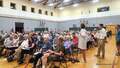
WILLIAMSTOWN, Mass. — The Planning Board last week advanced zoning bylaw amendments that maximize the opportunity for marijuana retail and production operations in town.
Town Planner Andrew Groff brought the board a proposed bylaw for discussion that limited retail pot establishments to one of the town's commercial zones, the Planned Business zone at the north end of Simonds Road and on Main Street (Route 2) west of Stratton Road.
It quickly became clear during the board's discussion that the majority of the planners felt such establishments should not be treated any differently than the closest analogous business, a liquor store. Currently, the town has two of those, both in the Village Business District, which includes Spring Street, Water Street and part of Cole Avenue.
"If the closest analogy is liquor stores and we allow liquor stores in any business district … these should be treated the same," board member Chris Winters said in a meeting telecast on the town's community access television station, WilliNet.
"This comes down to personal opinion," Chairwoman Amy Jeschawitz said. "Myself, I agree with Chris. I'm comfortable with the concept of — within reason for distances from schools, etc. — having it in other business districts. I'm also comfortable just having it in the Planned Business.
"I think there's going to be a lot of pushback if we try to put it in the Village Business District. That's my feeling of the town. Does it bother me? No."
Susan Puddester asked what the benefit might be of opening up the zoning to include pot sales in more parts of town.
"More opportunity for business," Ann McCallum replied. "I might choose to be in the Village Business District if I was to open such an establishment."
On the issue of "pushback," board members noted that the November 2016 statewide ballot initiative that legalized recreational marijuana had overwhelming support in Williamstown and that no one has addressed the Planning Board at one of its posted meetings where the question was on the agenda.
Winters also said that if the board hears considerable objections from the town at its April 3 public hearing on the question, the bylaw could be made more restrictive before it goes befor Annual Town Meeting in May.
The proposed bylaw will specify three different types of marijuana businesses: retail, production and testing. A fourth potential use, "on-site consumption," is specified in the ballot initiative as a use that would require a broader community conversation, Groff told the panel.
As a starting point for last week's meeting, Groff brought draft language that limited testing and manufacturing to the town's Limited Industrial zone retail to Planned Business.
Although the board agreed with keeping the testing facilities in Limited Industrial, it decided to expand the possibilities for production facilities — following a similar tack it took in regard to retail.
Again, Winters set the tone.
"We talk about farming a lot, and the fact of the matter is we have a ton of land that's farm land and a ton of people who are skilled at farming who aren't making as much return on investment on their farm land as they'd want," Winters said. "If I were to put up a big greenhouse and grow baby lettuce to sell at the farmer's market, people would applaud me. What's the difference?"
The board discussed the fact that marijuana production facilities would be highly regulated, secured facilities under state law — not pot plants growing in an open field — and most likely the growing would be done indoors.
There was quickly a consensus that pot growing should be allowed in the town's Rural Residence zones. A potential sticking point was the fact that cultivation — which conceivably would be allowed under an agricultural exemption anyway — does not necessarily include all steps of production.
"Manufacturing is different," Jeschawitz said. "That's taking the plant and doing what they do with it to package it. … Manufacturing may be a place where the plant is shipped there and they do whatever it is they do."
But Chris Kapiloff noted that indoor marijuana growing and packing likely would be done in the same facility.
"I don't know if from the outside you could tell the difference," he said. "It's just these steel buildings with no windows. As an entrepreneur, you want to control as much of the process as possible. I wouldn't want to grow it in Williamstown and have to ship to Boston or someplace [for processing]."
Groff pointed out that the town's Rural Residence districts likely would be unfit for pot production because they lack infrastructure — water and natural gas — to make such a facility practical.
"That would be the market telling us it doesn't want it, not us," Winters said.
"If someone figures out how to make it work [in the Rural Residence zones], we should let them," Kapiloff said. "That's what you're saying, and I agree."
In the end, the board advanced a zoning bylaw amendment that would allow testing facilities by right in Limited Industrial; production by right in Limited Industrial and by special permit in Rural Residence 2 and Rural Residence 3; and retail by right in Limited Business, Planned Business, and Village Business and by special permit in the Southern Gateway (Cold Spring Road) district.
The pot bylaw will not be the only bylaw change proposed to annual town meeting.
The Planning Board's April 3 public hearing also will solicit town input on a proposal initiated by Taconic Golf Club to expand the Village Business District by 120,000 square feet to include the land that houses the clubhouse, a change to the town's requirements for parking at multifamily residences and a couple of changes that clean up existing anomalies in the town bylaws.
The anomalies deal with mobile home parks and an area near the Green River that is zoned Limited Industrial but unlikely ever to attract industry. The latter would be rezoned General Residence.
The mobile home park change would remove an overlay district that allowed mobile homes on the former Spruces property and apply it to the town's remaining mobile home park, Pines Lodge Park. The change would allow any future modifications to Pines Lodge to be subject to a special permit process and would allow regulation by the Board of Health, Groff explained. Currently, the park off Henderson Road exists by use of variances.
"Applying this overlay up there will … give it a cleaner title and make it easier to sell it in the future," Groff said.
The parking change would simplify the town's parking requirements for multifamily units and reduce the number of spots required.
The current bylaw requires "two off-street parking spaces per dwelling unit plus one off-street parking space for every three dwelling units" in all districts outside Village Business. The proposed bylaw reduces that to "one off-street space per unit plus one off-street space for every three units within a building.”
In Village Business, the requirement under the proposed bylaw would require one space per unit.
"A lot of rural communities are still at two per unit, and there is a growing movement to decrease that," Groff said. "Communities find it increases housing costs and causes too much parking to be produced. I talked to [Pittsfield's] Berkshire Housing about Highland Woods. The project would have required 93 spaces [under the bylaw]. This is a requirement they waived. The ended up with one space per unit. Currently, the have no demand problems, and the parking lot is underutilized.
"It's the same thing at [the fully leased] Cable Mills apartments. The parking lot is about 50 percent occupied for the most part. The issue currently is there is too much pavement on the site. That does impact their ability to do a Phase 3 development."
Jeschawitz noted that if a developer wanted to provide more parking than required in the bylaw, it still could ask for an increase by special permit.
In other business at its March 7 meeting, the Planning Board approved by a vote of 4-0 (with Winters recusing himself) a development plan for the renovation and expansion of Williams College's Center for Development Economics at the corner of Main and South Streets.
Tags: bylaws, marijuana, town meeting 2017, zoning,