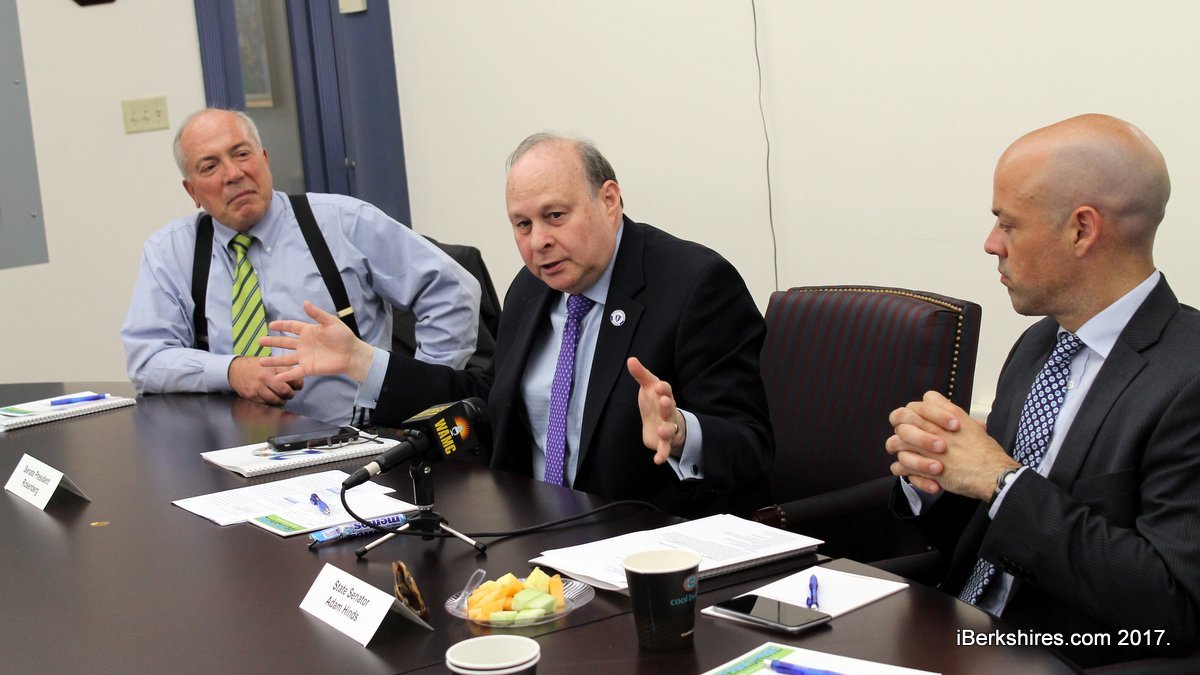
Senate President Gets Feel For Berkshires' Economic Future

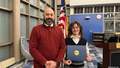
Christopher Kapiloff of Laminate Technologies showed off a piece of bulletproof glass his company is selling in large numbers, but said it will be made elsewhere if the state can't lower the cost of doing business.
But the state has stalled on education, transportation, and revenue. If those don't change, then Senate President Stanley Rosenberg believes the state will lose growth.
"Overall, in general, the commonwealth as a whole, we are a high-quality state for life, work, building businesses, and quality of life. But we are being compromised in terms of the next generation of this because we don't have transportation infrastructure and we don't have the education infrastructure. We are in a stall of education funding for 15 years now and we're stalled in closing the achievement gap," Rosenberg said.
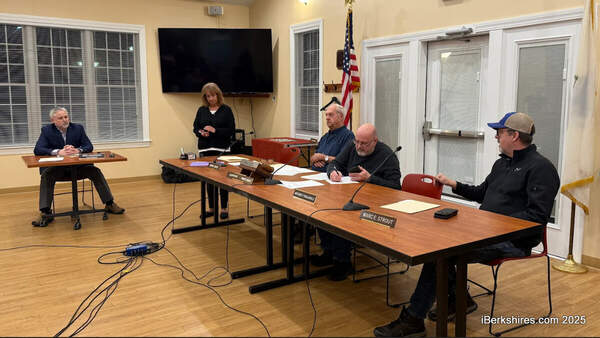
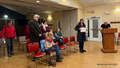
Rosenberg sat in on a number of meetings in the Berkshire on Friday to discuss the county's economic future. The Amherst Democrat knows a lot of the issues already from prior meetings here and representing rural Franklin County to the east.
"Franklin and Berkshire desperately need education and transportation," Rosenberg said.
The issues about aging demographics, the loss of young people, and the particulars like rolling out high-speed internet to help business development aren't really new to him. What he hoped to find out on Friday was what plans do local representatives have for the future of the economy.
"There's a lot of strategic thinking going on and trying to figure out what is the mechanism by which this whole county, which is really today thought of as three subunits within the same area, how are you proceeding to try to knit together major strategic initiatives?" Rosenberg asked.
1Berkshire Chairman Donald Dubendorf cited the Berkshire Blueprint project, which the state Senate has allocated funding. The effort brings leaders from throughout Berkshire County to revisit the plans crafted a decade ago. That will grapple with the Berkshires' identify and set a plan for future growth.
"I think the biggest problem, and what makes our parochialism even more exaggerated, is our comfort with silos. We've got to find ways to break those down and make sure the right people are talking to each other about the right issues," Dubendorf said.
Patrick Larkin, director of Massachusetts Technology Collaborative's Innovation Institute, encouraged a room full of local business leaders to "concentrate on your own indigenous strengths." A region can't simply say 'we want a bio-sector here,' Larkin said. But instead, a region should strengthen what it current has and then reach out to grow and expand that reach.
"The community has to be laser focused on what it is good and isn't good at and exploit that," Larkin said.
One example he used is that the Berkshires have a legacy of advanced manufacturing and state and federal funds have been used to boost similar efforts in the Albany, N.Y. area in at UMass Amherst. The Berkshires can find a niche to tie in with that by building on the region's current "nodes of innovation" and then expanding its networking reach.
Focusing on the local assets is exactly what Lever, in North Adams, Board of Trustee Jeffrey Thomas says his organization is trying to do. They opened a co-working space with the intent to help entrepreneurs. But, the problems he is running into is operations capital, deal flow, and investment capital.
Thomas says there is a lot of "raw talent" but operation capital poses a challenge. Deal flow is a term he used to describe what essentially amounts to a shortage of companies to invest in. He said there needs to be more companies for investors to put money into in order to build a portfolio. Investment capital is probably the easier hurdle, he said, because if there is a strong entrepreneur with a business that makes sense, there are people willing to invest.
Once off the ground, Berkshire Community College President Ellen Kennedy said she is focused on educating students with the right skills to fit those needs. She is a member of the workforce skills cabinet, which is a group of local business leaders who are aimed at ensuring there are people with the right skills to support job growth.
Heather Boulger of the Berkshire Regional Employment Board elaborated on that saying, "at any given time there are 1,700 job openings and at any given time we have 2,000 people looking for work." Current employers struggle to find qualified workers to grow companies, so education and job training is a priority moving forward.
At the K-12 level, Mayor Richard Alcombright said the biggest challenge is that there are too many school districts. He said the schools need to work closer together to provide the best service. Meanwhile, he said, local school funding has been "incredibly underfunded" making it difficult for cities and towns to provide the best education.
"We can maintain programming but we can't do anything progressive. We can't afford to think out of the box," Alcombright said.
Steve Roy from the Berkshire Board of Realtor cited home values for Western Massachusetts as severely lagging. He threw his support behind rail transportation to New York City, opening up the ability for more people to live here.
Laminate Technologies principal Chris Kapiloff said the overall costs of doing business is a problem with growing the economy. His company has a contract in the works that would require a $3 million expansion. He showed off a piece of bulletproof glass the company makes here. But that contract will be taken away from him in the future by companies in other parts of the state with lower overhead.
He said he's been offered free spaces to move the company to Cleveland or Maryland, where he'd be paying less in labor and less in electricity. He'd like to keep the company local but that will all depend on if the state and city can make the numbers work for him.
From Rosenberg's position, he said there are five items need to worked on statewide for business growth: revenue, education, transportation, energy, health care.
He is calling for a revamp of the tax code to support more middle-class job growth and provide more revenue for the state to make investments in other areas.
"If we don't figure out how to adapt to the extremely high incomes at one end of the employment scale and extremely low wages at another and barely growing wages in the middle, then we are not going to have the capacity to keep growing the economy and jobs. If we don't have a transportation system that gets people and good where they need to go, we are stuck," Rosenberg said.
He, too, supports rail, saying traffic on highways are getting so backed up that it slows commerce and only getting worse. He's hoping to get more people off the road and into commuting in other ways.
The president believes the state can do it. When the state focused on building pharmaceutical testing and renewable energy business sectors, it was successful. Now he is hoping for the same type of energies for the other high priority areas.
"When we set our mind on solving a large problem and creating a big change, we have the ability to do that. It takes focus, it takes energy, and it takes political will, and it takes building a coalition and partnership," Rosenberg said. "I know we can tackle these four or five problems."
Tags: 1Berkshire, economic development, economy, jobs, state officials,