Clarksburg Solar Project Seeking Answers
CLARKSBURG, Mass. — A solar array company says it's in "nowheresville" in trying to close out its River Road project.
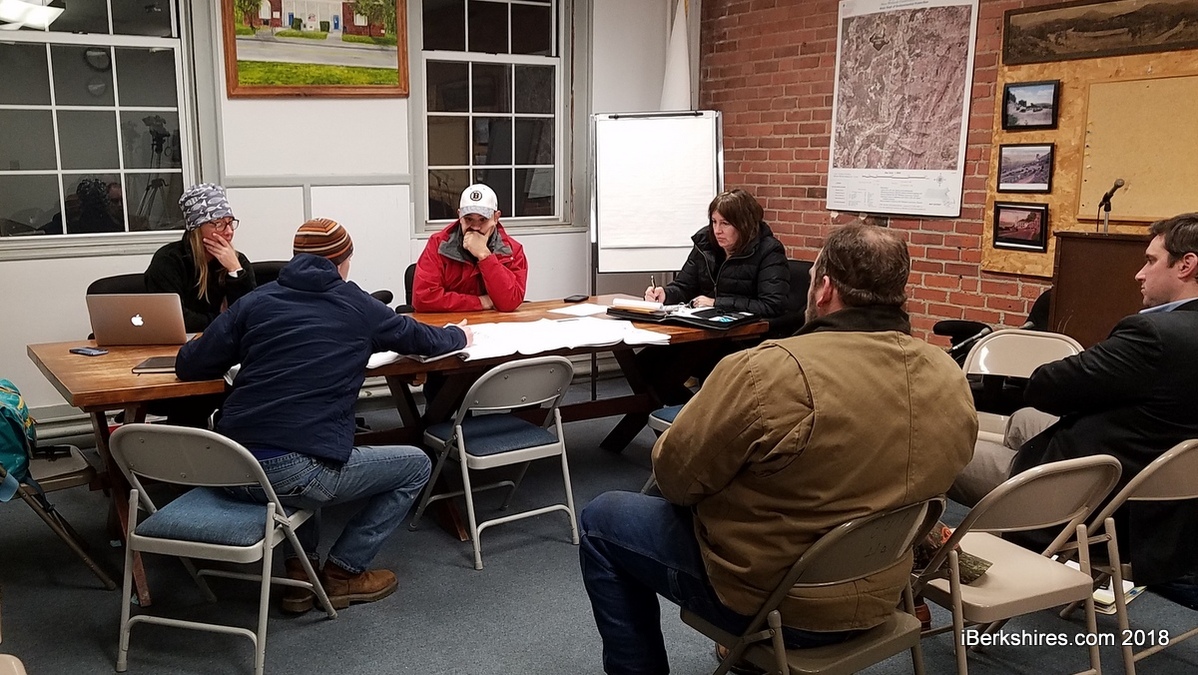
Michael Whigham, vice president of Clean Energy Collective, told the Planning Board on Wednesday that he has not been able to get the town to sign off on the completion of the project nor has he been able to get a clear understanding of what else might need to be done.
"The building inspector has told us we are compliant," he said. "Mr. [Town Administrator Carl] McKinney has indicated that he thinks we're not but won't provide us with anything stating what we're not compliant with ... We're kind of like in nowheresville. ... I just don't know what to do."
Whigham said he didn't think he had been treated well as a property owner, taxpayer and permit-holder and was looking to the Planning Board for direction.
The planners were sympathetic and believed the problem had centered around screening issues. Whigham said that was correct.
"We went through a lot of due diligence on this project, I think it was seven public sessions with a specific task of making sure we allow the project to have a voice with the abuttors," he said. "At some point, a complaint came to us through the building inspector from one of the abuttors and that was really concerns about screening."
Whigham said he had met with Building Inspector B.J. Church and McKinney during the summer about the screening on the western side of the project and believed they had arrived at an acceptable solution.
"At that point in time there was no statement that we were not in compliance," he said. "We really wanted to be very specific about that."
Town officials had suggested a new row of trees but those would have interfered with the solar panels, he said. The compromise was to install 200 feet of slats in the fencing and replace some trees, which was completed by October.
Whigham said when he then asked that the permit be closed, "that's when it kind of, to be frank, it went sideways in my opinion."
He said Church declined to sign off on the building card, referring him to McKinney. Whigham said he has repeatedly asked if the project is non-compliant. He believes that Clean Energy is being forced to deal with the unhappy abuttors despite having documentation showing it has fulfilled the requirements of the permit.
Whigham agreed with the planners that the area in question did look somewhat barren but added that stumps had been left there to grow and would fill in in the future.
Of the three planners at the meeting, only Audry Matys was on the board when the project went through the permitting process. Erin Scott and Gregory Vigna were elected last year. They said they would get in touch with Church and McKinney to clarify the issue.
In other business, the board held off on approval for a perimeter plan for A.J. Randall, wanting to confirm with town counsel. The area is projected to be used for an agricultural solar array. Matthew Parlon, a project development analyst with solar developer Blue Wave, and the company's attorney, Thomas Reidy, were in attendance with Randall.
The papers were filed last Tuesday, two days prior to a special town meeting creating an overlay district on the west side of town for commercial solar arrays.
Since the submission occurred at a time there was no solar bylaw, Reidy said, "three years from your endorsement, you're frozen under that zoning bylaw as far as use goes."
Randall and Blue Wave have appeared before the Selectmen and at last week's special town meeting to explain the use of agricultural solar projects and how they are being promoted by the state's state Department of Agricultural Resources. Randall is hoping to use the solar leases to help him in starting his farm on Daniels Road. Parlon said the hold would allow Blue Wave to begin conversations with Randall's neighbors and the town.
The boundary plan was routine but the planners hesitated in signing off on it because of the circumstances. They agreed to meet with Blue Wave representatives next Wednesday once they were advised by counsel.
Tags: solar array,