Pittsfield Signs Compact With State Cultural Commission
PITTSFIELD, Mass. — The city is adding to its toolbox for artists and cultural development with the signing of compact on Monday that brings together local and state cultural resources.
Pittsfield was one of only six communities invited into the pilot program established by the Massachusetts Cultural Council.
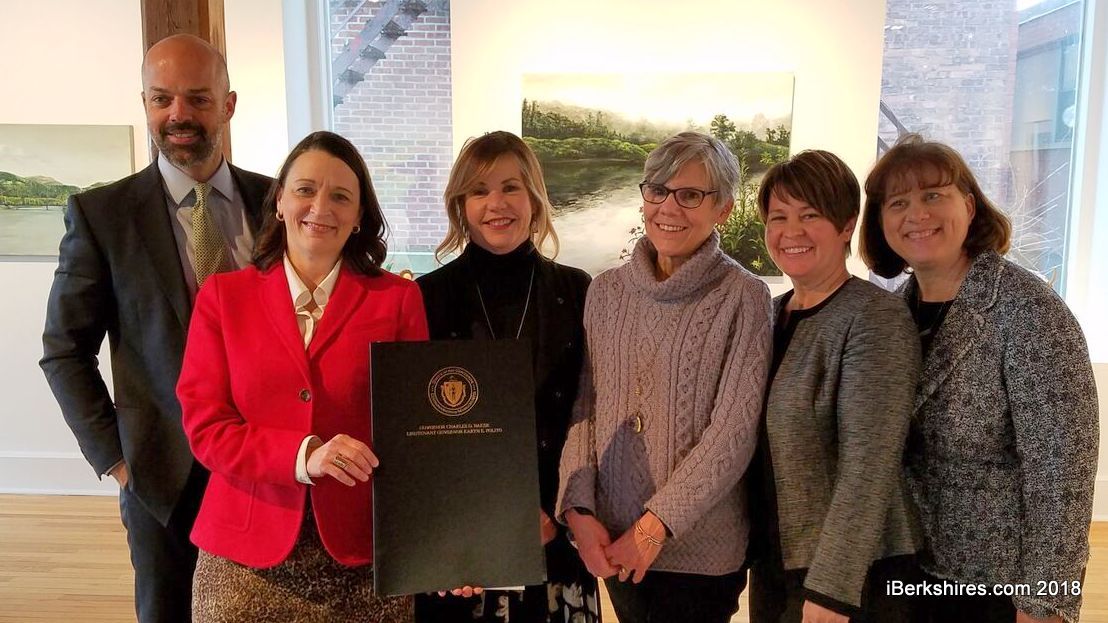
The Upstreet Cultural District, Pittsfield Cultural Council, the city of Pittsfield and the Massachusetts Cultural Council signed the agreement that seeks to align the city's cultural activities with its economic development and more deeply embed arts and culture in a way that betters the lives of the city's citizens.
"In this shared vision, MCC and Pittsfield recognize the power of culture to make communities a better place for people to live, work and visit," said Mayor Linda Tyer before the official signing at the Lichtenstein Center for the Arts. "With their support, Pittsfield has some ideas on how we can make a deeper connection between art, culture and community."
The most immediate benefits will be access to the online job bank HireCulture.org and online space for posting and finding cultural opportunities; access to technical help through webinars, trainings and workshops; and customized staff consulting and online guides and tool kits. The city will develop an inventory of artists and artist space.
The mayor said the city will also convene a meeting of economic developers within the next six months to discuss how their plans might dovetail with the arts. Imagine, she said, that an advanced manufacturing company could consider adding a cultural component.
They would likely have a budget, for say, landscaping, Tyer said. "How about turning that budget over to an artist who can create a landmark space?"
Her more ambitious goal is using the compact to inject an artistic vision into the Tyler Street Transformative Development Initative. The mayor said a stained-glass theme could connect the Morningside area by tying into the redevelopment of the St. Mary the Morning Star property.
"That St. Mary's property has great meaning for the people of Tyler Street and how can we create a themed corridor," she said.
The city will also work to create an artist-led, community-based art installation to be completed within the next 18-24 months.
Pittsfield's embrace of culture as an economic driver began more than a dozen years ago, first with the Storefront Artists Project and with the creation of the office of cultural development that both Tyer and state Rep. Tricia Farley-Bouvier voted for as city councilors. It was also among the first municipalities to have a designated cultural district (the first in Western Mass.).
That long history is what led the MCC to reach out to Pittsfield, said Executive Director Anita Walker, for this first round.
"We didn't want to make it hard, we wanted to make it easy, so we chose communities that we had a longstanding relationship with, we had
a track record of success with," she said. "We had a very longstanding and productive relationship with the city of Pittsfield."
There isn't a lot of money in the compact, Walker said, but rather it's about what happens when the cultural community has a voice at the table, when it becomes part of parcel of community thinking and planning.
"We were looking for communities that get it, that understand the power of culture in making lives better, and making communities more vibrant and exciting," she said. "We also wanted to work with leaders in communities that get it."
State Sen. Adam Hinds, D-Pittsfield, said he'd asked to be chairman of the Joint Committee on Tourism, Arts and Cultural Development because of its importance to the area. The compact was another sign of what communities can do with state and local resources are aligned.
"What is wonderful about it is, again, it's another example between that cultural and economic connection," he said.
Farley-Bouvier agreed that "we do our very best work when city, state and federal dollars come together to do good things."
That money is the taxpayers, so it's only right it comes back, she said, adding to Walker that "you're going to find that you chose right when you chose Pittsfield."
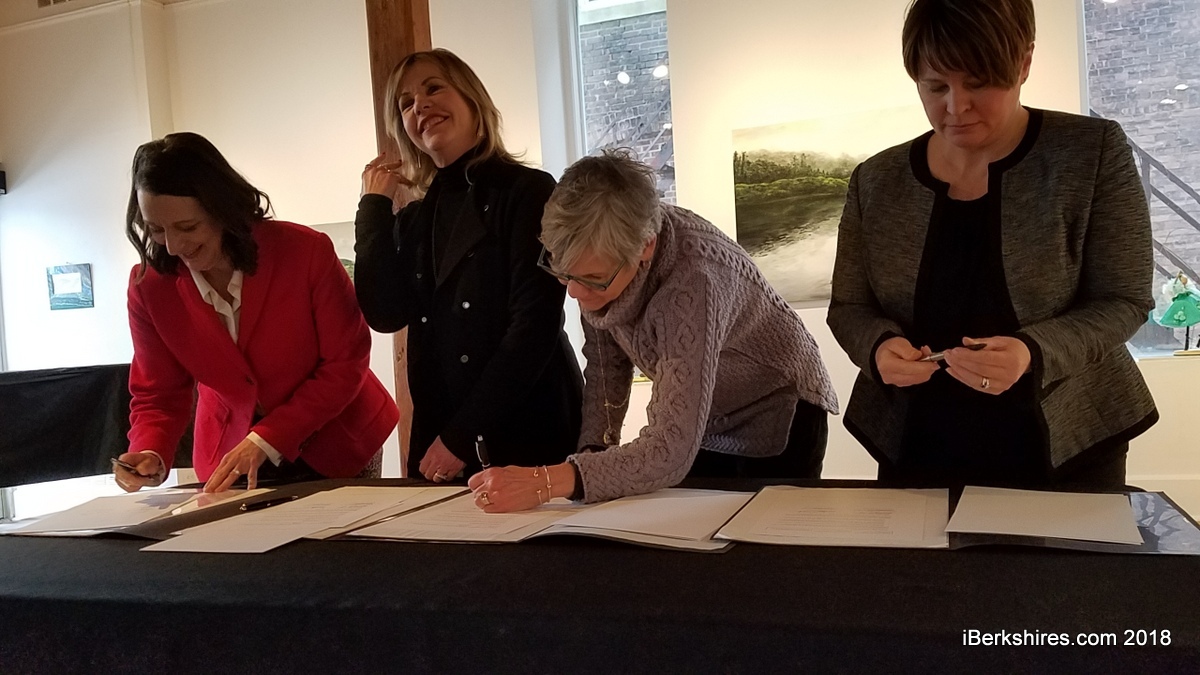
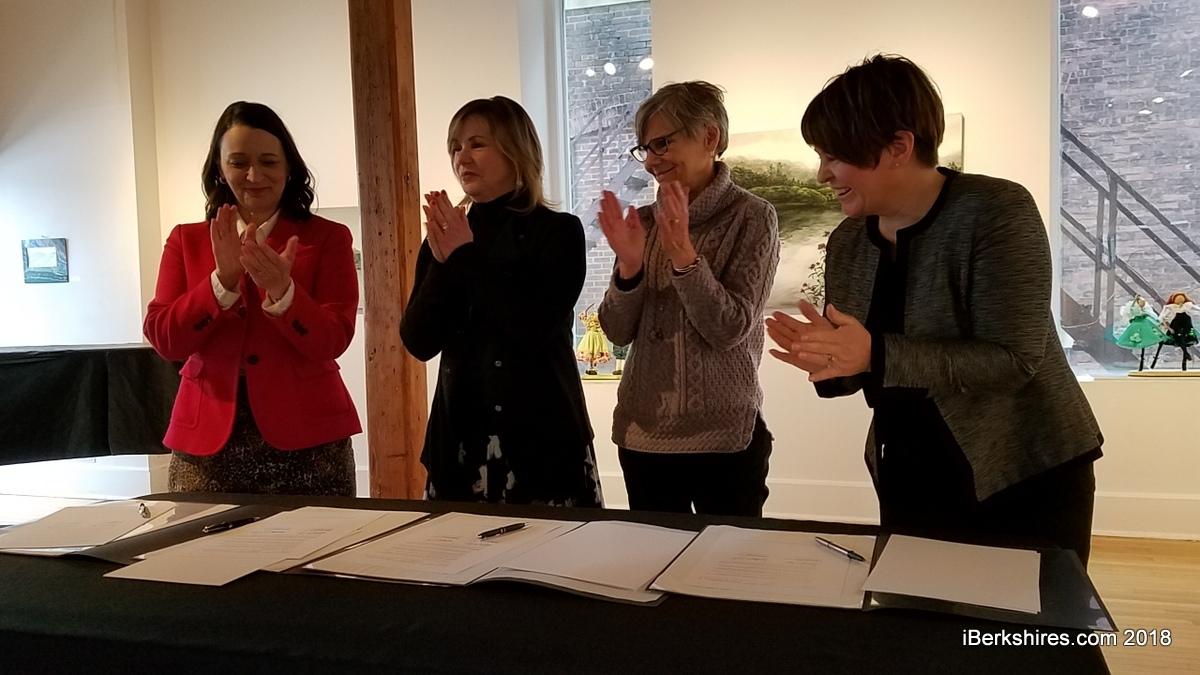
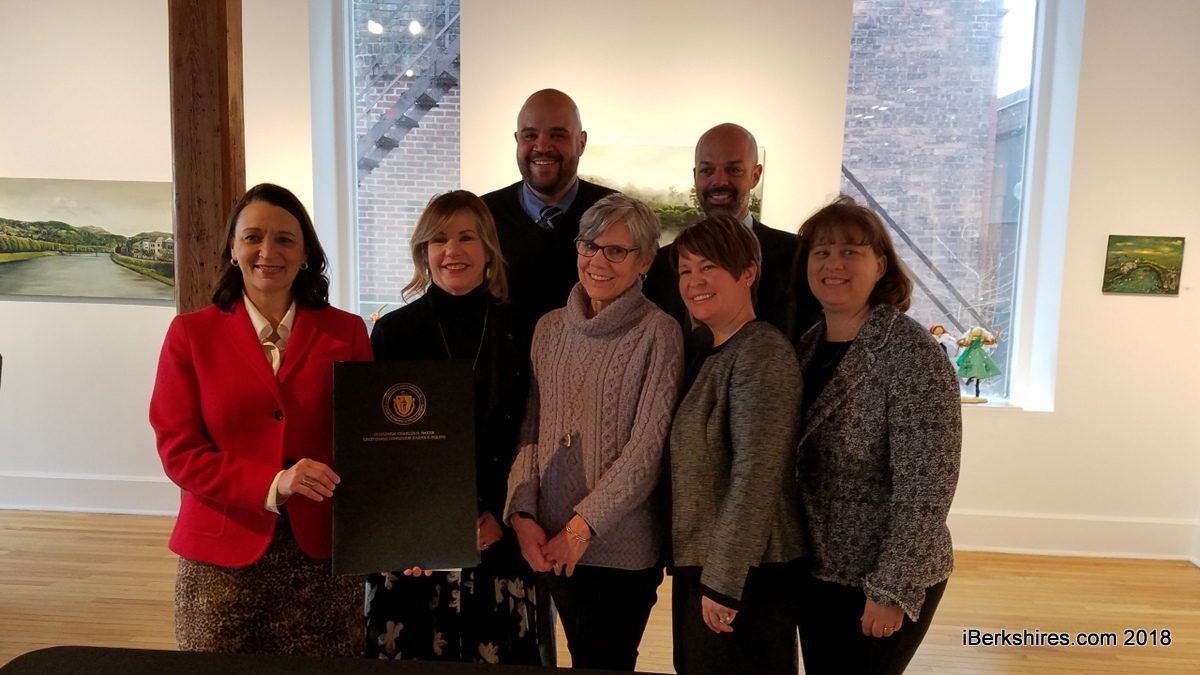
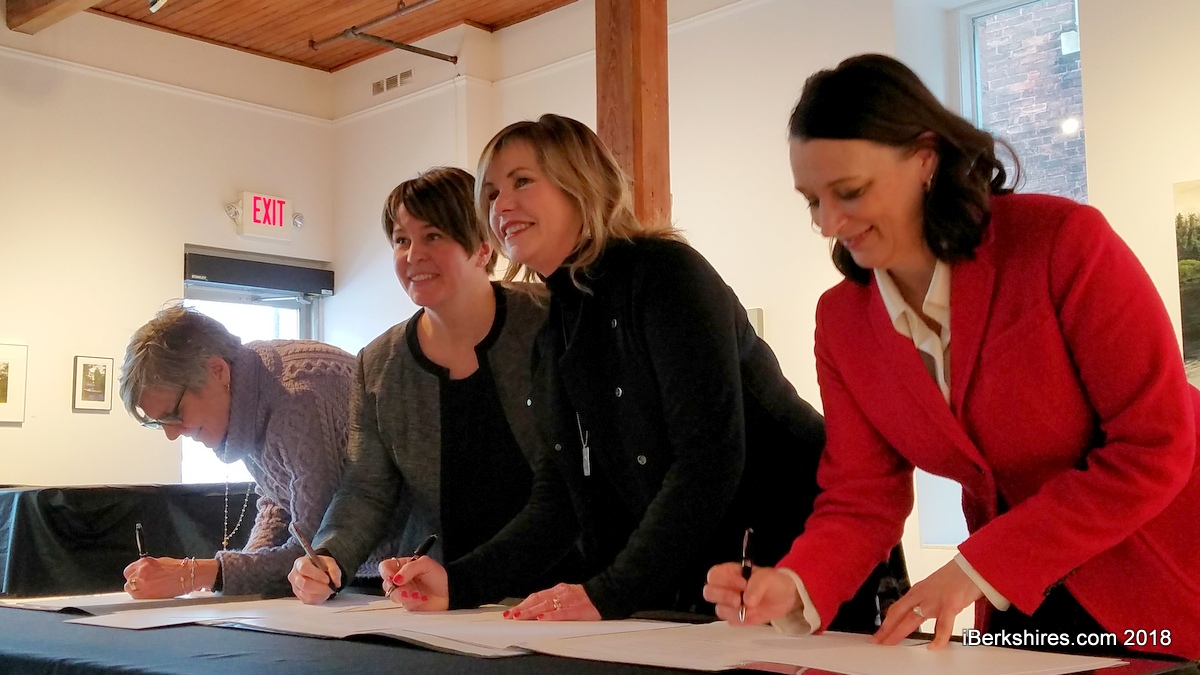
The four copies of the compact were signed by representatives of the entities in the agreement; Tyer and Walker for the city and MCC, respectively, Director of Cultural Development Jen Glockner for the Upstreet Cultural District and Mary Beth Eldridge for the Pittsfield Cultural Council.
Walker said the MCC had met with the leaders of the invited communities to get their thinking on how the arts could benefit their development. Ideas like Tyer's of taking broader themes, such as the stained-glass idea, is about using art to engage and elevate conversations and communities.
"That is aspirational," she said. "That isn't about fixing a problem, that is about creating a new dynamic."
Tags: cultural compact, MCC,