BRTA Cuts Service Despite Increased Support In State Budget
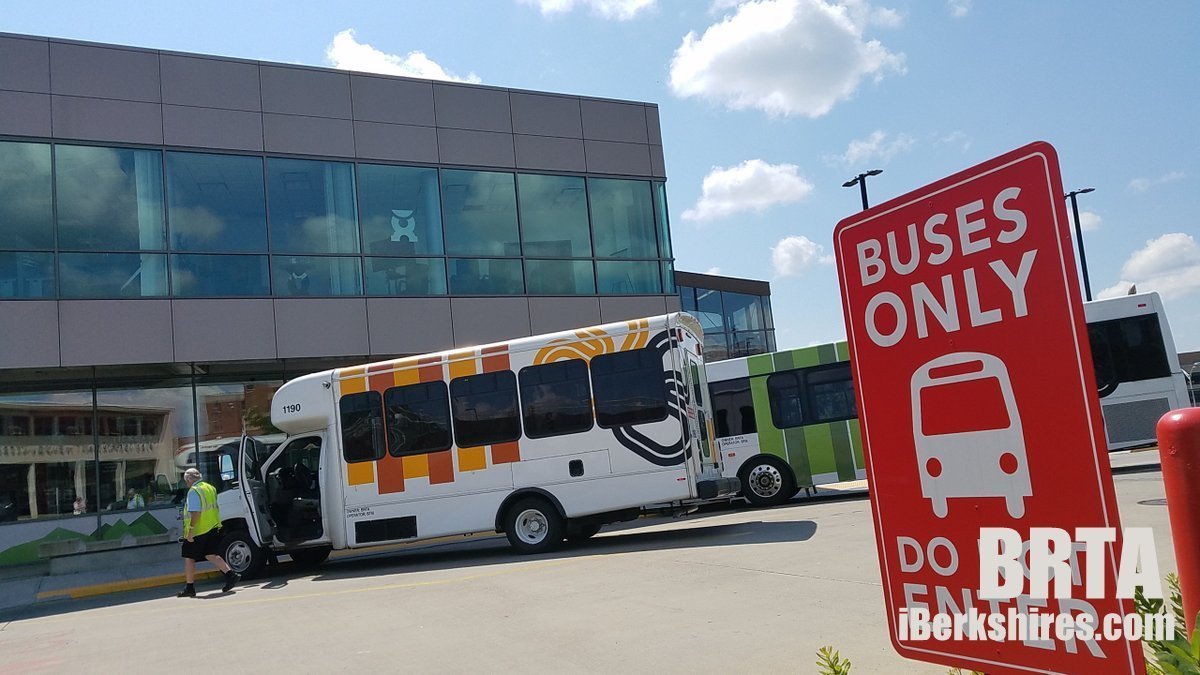
PITTSFIELD, Mass. — Gov. Charlie Baker signed a budget that increased funding for regional transit authorities by 10 percent. But, that isn't stopping the BRTA from reducing services.
On Thursday the Berkshire Regional Transit Authority voted in favor of a budget which eliminates a handful of runs and gets rid of a discount for those who use the Charlie Card.
BRTA Administrator Robert Malnati said that while the state legislature has approved an increase, most of the additional funds are being held back for a few months. He based the budget on level funding, and eyes a portion of the state's increase to pilot a run later in the evening.
"The good news is, it is $88 million. The bad news is, it is $82 million - that's what will be apportioned out according to the formula we have in place," Malnati said.
Baker had initially proposed a level-funded budget of $80.4 million for all of the regional transit authorities. The BRTA gets only a small portion of that - to the tune of about $2.5 million - and the organization had plotted out a way to cut costs. The BRTA said that salary increases, health insurance, fuel, and liability insurance were all increasing and that difference had to be cut out of operations.
"If you have a level amount of funds, then something has to give," Malnati said in April when the BRTA proposed a menu of options to cut costs.
The state Legislature then boosted the budget to $88 million - a number the collective group of RTAs said were needed for sustainability. But in doing so, lawmakers want assurance that the money is being wisely spent.
The ultimate budget language breaks that additional $8 million into three areas - $2 million upfront, $2 million to be released to operations with deficits who create remedial plans, and $4 million after a newly created task force does an analysis on each RTA to ensure efficiency, develops performance measures for each, and signs memoranda of understanding to incorporate the panel's recommendations.
Malnati is planning to keep the budget based on the $80.4 million and with its portion of the $2 million provided up front - which is $62,000 for the BRTA - to trial a route at night. The BRTA hasn't budgeted for the $4 million just yet.
"Would we set up a trial of later evening service and concentrate it on Route 12, which goes from the Intermodal Center to Berkshire Crossing, and go to 9 o'clock or 10 o'clock at night for a six-month study. How many customers is that going to serve? What kind of revenue could we expect? Is it the right one to try?" Malnati said.
"If we are apportioned more funding, then we need to be more forward thinking. We've been talking about later evening service forever and this is a way to try something with limited funds. That $2 million is $62,000."
Malnati is also toying with the idea of later routes in North Adams and Great Barrington - both downtown. He hopes to have the pilot up and running by January.
State Rep. John Barrett III had fought for an increase in funding for the RTAs in the state house and he disagrees with Malnati's decision to cut routes and raise fares at this point. He said the intent of the increase was to ensure there were no cuts while also providing a new level of accountability.
"They should be assuming they are getting [the additional $4 million] if they have a good operation," Barrett said. "In the meantime, they will get enough to run services without making cuts."
Barrett feels the BRTA is doing it backward. He said the organization should be expanding services to make sure it is providing the best service it can now because it has the additional resources. Barrett said if the organization isn't using the funding wisely after a task force review, those additional funds won't be released and cuts can be made then.
"The feeling in the House was that we'll give you the money but you have to do some real analysis of your options," Barrett said. "They can't do business as usual... we want to see real innovation."
He said if the organization is still not meeting the task force's accountability standards halfway through the year, then it can reduce routes.
Barrett said there had been a growing frustration among the state house with RTAs for what he sees as a lack of change. Throughout the state transit authorities have been struggling and some losing money. Lawmakers have been urging administrators to find ways to serve the needs better. But, Barrett said that hasn't really happened here.
"It is time to get an operation in place that will meet the needs of Berkshire County," Barrett said.
Barrett is also critical in that once the governor's budget came out, immediately the BRTA began talking about reducing service - before the legislature, which has the most power over the budget got a shot at it.
Malnati, however, said the reductions are part of being more efficient. He said the routes cut have the lowest amount of ridership. He believes that cutting those and developing new routes - such as later at night runs - is a shift the state wants to see.
"The reason why we are doing these efficiencies is because they were the lower of the usage areas. For the $25,000 we would be spending for that, we might transport 120 people. If you are going to spend $60,000 to run a different loop, you might transport 5,000 people. That's a payoff. We are trying to get more readership," Malnati said.
The routes being reduced are the Route 21 Express at 4:30 p.m. in Great Barrington. That route averages less than four passengers per hour. The plan is to eliminate Saturday morning and midday runs on Route 5/13, and 15/16. The 5 and 13 runs on Linden, Valentine, and Hancock Roads to the Intermodal Center and from Lanesborough to the Intermodal Center. The plan also calls for the combining of Route 5 and 13 into one loop.
The 15 and 16 runs from the Lebanon Avenue area to the Intermodal Center and from the Allendale area to the Intermodal Center. The 15 and 16 have shown a particularly low demand on the weekends. The BRTA will also discontinue Route 3S in Williamstown and North Adams, but add a 2:30 run on Route 3.
The organization is also aligning non-ADA hours with ADA service hours. In total, the organization looks to open up $231,902 in revenue between reductions in the fixed route cost and increased revenue by eliminating the Charlie Card discount. The organization approved a $6.3 million total budget - all based on the governor's $80.4 million number.
Malnati also has software outlining the employment sectors and will be reaching out to businesses to develop the best times for new routes in an effort to improve operations.
"It gives me the demographics and we can say we are serving the people we need to serve and this is the way to try it," Malnati said.
But Barrett said that analysis should have already been done.
"They should have been thinking about innovative ways six or seven months ago," Barrett said, adding that he and other representatives met with the BRTA about it in early spring and told them this idea was coming.
"Why weren't they ready?"
BRTA Board member Rene Wood added that the $4 million to be released later still isn't a certainty and can always be used to bolster operations later. She doesn't want to bank on that coming in.
"I think it is important that we don't plan on spending that money at this point because we don't know if that $4 million is going to come, what it is going to come with, we don't know when it is going to arrive and it may have conditions on it," Wood said.
"I think it is best to adopt a leaner budget and make the changes the staff thinks need to be made. When that money comes in then be ready to spend it, if there are no strings, in a way that will benefit."
The state task force will consist of two members of the House of Representatives; two members of the Senate; MassDOT rail and administrator; three former or current RTA administrators; and 11 people appointed by the governor - three of which are current or former administrators, two expects in bus service planning, two from municipalities; one from a rider advisory board, one advocate for people with disabilities, and one from an organization that advocates for regional transit riders.
That task force will then evaluate and develop best practices to improve the RTAs, conduct regular planning meetings, and ensure that fares, local contributions, and other revenues are appropriate.
"They will be determining performance measures and out of those performance measures, they will be applying those to each RTA," Malnati said.
That force will create recommendations by Nov. 1 and a memoranda of understanding will be crafted with the RTAs to incorporate those practices. That is when the RTA are eligible for the additional funds.
Malnati said there had also been some conversation about changing the funding formula, which could ultimately give the BRTA more to roll out new services. The pilot of late-night services will show if that is the right way to spend the money and serve as a way to advocate for additional state help.
"If they re-do our formula, we may get more than 3 percent. This would be a good test to at least propose to DOT and hopefully get a blessing on trying it," Malnati said.