BRTA Consider Fare Increases, Service Reductions
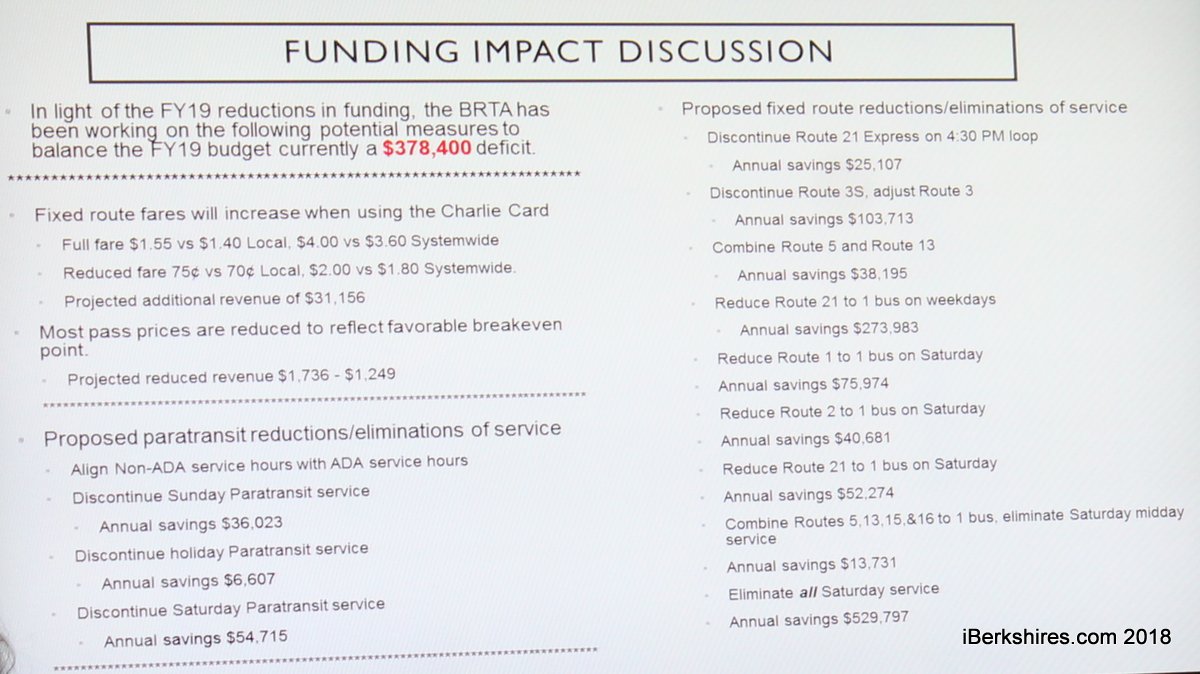
The BRTA is considering a menu of options to save money.
Berkshire Regional Transit Authority Administrator Robert Malnati said the state's funding for the organization is flat in the governor's budget.
The organization says fixed costs such as salary increases, health insurance, fuel, and liability insurance is expected to increase. Thus, the authority is planning its budget trying to find $378,400 in savings elsewhere.
"If you have a level amount of funds, then something has to give," Malnati said.
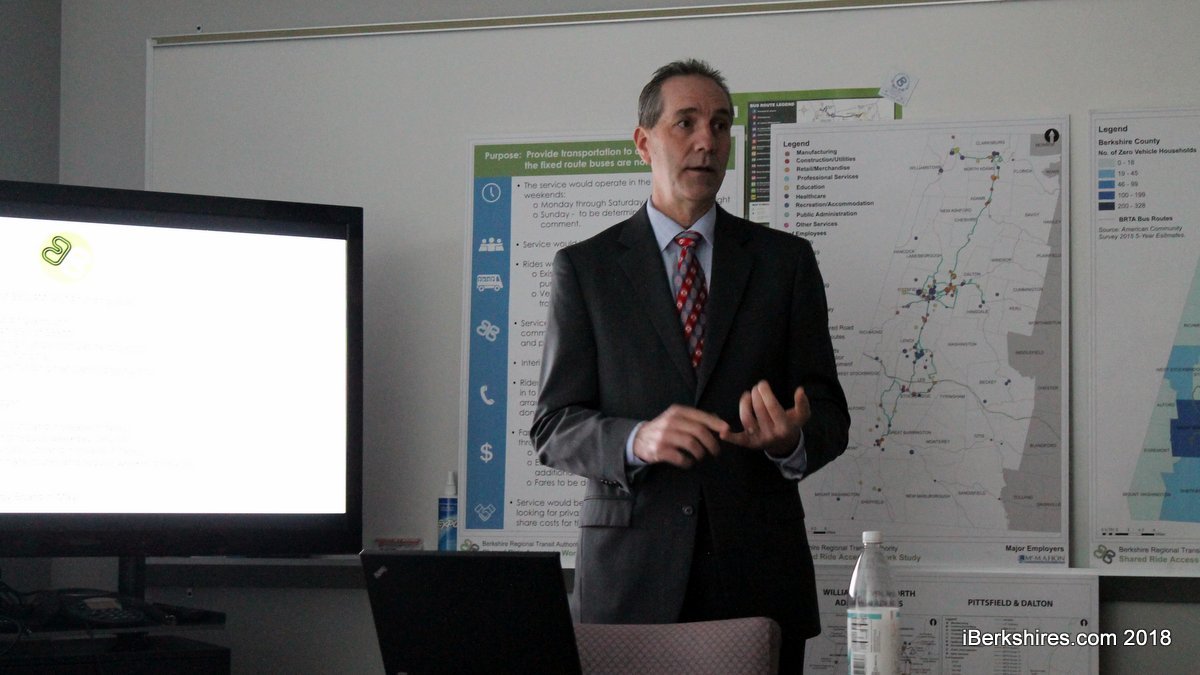
Malnati is presenting options to the ridership over a series of six public hearings. He presented a menu of options for eliminating or combining fixed routes, reducing the number of runs, aligning paratransit operations with non-paratransit runs, and raising fares.
Overall, Malnati was told by the governor's office that regional transit authorities should expect $80.4 million in funding, the same as last year. Of that, the BRTA receives just $2.5 million. The transit authorities say they need at least $88 million to sustain themselves.
"The money we receive for this is for operating funds, meaning we can't use it for purchasing buses or other capital expenses like maintenance on the vehicles or maintenance on a building," he said.
Malnati said that if the state had kept up with regular increases since 2014, the system would receive $2.74 million. But, the state support hasn't kept pace and for the fourth consecutive year, the organization is struggling to balance its budget.
Those figures aren't set in stone, however. The House's budget released Wednesday has the same figures but the Senate will then take on the budget and pass its own. And finally, the two houses of the Legislature will come to a compromise budget.
But that legislative process won't be concluded until May. Malnati said that would give the authority a limited window to hold the required 30-day comment period to implement any changes.
"Nothing is cut in stone right now. We are taking comments. I've received at least a dozen emails from other folks. All of that will be presented to the board to help make a decision," Malnati said.
Nonetheless, the BRTA is getting ahead of the issue and is working on the assumption of level funding. Malnati said any changes to the operations depend on the state's final budget figure.
The organization has a number of options based on an analysis of the current operations. The organization looked at the routes by passengers per mile, passengers by the hour, costs, and time.
Ridership has been declining for the organization, which already struggles to provide services at night and does not provide any runs on Sundays, in the sprawling, rural Berkshires. Some routes serve only a few people per mile on routes that run great distances, Malnati said.
"So far this year, it is 1 percent over the 6 percent drop. It is not declining anymore. It isn't a dramatic increase but at least it is on the positive side," Malnati said.
Less than half of the possible changes to the routes, which are available below, will be implemented. But right now, the BRTA is hoping riders will weigh in on what routes matter to them to help guide the board's decision.
BRTA April 2018 Public Meeting Presentation by iBerkshires.com on Scribd
Tags: BRTA, fiscal 2019, public transportation, state budget,