Berkshire Medical Center Shows Off New Technology

The newer model allows for greater use.
The hospital recent upgraded its daVinci Robot to lessen the invasiveness of surgery and purchased a new EksoGT robotic exoskeleton to help patients who had strokes or spinal cord injuries learn to walk again.
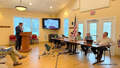
On Wednesday, the hospital showed off the new equipment in its lobby, displaying all of the cool features the equipment has to offer.
The daVinci is a newer model of a piece of equipment the hospital purchased in 2010 and with which some 300 surgeries per year have been performed. The newer model features a 3D, high-definition camera, a fourth arm, and more maneuverability.
"It is very exciting in several different areas. Before it was more rigid in the sense of spacial relationship to the patient. We had to bring it over to a patient this way and we would be kind of in the way a little," said thoracic surgeon Dr. Christian Galvez.
"With this robot, one of the things we can do it is get it away from the patient so everybody can work on the patient. It has this boom so it can gravitate above.
"Another thing is the instruments have much more angle capabilities. We can get to different areas of the body that we could not get to physically before with the first-generation robot. There are many new instruments that come with it."
Galvez specializes in chest surgery, doing many surgeries on those with lung cancer. He was trained on the equipment in 2013. He said robotic surgery specifically helps patients heal quicker and with less pain.
"We're trying to advance the science of cancer care with this minimally invasive surgery," he said.
Vice President of Surgical Services Diana Vallone added that even more surgeries can be done. Previously the equipment physically couldn't reach certain areas of the body. But, the newer model allows for rectal surgery and lung surgery that couldn't be done on the old machine.
"All of the robots provide less invasive procedures for patients, no incision just small portholes, take out big organs through these holes," Vallone said. "What it limited was getting deep into the abdomen or deep into the chest because the arms weren't as maneuverable."
She with conventional surgery much larger incisions would cut through muscles and blood vessels, causing more damage and taking longer to heal. Now there is less blood loss, patients have less risk of infection and heal quicker. She added that fewer if any, opioids are prescribed for the pain.
"The long-term outcomes are probably not any different but the immediate post-op period, the first six weeks, is so much better. They get back to work, don't have to take narcotics for their pain, they are back to their normal lives in a week," Vallone said.
Meanwhile, the exoskeleton is a brand new piece for the Center for Rehabilitation. Therapist Jessica Dellaghelfa had pushed the administration for the technology after piloting it with her patients. She contacted Ekso-bionics about the equipment and found it be a major help.
"It senses when it needs to help at certain times, which I think is the coolest the part of the technology. If it notices somebody is lacking somewhere, it will speed up and help in that certain part of the gait cycle," Dellaghelfa said.
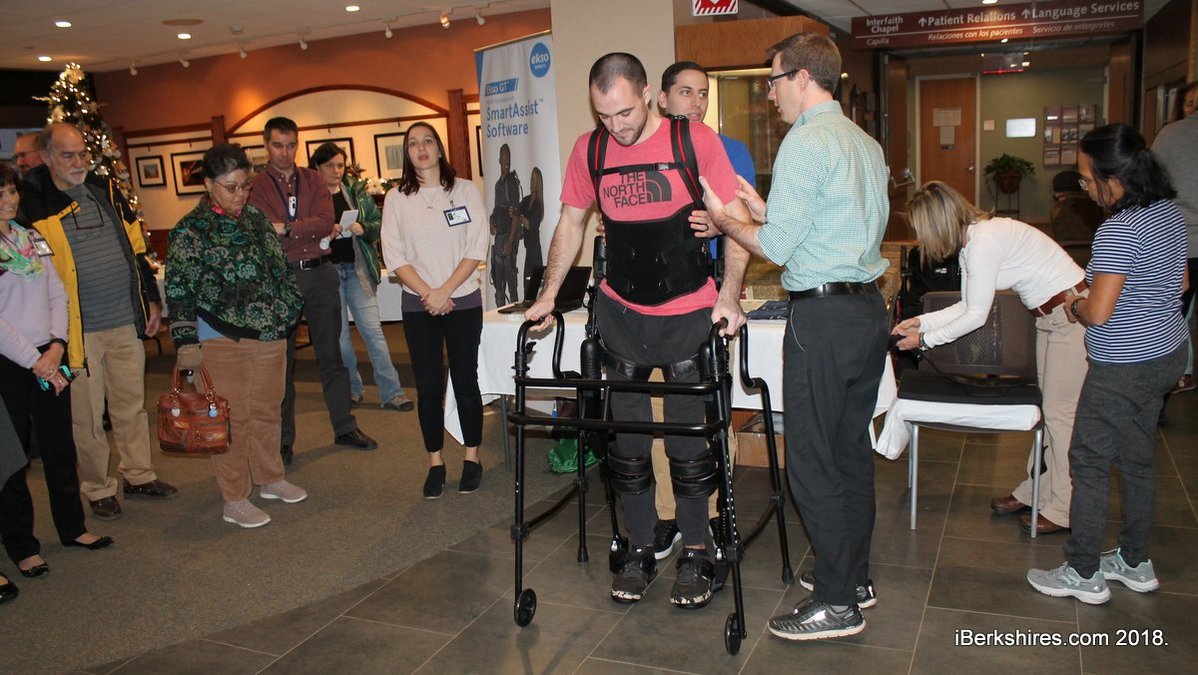
A patient re-learning how to walk can get into the suit for therapy. Previously, it could take multiple therapists to just get a person standing upright. The suit is powered to move hips and knees and has springs at the ankle to support the foot. Sensors change the assistance being given at those joints to ensure patients have the proper gait.
"It is constantly monitoring the patient's contribution to the effort and as the patient gets stronger, the robot can back off the resistance or it can even provide resistance to a patient who is getting stronger and wants to work harder. It is truly dynamic robotics," said Andy McGuigan, the regional sales manager for Ekso-bionics who worked with Dellaghelfa on the pilots.
Travis is one of Dellaghelfa's patients with a spinal cord injury. On Wednesday, he was able to walk himself across the lobby and back while wearing the exoskeleton.

The robot was available for people to "test drive."
Dellaghelfa said the idea is to get all patients back to walking but even for those who have significant spinal injuries, just the ability to stand up provides a health benefit.
"This technology can help those who can't stand or walk, it gives them the ability to do so. It helps them maintain their balance," she said.
"Standing in general for those who have spinal cord injuries is a benefit for their muscle strength, bone density, bowel bladder care, there are a lot of benefits to just being upright. Those who have some muscle control, it can help to re-teach and re-learn the proper gait pattern."
She added that if used quickly, it gets the person back to walking quicker because they do not develop compensations and learn to walk properly.
McGuigan said the technology isn't made for at home mobility but to be used in a therapy setting to rebuild those abilities. He said four therapists at Berkshire Medical Center are currently being trained on the equipment and are working with patients now. The equipment will expand to other patients in the near future.
Tags: berkshire medical center, medical devices, physical therapy, surgery,