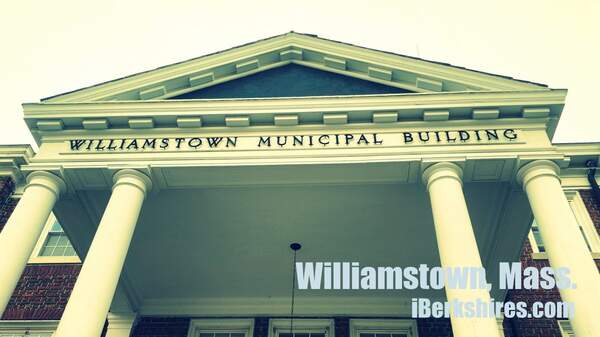
WILLIAMSTOWN, Mass. — The Select Board on Monday appointed eight community members and one member of its own panel to serve on a newly formed advisory committee on diversity and equity.
The board decided this summer to form a committee in response to community concerns about racial justice growing out of the nationwide conversation following the killing of George Floyd in Minneapolis on Memorial Day.
Twenty-five residents either applied or were nominated by their fellow townspeople, Select Board Chair Jane Patton reported.
"In the entire time I've been on the Select Board, that has never been the case," Patton said about the high rate of volunteerism. "I would like to thank everyone who put themselves forward and other folks who nominated community members."
Bilal Ansari, Andrew Art, Gina Coleman, Aruna D'Souza, Drea Finley, Jeff Johnson, Mohammed Memfis and Kerri Nicoll were named to the committee. They will be joined by Patton, who will fill a seat designated to a member of the Select Board in an effort to facilitate communication between the two committees.
The nine-person committee will be the largest standing committee in town government. But it could have been even larger.
"I also want to speak to the folks who were not selected to the 'core committee,' for lack of a better term," Patton said. "You still probably likely be asked in one way or another to contribute, perhaps by serving on a working group, subcommittee, or in some other fashion deemed necessary by the committee. Also depending on the length of time the committee goes on, some folks may roll off.
"Please know that we just had an incredible group of people come forward. I was really touched by that."
The first nine people on the committee were appointed after the board unanimously approved a one-page charter for the group drafted by Hogeland.
"Therefore, the Select Board establishes an advisory committee to address [inclusion, diversity and equity] through the development of forums for open and safe discussion of these issues, and for the development of actionable recommendations to improve the attainment of these goals in Williamstown for all residents," the charter reads in part. "This effort is designed to help make sure that Williamstown is a safe and inclusive community."
The board decided to leave the naming of the committee up to its membership when it convenes. It also left the committee's charge fairly open-ended.
"We give them a fairly broad mandate," Hogeland said in discussing the charter he drafted. "The only specific is to have a safe listening forum. … There's an active listening phase, which is important. The other thing is actionable recommendations.
"To me, it doesn't mean, 'Let's make the town a better place' or 'Let's assure equality.' I mean, 'Let's do something with affordable housing' and make a specific recommendation of what that is. I think we've all been on committees or seen plans which have a mixture of high, idealistic things with no action you can take compared to others which are very specific and detailed."
Hogeland and the board are hoping this new committee's recommendations fall into the latter category.
It is asking the new group to report to the Select Board at least once a month and to provide a formal report of some kind at the end of its first year.
The end of the first year also may be the point when the equity and diversity committee decides how it wants to be structured going forward.
On Monday, the Select Board discussed whether it wanted to make the initial appointments to the diversity panel one-year or two-year appointments and whether it wanted to stagger those seats so that the committee — assuming it continues indefinitely — has continuity as new members cycle through.
But ultimately it decided to let all the appointments be for one year with the understanding that the initial members might stay on in whatever form the committee ultimately takes.
"I had pictured a situation where everybody goes for the year and part of the year-end re-evaluation process is the [committee's] format, membership and the like and what sustainability is," Town Manager Jason Hoch advised the board. "Appoint everyone for, call it a year … with the understanding that at the end of the year, part of the check in is: What does this look like going forward? Three, five, seven, nine people? And focus on institutionalizing whatever happens after that year."
One thing is for certain, the Select Board does anticipate the to-be-named committee extending beyond its first year.
"I personally think this is something that is going to be part of our fabric indefinitely," Patton said. "I can't begin to think about when sunset time is when we haven't even had the sun rise yet."
As for the surplus of applicants for the committee, Jeffrey Thomas had a suggestion.
"I wanted to bring up the topic of diversity on town boards and committees and the lack thereof," Thomas said toward the end of a two-hour meeting. "I think we can all do better at having more diversity — age diversity, race diversity, more diversity of perspective. And I think we have a great opportunity here with so many people interested in serving on the diversity, equity and racial justice committee. … I would hope they'd consider serving on other boards and committees in town.
"I'd also like to challenge this board, the Select Board, of doing a better job of reaching out to people in the community who might not know there are opportunities to serve on town boards and committees. I think it's incumbent on us to help create more diversity at town hall."
If you would like to contribute information on this article, contact us at info@iberkshires.com.
Your Comments
iBerkshires.com welcomes critical, respectful dialogue. Name-calling, personal attacks, libel, slander or foul language is not allowed. All comments are reviewed before posting and will be deleted or edited as necessary.
Please provide the names of the volunteers who were not selected. This is equally mportant.
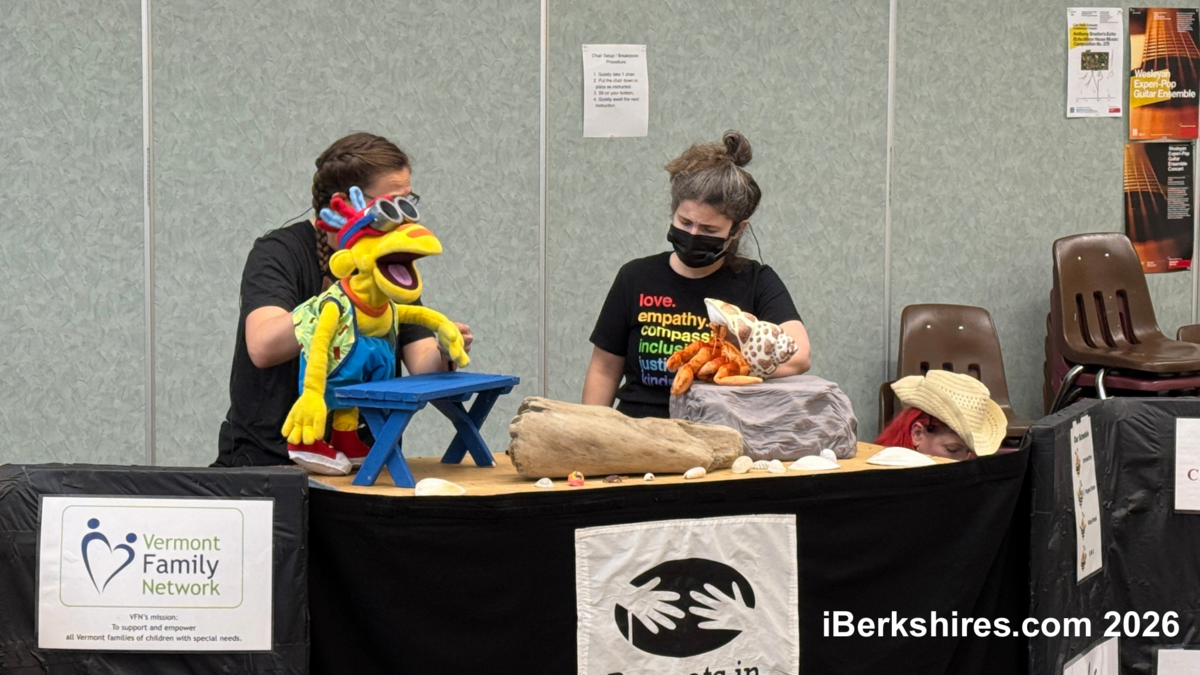
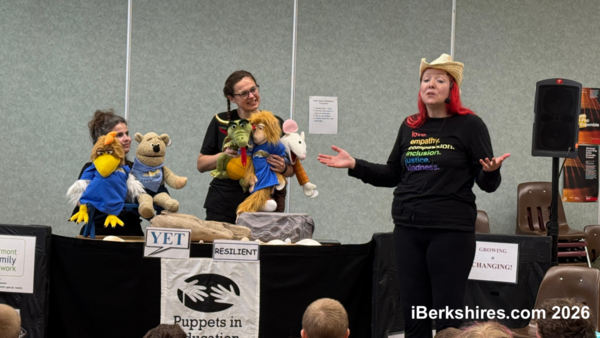
Classes filtered through the music class Thursday to learn about how to be resilient and kind, deal with change and anxiety, and more.
"This program is this beautiful blending of other programs we have, which is our anxiety program, our bullying prevention and friendship program, but is teaching children the power of yet and how to be able to feel empowered and strong when times are challenging and tough," said program manager Sarah Vogelsang-Card.
The kids got to engage with a "bounce back" song, move around, and listen to a hermit crab deal with the change of needing a new shell.
"A crab that is too small or too big for its shell, so trying to problem solve, having a plan A, B and C, because it's a really tough time," Vogelsang-Card said. "It's like moving, it's like divorce of parents, it's changing schools. It's things that children would be going through, even on a day to day basis, that are just things they need to be resilient, that they feel strong and they feel empowered to be able to make these choices for themselves."
The resiliency program is new and formatted little differently to each of the age groups.
"For the older kids. We age it up a bit, so we talk about harassment and bullying and even setting the scene with the beach is a little bit different kind of language, something that they feel like they can buy into," she said. "For the younger kids, it's a little bit more playful, and we don't touch about harassment. We just talk about making friends and being kind. So that's where we're learning as we're growing this program, is to find the different kinds of messaging that's appropriate for each development level."
This programming affirms themes that are already being discussed in the elementary school, said school psychologist Christy Viall. She thinks this is a fun way for the children to continue learning.
"We have programs here at the school called community building, and that's really good. So they go through all of these strategies already," she said. "But having that repetition is really important, and finding it in a different way, like the puppets coming in and sharing it with them is a fun way that they can really connect to, I think, and it might, get in a little more deeply for them.
Vogelsang-Card said its another space for them to be safe and discuss what's going on in their life. Some children are afraid because maybe their parents are getting divorced, or they're being bullied, but with the puppets, they might open up and disclose what's bothering them because they feel safe, even in a larger crowd.
"When we do sexual abuse awareness that program alone, over five years, we had 87 disclosures of abuse that were followed up and reported," she said. "And children feel safe with the puppets. It makes them feel valued, heard, and we hope that in our short time that we're together, that they at least leave knowing that they're not alone."
Bedard Brothers also gave the school five new puppets to use. Viall said the puppets are a great help for the students in her classroom, especially in the younger grades.
"Every year, I've been giving the puppets to the students. And I also have a few of the puppets in my classroom, and the students use them in small groups to practice out the strategies with each other, which is really helpful," she said. "Sometimes the older students, like sixth graders, will put on a puppet show. They'll come up with a whole theme and a whole little situation, and they'll act it out with the strategies for the younger students. It's really cute, they've done it with kindergarteners, and the kids really like it."
Vogelsang-Card said there are 130 schools in Vermont that are on the waiting list for them to come in. Lanesborough Elementary has been the only Massachusetts school they have visited, thanks to Bedard Brothers.
"These programs are so critical and life-changing for children in such a short amount of time, and we are the only program in the United States that does what we do, which is create this content in this enjoyable, fun, engaging way with oftentimes difficult subjects," she said. "Vermont is our home base, but we would love to be able to bring this to more schools, and we can't do this without the support of community, business funders or donors, and it really makes a difference for children."
The fourth-grade students were the first class to engage with the puppets and a lot of them really connected with the show.
"I learned to never give-up and if you have to move houses, be nervous, but it still helps," said William Larios.
"I learned to always add the word 'yet' at the end," said Sierra Kellogg, because even if she can't do something now, she will be able to at some point.
Samuel Casucci was struck by what one of the puppets talked about. "He said some people make fun of him if he dresses different, come from different place, brings home lunch, it doesn't matter," Samuel continued. "We're all kind of the same. We're all kind of different, like we have different hairstyles, different clothes. We're all the same because we're all human."
"I learned how to be more positive about myself and like, say, I can't do this yet, it's positive and helpful," said Liam Flaherty.
The students got to take home stickers at the end of the day with contact information of the organization.
Students got to showcase their art at the Clark Art Institute depicting their relationship with the Earth in the time of climate change. click for more
The 100th annual meeting will be held on March 10, 2027, the Community Chest's birthday (there will be cake, he promised) and a gala will be held at the Clark Art Institute on Sept. 25, 2027.
click for more