image description
Part of the protest last summer at the neighborhood formerly known as Colonial Village in Williamstown.

Williamstown DIRE Committee Recognizes Effort to Address Racist Covenant

By Stephen DravisiBerkshires Staff
Print Story | Email Story
WILLIAMSTOWN, Mass. — The town's diversity committee Monday officially recognized the work of a group of residents who worked this summer to acknowledge and right a historic injustice.
 
The Diversity, Inclusion and Racial Equity Committee used its first meeting of the new year to pass a resolution commending the residents of the area formerly known as Colonial Village not only for renouncing the racist covenant that restricted home sales in the neighborhood at its birth but for trying to make it easier for other residents of the commonwealth to do the same.
 
Before passing the resolution, the DIRE Committee acknowledged the harm done by the covenant -- both as a tool for maintaining "white purity" in the neighborhood and as an insult to Black people for nearly a century.
 
The covenant, written into home deeds in the 1930s, forbade home ownership in the neighborhood to people of color. Although the racist language was subsequently nullified by Supreme Court precedent and legislation at the state and federal level, they continued to persist on the deed documents as homes changed hands through the decades.
 
Last year, residents of the neighborhood, which includes Berkshire Drive, Colonial Avenue and Orchard Lane, filed a with the Registry of Deeds documents that condemned and revoked the covenant and replaced it with the following statement: "This subdivision is rededicated as welcoming in word and deed to all people without regard to their race, color, religion, national origin, ethnicity, sex, sex characteristics, sexual orientation, gender identity or gender expression."
 
The residents went a step further by asking state Rep. John Barrett III, D-North Adams, to file legislation in Boston that would enable other Massachusetts residents to more easily strike the vestigial language from their own deeds. H.4944 ended up with 50 co-sponsors and ended the recently completed legislative session in committee.
 
In Massachusetts, Section 23B of Chapter 184 of Massachusetts General Law voids any deed language that "purports to forbid or restrict the conveyance, encumbrance, occupancy, or lease thereof to individuals of a specified race, color, religion, national origin or sex."
 
Barrett's amendment to Section 23B would allow "a person holding an interest in real property or a party in interest affected by a void provision in this section [ ... to] request the land court to expunge a provision made void by this section."
 
Although the covenant has not had force of law for decades, DIRE Committee member Bilal Ansari emphasized that the deed language has had a lasting impact.
 
"That it was allowed to sit in the deed, it did have an effect," Ansari said. "It had an effect on every person of color who came across that. That was the initial intent and aim and purpose. Therefore, it was effective in doing that.
 
"For the people who had to live through that, there was an affective harm. So it was effective."
 
The DIRE Committee used its second resolution of 2021 to put pressure on the Select Board to "hire an independent investigator to determine the facts … and issue a timely public report" on allegations raised in a recently withdrawn federal lawsuit against the town, its former police chief and its town manager.
 
As it did for the Select Board later that night, Monday's meeting marked the DIRE Committee's first gathering since the Dec. 14 announcement by Sgt. Scott McGowan that he was dropping the lawsuit.
 
The committee's members were consistent in their calls for a vetting of the allegations of racism and sexual misconduct raised in the suit since it became public in August, and they did not back off that stance this week.
 
One member, Andrew Art, did suggest that since the town is no longer party to a lawsuit, the Select Board could conduct the probe "in house" without needing a third-party investigation. But the majority of the committee, including Select Board Chair Jane Patton, favored the approach of bringing in a neutral party.
 
"I think it's an important step to rebuilding some kind of trust," Aruna D'Souza said of the investigation. "There were many actors in this whole situation, and the Select Board was one of those actors. The Police Department was one of the actors. The town manager was one of the actors. I think it would be difficult from an optics point of view for one of the actors to be the investigator."
 
D'Souza later said the probe should happen either before or concurrently with a search for a new police chief.
 
"If we're thinking we need to change the culture that led to the problems, we need to identify what that culture is and what has led to the existing culture," she said. "I think that's part of the larger process of hiring a new police chief.
 
"I'd rather be prompt in this, as long as we're making clear that ‘independent' means actually independent, however we want to word that so that can happen in a way that engenders public confidence."
 

Tags: DIRE,   
If you would like to contribute information on this article, contact us at info@iberkshires.com.

Puppets Teach Resilience at Lanesborough Elementary School

By Breanna SteeleiBerkshires Staff

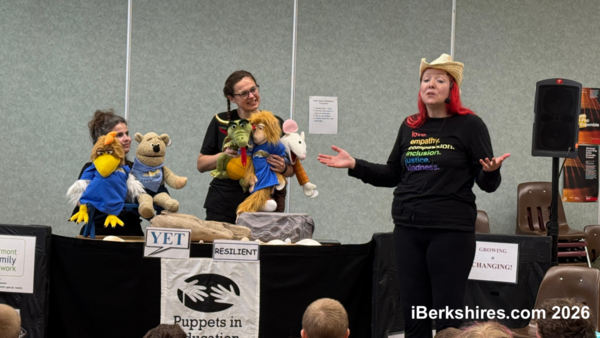
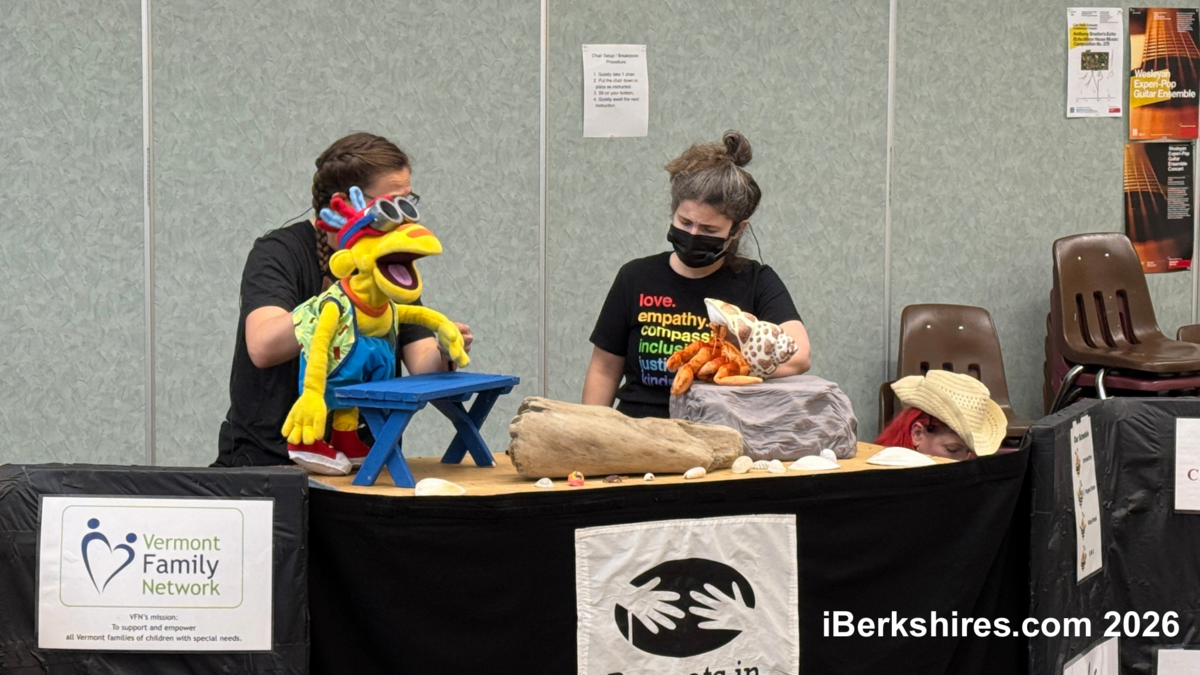
The kids learned from puppets Ollie and a hermit crab.

LANESBOROUGH, Mass. — Vermont Family Network's Puppets in Education visited the elementary school recently to teach kids about being resilient.

Puppets in Education has been engaging with young students with interactive puppets for 45 years.  

The group partnered again with Bedard Brothers Chevrolet, which sponsored the visit. 

Classes filtered through the music class Thursday to learn about how to be resilient and kind, deal with change and anxiety, and more.

"This program is this beautiful blending of other programs we have, which is our anxiety program, our bullying prevention and friendship program, but is teaching children the power of yet and how to be able to feel empowered and strong when times are challenging and tough," said program manager Sarah Vogelsang-Card.

The kids got to engage with a "bounce back" song, move around, and listen to a hermit crab deal with the change of needing a new shell.

"A crab that is too small or too big for its shell, so trying to problem solve, having a plan A, B and C, because it's a really tough time," Vogelsang-Card said. "It's like moving, it's like divorce of parents, it's changing schools. It's things that children would be going through, even on a day to day basis, that are just things they need to be resilient, that they feel strong and they feel empowered to be able to make these choices for themselves."

The resiliency program is new and formatted little differently to each of the age groups.

"For the older kids. We age it up a bit, so we talk about harassment and bullying and even setting the scene with the beach is a little bit different kind of language, something that they feel like they can buy into," she said. "For the younger kids, it's a little bit more playful, and we don't touch about harassment. We just talk about making friends and being kind. So that's where we're learning as we're growing this program, is to find the different kinds of messaging that's appropriate for each development level."

This programming affirms themes that are already being discussed in the elementary school, said school psychologist Christy Viall. She thinks this is a fun way for the children to continue learning. 

"We have programs here at the school called community building, and that's really good. So they go through all of these strategies already," she said. "But having that repetition is really important, and finding it in a different way, like the puppets coming in and sharing it with them is a fun way that they can really connect to, I think, and it might, get in a little more deeply for them.

Vogelsang-Card said its another space for them to be safe and discuss what's going on in their life. Some children are afraid because maybe their parents are getting divorced, or they're being bullied, but with the puppets, they might open up and disclose what's bothering them because they feel safe, even in a larger crowd. 

"When we do sexual abuse awareness that program alone, over five years, we had 87 disclosures of abuse that were followed up and reported," she said. "And children feel safe with the puppets. It makes them feel valued, heard, and we hope that in our short time that we're together, that they at least leave knowing that they're not alone."

Bedard Brothers also gave the school five new puppets to use. Viall said the puppets are a great help for the students in her classroom, especially in the younger grades. 

"Every year, I've been giving the puppets to the students. And I also have a few of the puppets in my classroom, and the students use them in small groups to practice out the strategies with each other, which is really helpful," she said. "Sometimes the older students, like sixth graders, will put on a puppet show. They'll come up with a whole theme and a whole little situation, and they'll act it out with the strategies for the younger students. It's really cute, they've done it with kindergarteners, and the kids really like it."

Vogelsang-Card said there are 130 schools in Vermont that are on the waiting list for them to come in. Lanesborough Elementary has been the only Massachusetts school they have visited, thanks to Bedard Brothers. 

"These programs are so critical and life-changing for children in such a short amount of time, and we are the only program in the United States that does what we do, which is create this content in this enjoyable, fun, engaging way with oftentimes difficult subjects," she said. "Vermont is our home base, but we would love to be able to bring this to more schools, and we can't do this without the support of community, business funders or donors, and it really makes a difference for children."

The fourth-grade students were the first class to engage with the puppets and a lot of them really connected with the show.

"I learned to never give-up and if you have to move houses, be nervous, but it still helps," said William Larios.

"I learned to always add the word 'yet' at the end," said Sierra Kellogg, because even if she can't do something now, she will be able to at some point.

Samuel Casucci was struck by what one of the puppets talked about. "He said some people make fun of him if he dresses different, come from different place, brings home lunch, it doesn't matter," Samuel continued. "We're all kind of the same. We're all kind of different, like we have different hairstyles, different clothes. We're all the same because we're all human."

"I learned how to be more positive about myself and like, say, I can't do this yet, it's positive and helpful," said Liam Flaherty.

The students got to take home stickers at the end of the day with contact information of the organization.

View Full Story

More Williamstown Stories